Image 1 of 7
1 / 7
Plant Reference
Podophyllum, Genus, 'Spotty Dotty', Cultivar,
- Genus
- Cultivar
spotty dotty mayapple
Hybrid of garden origin (Podophyllum hybrid — Asian species parentage)
Overview
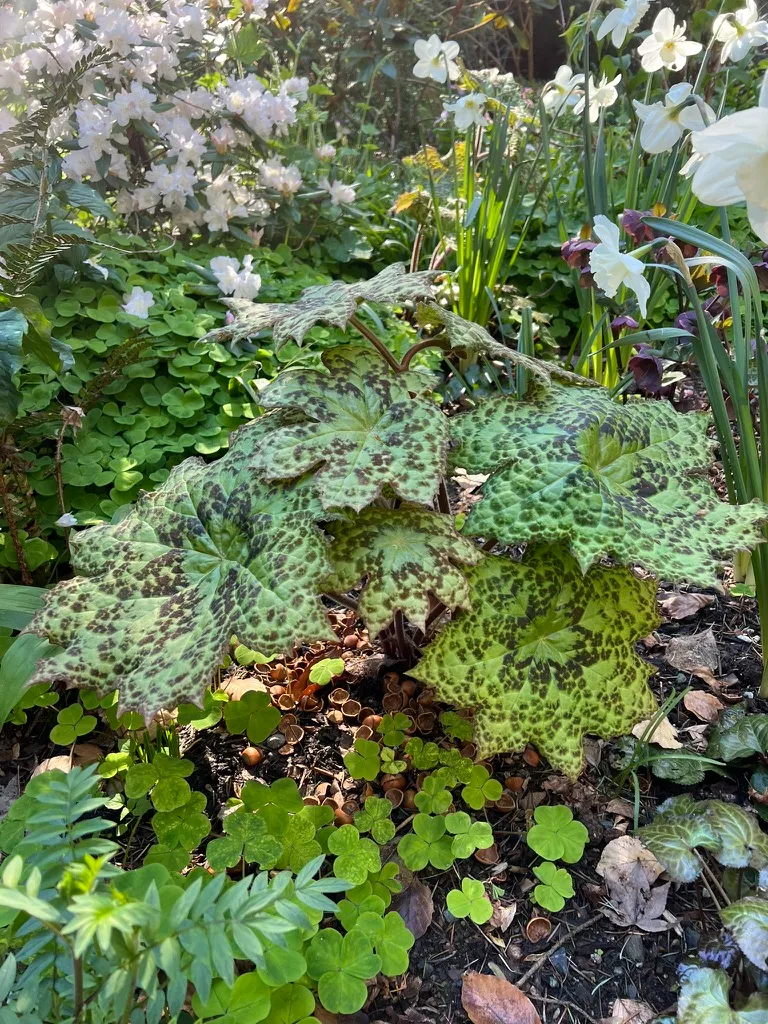
Podophyllum 'Spotty Dotty' is a hybrid mayapple, growing 12–20 inches (30–50 cm) tall and 18–30 inches (45–75 cm) wide. Large palmately lobed leaves 8–14 inches (20–35 cm) across with chocolate-brown to maroon spots and blotches on a dark green ground — the spotted foliage pattern gives the cultivar name and is the primary feature, visible from leaf emergence through fall. Dark red to maroon nodding flowers 1–1.5 inches (2.5–4 cm) beneath the leaf canopy in mid to late spring — the flowers are hidden under the leaves. A hybrid of Asian Podophyllum species (likely involving P. pleianthum and/or P. hexandrum). In the barberry family (Berberidaceae). The spotted leaf pattern varies between individual plants and can intensify or fade depending on light levels — brighter indirect light produces more defined spotting; deep shade reduces contrast. All parts contain podophyllotoxin — cytotoxic to humans and animals (skin blistering, gastrointestinal distress). Handle with gloves. Slow-spreading by thick rhizomes. Partial shade to full shade. Humus-rich well-drained soil. Consistent moisture. Deer-resistant (toxic). Zones 5–9. Growth rate is slow.
Native Range
Hybrid of garden origin — parentage involves Asian Podophyllum species (likely P. pleianthum and/or P. hexandrum).Suggested Uses
Grown in woodland gardens and shaded borders in zones 5–9. The spotted foliage pattern is the cultivation interest. Brighter indirect light for defined spots. All parts cytotoxic — handle with gloves. Companion to Trillium, Erythronium, and ferns. Deer-resistant.How to Identify
Appearance
Size & Dimensions
Height1' - 1'8"
Width/Spread1'6" - 2'6"
Bloom Information
Mid to late spring (April–May), lasting 2–3 weeks. Dark red nodding flowers beneath the leaf canopy. The spotted foliage — not the flowers — is the primary season-long feature (spring through fall).
Detailed Descriptions
Flower Description
Dark red to maroon, nodding, 1-1.5 inches (2.5-4 cm), beneath the leavesFoliage Description
Dark green with prominent chocolate-brown to maroon spots and blotches; palmately lobed, 8-14 inches (20-35 cm) acrossGrowing Conditions
Sun Requirements
Needs bright indirect light. Keep it out of direct sun, which can scorch the leaves.
• Bright indirect light: a bright spot near a window, with no direct sun on the leaves
Care & Maintenance
Care Guide
Partial shade to full shade. Humus-rich well-drained soil. Consistent moisture. Brighter indirect light intensifies the leaf spotting; deep shade reduces contrast. All parts cytotoxic (podophyllotoxin) — handle with gloves. Slow-spreading. Deer-resistant. Zones 5–9.Pruning
No pruning during the growing season. Remove dead foliage after dormancy in late autumn. Do not disturb the thick rhizome.Pruning Schedule
Prune: November
fall
Container Growing
Suitable for container growing
Minimum container size: 5 gallons