Podophyllum, Genus, peltatum, Species,
- Genus & species
mayapple
Eastern North America — from Quebec to Florida and west to Texas; moist deciduous woodlands, floodplains, and shaded roadsides
Overview
Podophyllum peltatum is mayapple (American mandrake), a spreading deciduous perennial growing 12-18 inches (30-45 cm) tall and 12-24 inches (30-60 cm) wide. Waxy white flowers 1.5-2 inches (4-5 cm) with 6-9 petals, solitary, nodding, partially hidden in the fork between 2 paired umbrella-like leaves in May (3 weeks). Glossy dark green deeply palmately lobed peltate leaves 6-14 inches (15-35 cm) across. A yellow-green egg-shaped fruit 1-2 inches (2.5-5 cm) ripens to yellow in late summer. In Berberidaceae. Peltatum = shield-shaped. Native to eastern North America. Spreads by rhizomes to carpet entire forest floors. The entire plant goes dormant by midsummer — the leaves disappear by July-August. All parts except the ripe yellow fruit contain podophyllotoxin — the precursor to the cancer chemotherapy drug etoposide. The unripe green fruit, leaves, roots, and stems are toxic if ingested. Only the fully ripe yellow fruit is edible. Not drought-tolerant. Deer-resistant (toxicity). Zones 3-8. Full shade to part shade. Growth rate is moderate to fast (via rhizomes).
Native Range
Native to eastern North America — from Quebec to Florida and west to Texas. Found in moist deciduous woodlands, floodplains, and shaded roadsides.Suggested Uses
Grown as a native shade ground cover in woodland gardens, under deciduous trees, and on moist slopes, spaced 12-24 inches (30-60 cm). Umbrella-like colonial foliage. Dormant by midsummer. All parts toxic except ripe fruit. Native to eastern North America. Zones 3-8.How to Identify
Appearance
Size & Dimensions
Height1' - 1'6"
Width/Spread1' - 2'
Bloom Information
Mid spring (May). Waxy white flowers 1.5-2 inches (4-5 cm), solitary, nodding beneath paired leaves. 3 weeks. Bee-visited. Yellow edible fruit follows in late summer (only ripe fruit is edible).
Detailed Descriptions
Flower Description
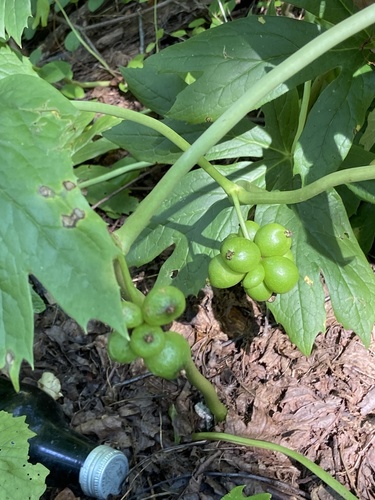
Waxy white, 6-9 petals, 1.5-2 inches (4-5 cm), solitary, nodding, partially hidden beneath the paired leaves; followed by a yellow-green egg-shaped fruit 1-2 inches (2.5-5 cm) that ripens to yellow in late summerFoliage Description
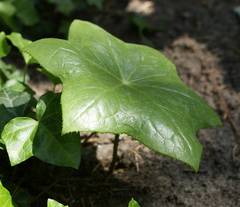
Glossy dark green, deeply palmately lobed (5-9 lobes), umbrella-like, 6-14 inches (15-35 cm) across; peltate (the petiole attaches at the center of the blade); 1 leaf on non-flowering stems, 2 leaves on flowering stems — the flower hangs in the fork between the two leavesGrowing Conditions
Sun Requirements
Requires 1-3 hours of direct sunlight daily
• Full Sun: 6+ hours of direct sunlight
• Partial Shade: 3-6 hours of direct sunlight
• Full Shade: Less than 3 hours of direct sunlight
Care & Maintenance
Care Guide
Full shade to part shade (1-3 hours). Moist humus-rich soil pH 5.5-7.0. Not drought-tolerant. Spreads by rhizomes to form colonies. Dormant by midsummer. All parts toxic except ripe yellow fruit (contains podophyllotoxin — cancer drug precursor). Cut dead foliage when it withers. Deer-resistant. Zones 3-8.Pruning
Cut dead dormant foliage when it withers in late summer (August-September). No other pruning needed. Thin rhizome spread if colonies exceed desired area.Pruning Schedule
Prune: August–September
summerfall