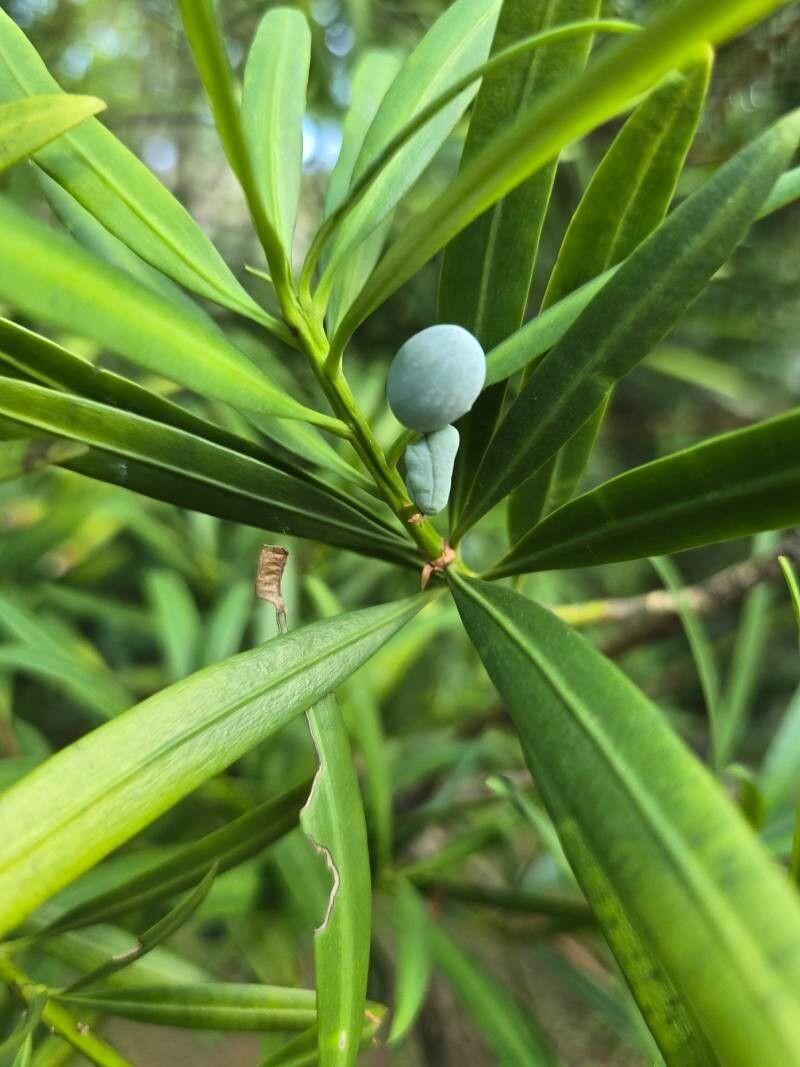
Podocarpus, Genus, spp., Multiple species,
- Genus
- Multiple species
plum pines
Mainly southern hemisphere (Australasia, southern Africa, South America) and tropical Asia
Overview
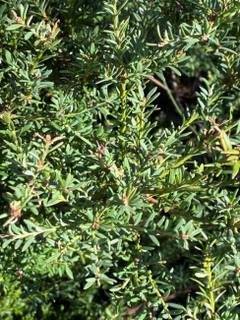
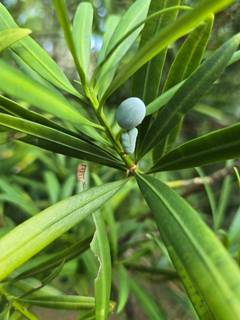
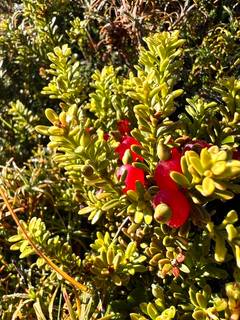
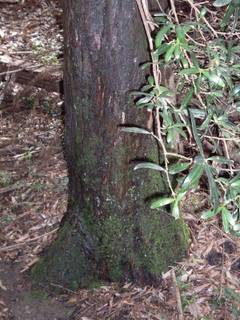
Podocarpus is a genus of about 100 evergreen coniferous species in the family Podocarpaceae, native largely to the southern hemisphere, with centres in Australasia, southern Africa, South America, and tropical Asia. Unlike northern conifers, the plants bear flat, linear to lance-shaped leaves 0.5-6 in (1-15 cm) long rather than needles, arranged spirally and coloured deep green, sometimes blue-green beneath. The genus ranges from low, dense shrubs used for hedging, such as forms of P. macrophyllus, to forest trees over 100 ft (30 m) tall. Most species are dioecious, with male and female cones on separate plants. The seed is the distinguishing feature: a single hard seed sits on a swollen, fleshy, often red or purple stalk that looks and tastes plum-like, drawing birds, though the seed itself and the foliage are toxic if eaten. Plants grow slowly, tolerate shade, salt, and clipping, and stand up to drought once established. They prefer warm, frost-free or near-frost-free conditions and well-drained, slightly acid soil. Slow growth and tolerance of shearing have made several species common as hedges, screens, and clipped specimens in warm-climate gardens.
Native Range
The genus is centred in the southern hemisphere, ranging through New Zealand, Australia, New Guinea, southern Africa, South and Central America, and the warmer parts of Asia. A few species, such as P. macrophyllus from China and Japan, extend into the northern hemisphere.Suggested Uses
Shrubby species and selections are grown as clipped hedges, screens, foundation plantings, and topiary in warm climates, and as container and indoor plants in cooler regions. Tree species are used as specimen and street trees where space allows. Tolerance of salt and shade suits coastal and courtyard plantings.How to Identify
Appearance
Size & Dimensions
Height3' - 130'
Width/Spread3' - 25'
Colors
Foliage Colors
Fall Foliage Colors
Bloom Information
As a conifer, Podocarpus produces cones rather than flowers. Pollen sheds from small cones in spring on male plants, while female plants, where present, develop seeds through summer. Each ripe seed sits on a swollen, fleshy red or purple stalk that matures in late summer and autumn and is the most visible seasonal feature of the genus.
Detailed Descriptions
Foliage Description
deep green, sometimes blue-green beneathGrowing Conditions
Sun Requirements
Requires 4-10 hours of direct sunlight daily
• Full Sun: 6+ hours of direct sunlight
• Partial Shade: 3-6 hours of direct sunlight
• Full Shade: Less than 3 hours of direct sunlight
Care & Maintenance
Care Guide
Podocarpus grows in full sun to part shade on most well-drained soils at slightly acid to neutral pH around 5.0-7.0, and tolerates sand, clay, salt, and urban conditions. Plants are slow-growing and drought-tolerant once established, though young plants need regular water through the first two seasons. Most species are damaged by hard frost and grow most strongly in warm, frost-free or mild regions. They withstand repeated clipping, which suits them to hedging and topiary. Scale, aphids, and sooty mould are the main pests, and root rot follows waterlogged soil. The seeds and foliage are toxic to people and pets if eaten.Pruning
Podocarpus tolerates regular shearing and is clipped through the growing season to shape hedges, screens, and topiary. Cuts into older green wood resprout, unlike most needle conifers, allowing fairly hard renewal in spring. Specimen plants need only the removal of dead or wayward branches.Container Growing
Suitable for container growing
Minimum container size: 5 gallons