Plumeria, Genus, spp., Multiple species,
- Genus
- Multiple species
frangipani trees
Mexico, Central America, Caribbean, and tropical South America
Overview
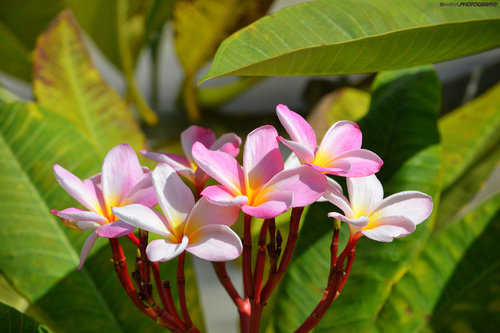
Plumeria is a genus of about seven to eleven species of deciduous shrubs and small trees in the dogbane family (Apocynaceae), native to Mexico, Central America, the Caribbean, and tropical South America. Plants grow 10-25 feet (3-8 m) tall with thick, soft-wooded branches that hold a milky latex and are tipped with clusters of large leathery leaves 8-20 inches (20-50 cm) long. The branches are blunt and sparsely forked, giving bare plants a candelabra outline after the leaves drop in the dry season or with cold. Flowers are 2-4 inches (5-10 cm) across with five overlapping waxy petals, in white, yellow, pink, red, and bicolor blends, usually with a yellow throat, and many are strongly fragrant in the evening. Bloom is carried in rounded terminal clusters through the warm months, followed by paired slender seed pods 6-12 inches (15-30 cm) long that are rarely set in cultivation. All parts contain a milky sap that can irritate skin and is poisonous if eaten. The genus is grown outdoors only in frost-free climates, USDA zones 10 to 12, and elsewhere in containers moved under cover for winter. Flowers of P. rubra and P. obtusa are widely used in leis and garlands.
Native Range
Plumeria species are native to Mexico, Central America, the Caribbean islands, and northern South America, in seasonally dry tropical forest and scrub. P. rubra and P. obtusa have been carried throughout the tropics and are now common in gardens and temple grounds across Asia and the Pacific.Suggested Uses
Plumeria is grown as a specimen shrub or small tree in tropical and subtropical gardens, in large containers on patios in cooler regions, and along streets and temple grounds in frost-free climates. The fragrant flowers are used in leis, garlands, and cut arrangements. Compact and dwarf selections are grown in pots spaced to allow air movement.How to Identify
Appearance
Size & Dimensions
Height10' - 25'
Width/Spread10' - 20'
Bloom Information
Plumeria blooms through the warm season, generally late spring to autumn, with peak flowering in summer. Evergreen species such as P. obtusa can flower nearly year-round in frost-free climates, while deciduous species flower as new growth emerges after the leafless period. Many flowers release a strong scent in the evening and at night.
Detailed Descriptions
Flower Description
white, yellow, pink, or red, often with a yellow throatFoliage Description
greenGrowing Conditions
Sun Requirements
Requires 6-12 hours of direct sunlight daily
• Full Sun: 6+ hours of direct sunlight
• Partial Shade: 3-6 hours of direct sunlight
• Full Shade: Less than 3 hours of direct sunlight
Care & Maintenance
Care Guide
Plants grow in full sun, needing at least six hours of direct light to flower freely, in coarse, sharply drained soil with a pH near 6.0 to 7.0. During active growth they take regular water and a high-phosphorus feed, but watering is reduced sharply in the cool, leafless dormant period to prevent stem rot. Temperatures below about 40 F (4 C) damage the soft wood, and frost kills unprotected plants, so container culture is used outside the tropics. The milky sap can cause skin and eye irritation and is poisonous if swallowed. Common problems include plumeria rust fungus, stem rot from overwatering in cool weather, and spider mites on plants kept indoors.Pruning
Pruning is done in early spring before growth resumes, removing crossing, damaged, or overly long branches to shape the plant and keep it compact. Cuts release copious latex and callus over before rooting readily as cuttings. Each cut branch tip typically forks into two or three new shoots that can flower the following season.Container Growing
Suitable for container growing
Minimum container size: 5 gallons