Image 1 of 2
1 / 2
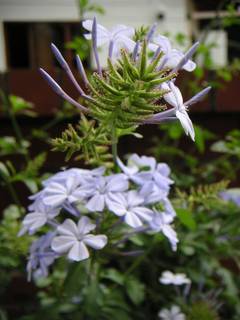
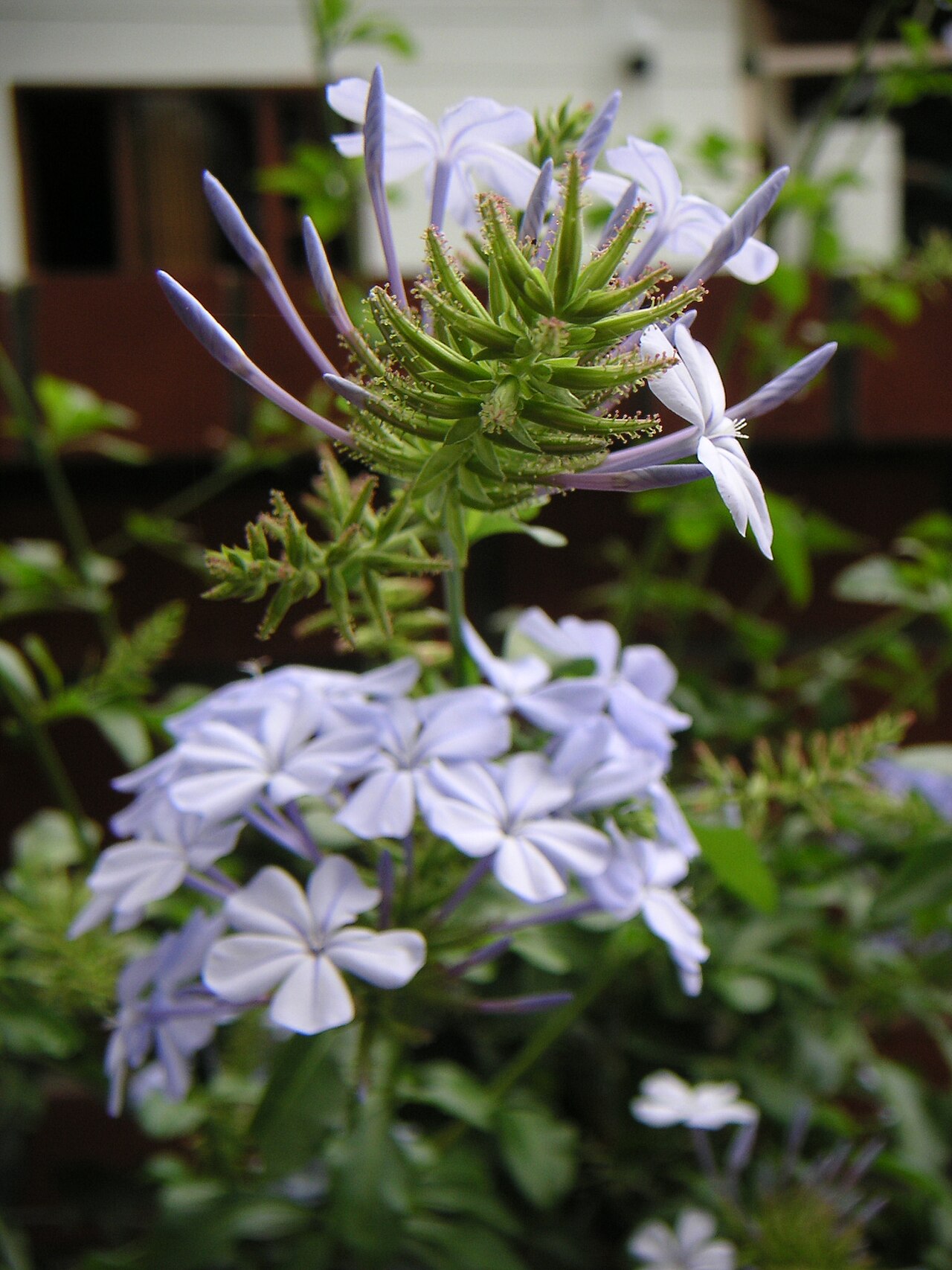
© Louise Wolff -- darina 00:04, 7 May 2005 (UTC), some rights reserved (CC-BY-SA) · Wikimedia Commons
Plumbago, Genus, spp., Multiple species,
- Genus
- Multiple species
plumbagos
Africa, southern Asia, Australia, and the warmer Americas
Overview
Plumbago is a genus of about a dozen species of shrubs, scramblers, and perennials in the family Plumbaginaceae, native to warm-temperate and tropical regions worldwide. Most species are loose, sprawling shrubs 3-10 feet (0.9-3 m) tall and wide, with thin green stems that lean on supports or mound over the ground, carrying simple oval leaves 1-3 inches (2.5-7.5 cm) long. Clusters of tubular five-lobed flowers, resembling those of phlox, open at the branch tips over a long season, sky-blue in P. auriculata, white in P. zeylanica, and red in P. indica. The tubular calyx is covered in sticky glandular hairs that cling to fur and clothing, which is how the seeds are dispersed. Most species flower through the warm months and tolerate heat and drought once established. They are frost-tender, dying back or being killed where temperatures fall much below freezing, which limits them to mild climates or container culture. The sap of some species can irritate the skin on contact. P. auriculata from South Africa is grown most often, used as a flowering shrub, informal hedge, or container plant in warm regions.
Native Range
Plumbago occurs naturally across Africa, southern Asia, Australia, and the warmer Americas. P. auriculata is native to South Africa, while P. zeylanica is widespread through the tropics of Africa and Asia.Suggested Uses
Grown as a flowering shrub, informal hedge, or scrambling cover on low walls and fences in frost-free climates. In colder areas it is used as a container plant moved under cover for winter. The long flowering season and blue blooms suit Mediterranean and coastal gardens.How to Identify
Appearance
Size & Dimensions
Height3' - 10'
Width/Spread3' - 10'
Bloom Information
In warm climates flowering continues through much of the year, peaking in the warm months from late spring to autumn. Each cluster opens its tubular flowers in succession over several weeks. Flowering slows or stops during cool weather and resumes as temperatures rise.
Detailed Descriptions
Flower Description
sky-blue, white, or redFoliage Description
greenGrowing Conditions
Sun Requirements
Requires 6-10 hours of direct sunlight daily
• Full Sun: 6+ hours of direct sunlight
• Partial Shade: 3-6 hours of direct sunlight
• Full Shade: Less than 3 hours of direct sunlight
Care & Maintenance
Care Guide
Plants grow in full sun to light shade in well-drained soil and flower most freely with heat and ample sun. They tolerate drought once established but bloom better with occasional summer water. P. auriculata is hardy only to about USDA zone 9, with top growth killed by frost, so in colder areas it is grown in containers and overwintered under cover. Pinching the shoot tips of young plants encourages branching and more flowering wood. The sap can irritate sensitive skin during pruning. Plants are fast-growing and may need cutting back to keep them within bounds.Pruning
Cut back hard in late winter or early spring to remove frost-damaged growth and to control the sprawling habit. Shorten long shoots through the growing season to keep a dense shape, since flowers form on new growth. Plants tolerate severe pruning and regrow quickly.Container Growing
Suitable for container growing
Minimum container size: 5 gallons