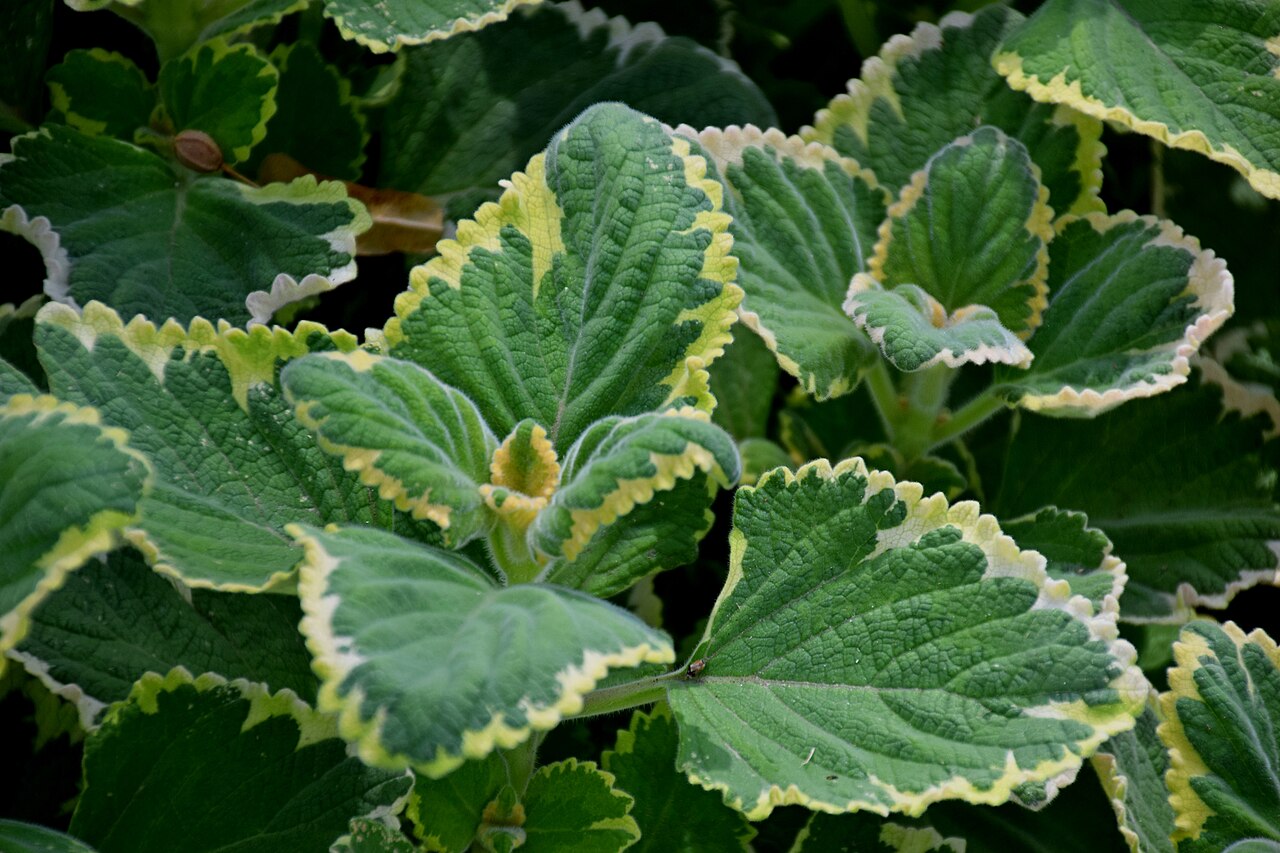
Plectranthus, Genus, spp., Multiple species,
- Genus
- Multiple species
spurflowers
Old World tropics, centered in Africa
Overview
Plectranthus is a genus of about 70 species of aromatic perennials, subshrubs, and trailing herbs in the mint family (Lamiaceae), native mainly to Africa, Asia, Australia, and the Pacific. Many succulent and tender-foliage species once grouped here are now placed in Coleus. Plants range from trailing stems a few inches high to upright subshrubs 1–6 feet (0.3–1.8 m) tall, with opposite, often fleshy or velvety leaves 1–5 inches (2.5–13 cm) long that are scented when bruised. Stems are square, and many root where they touch the soil. Two-lipped tubular flowers, 0.3–0.8 inch (8–20 mm) long, in blue, lavender, white, or pink, are carried in upright spikes above the foliage, mostly in late summer and fall. Several species are grown for foliage rather than flowers, including the trailing Swedish ivy and the scented Cuban oregano. Most are frost-tender and grown as houseplants, container plants, or summer bedding outside the tropics.
Native Range
Native to the Old World tropics and subtropics, with the greatest diversity in southern and eastern Africa, and extending into Asia, Australia, and the Pacific islands. Grows in woodland, rocky slopes, and forest margins, often in shade and well-drained ground, from sea level to about 8,000 feet (2,400 m).Suggested Uses
Grown as houseplants, hanging-basket and container plants, ground covers, and summer bedding, spaced 12–24 inches (30–60 cm) apart. Trailing species such as Swedish ivy are used in baskets, while P. amboinicus (Cuban oregano) is grown as a culinary herb. In frost-free gardens shrubby species are used as fall-flowering border plants.How to Identify
Appearance
Size & Dimensions
Height4" - 6'
Width/Spread1' - 4'
Bloom Information
Flowering comes mainly in late summer and fall, often triggered by shortening days, with bloom continuing into winter in frost-free and indoor settings. Spikes open from the base upward over 3–6 weeks. Foliage-grown species flower sparsely or are pinched to stay leafy.
Detailed Descriptions
Flower Description
blue, lavender, white, to pinkFoliage Description
green, often gray-green or purple beneathGrowing Conditions
Sun Requirements
Requires 3-7 hours of direct sunlight daily
• Full Sun: 6+ hours of direct sunlight
• Partial Shade: 3-6 hours of direct sunlight
• Full Shade: Less than 3 hours of direct sunlight
Care & Maintenance
Care Guide
Grows in part shade to full sun and moist, well-drained soil with moderate water, tolerating drought once established in the fleshier species. Plants are frost-tender and damaged below about 40°F (4°C), so they are overwintered indoors outside the tropics. Stems root readily at the nodes and from cuttings, making propagation simple. Overwatering causes stem and root rot, especially in winter. Mealybug, whitefly, and aphid occur on indoor plants. Pinching the shoots keeps growth bushy and delays flowering in foliage types.Pruning
Pinch growing tips through the season to keep plants compact and well-branched. Cut back leggy stems in spring to renew growth, using the removed shoots as cuttings. Removing spent flower spikes tidies the plant and can prompt further bloom.Container Growing
Suitable for container growing
Minimum container size: 2 gallons
