Plectocephalus, Genus, americanus, Species,
- Genus & species
American basketflower
South-central United States and northern Mexico
SunFull Sun
Overview
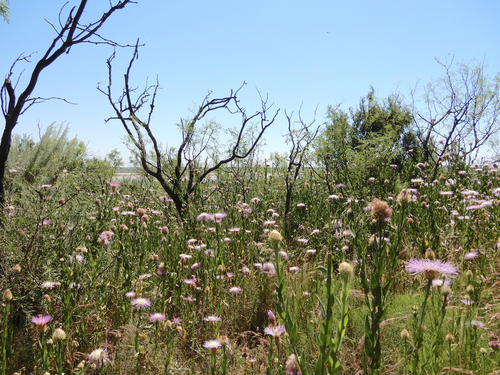
Plectocephalus americanus, American basketflower, is an annual in the aster family grown for its large lavender-pink flower heads set over a basket-like cage of straw-colored, fringed bracts. The erect, branching stems reach 2-6 feet (0.6-1.8 m), and are topped with thistle-like heads 3-5 inches (8-13 cm) across; the outer florets flare and notch like a frill while the center is a paler cream-pink dome. Despite the resemblance to thistles, the stems and leaves are smooth and spineless, the leaves lance-shaped and 2-4 inches (5-10 cm) long. The heads carry a light honey scent and open from late spring into summer, drawing many bees and butterflies. It is native to open prairies, plains, and disturbed ground in the south-central United States and northern Mexico, on dry to average soils. Being annual, it completes its life in a single season and depends on reseeding to return, and the tall stems can lean or flop in rich soil or wind. Plectocephalus americanus fills annual borders, meadows, and cut-flower rows, where the heads cut and dry readily, though plants need full sun and room and will not persist as a permanent clump.
Native Range
Plectocephalus americanus is native to the south-central United States and northern Mexico, centered on Texas, Oklahoma, Kansas, and adjacent states. It grows in open prairies, plains, roadsides, and disturbed ground on dry to moderately moist soil.Suggested Uses
Plectocephalus americanus is used in annual and native borders, wildflower meadows, pollinator plantings, and cut-flower gardens. The heads draw bees and butterflies and can be cut fresh or dried.How to Identify
Appearance
Size & Dimensions
Height2' - 6'
Width/Spread1' - 2'
Bloom Information
Flowering runs from late spring into midsummer, often May to July, with a long succession of heads on a branched plant. Each head lasts several days and is followed by a tuft of bristly seed. Bloom is heaviest where plants get full sun and even moisture early in the season.
Detailed Descriptions
Flower Description
lavender-pink with cream centerFoliage Description
greenGrowing Conditions
Sun Requirements
Requires 6-10 hours of direct sunlight daily
• Full Sun: 6+ hours of direct sunlight
• Partial Shade: 3-6 hours of direct sunlight
• Full Shade: Less than 3 hours of direct sunlight
Water & Climate
Water Needs
Drought Tolerance
Drought tolerant when established
Care & Maintenance
Care Guide
Grow Plectocephalus americanus in full sun in well-drained soil of average to low fertility, with a pH of about 6.0 to 7.5. Sow seed directly in fall or early spring where the plants are to grow, since the taproot does not transplant well. Thin seedlings to stand about 12-18 inches (30-45 cm) apart so the stems support each other. It tolerates heat and drought once established and needs little water, while rich soil produces taller, weaker stems that may lean. Letting some heads set seed keeps the planting returning each year.Pruning
Deadhead spent flowers to extend bloom and limit self-seeding, or leave the last heads to drop seed for next year. Pull or cut declining plants at the end of the season. No structural pruning is needed on this annual.Toxicity
Non-toxicPlanting Guide
Planting Methods & Timing
Planting Method
direct sow
Direct Sow Timing
fall or early spring
Days to Maturity
80–110 days
Plant Spacing
15 inches