Platysace, Genus, lanceolata, Species,
- Genus & species
shrubby platysace
Overview
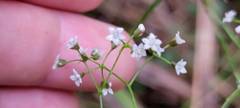
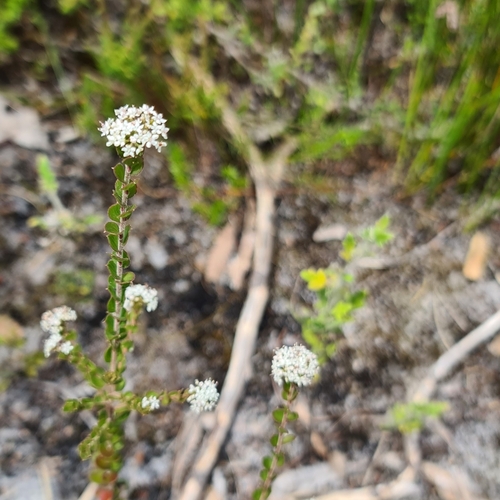
Platysace lanceolata is an erect to straggling evergreen shrub 0.5-1.5 m (20-59 in) tall in the carrot family, with slender, wiry stems. The leaves are variable, narrow to lance-shaped or elliptic, 1-4 cm (0.4-1.6 in) long, thick-textured, and sometimes toothed near the tip. Small white flowers are grouped into rounded compound umbels 1-3 cm (0.4-1.2 in) across at the stem tips, opening mainly in spring and summer and drawing a range of insects. Tiny dry, ribbed fruits that split into two follow flowering. It grows on sandstone outcrops, in heath, and in dry sclerophyll forest on shallow, sandy, well-drained soils, often in exposed coastal and cliff-top positions. The growth habit is open and somewhat sprawling rather than dense, so it reads as an informal, twiggy shrub, and it is short-lived on heavier, moister soils.
Native Range
Native to eastern Australia, occurring along the coast and ranges of New South Wales and into southern Queensland and eastern Victoria.Suggested Uses
Used in native, coastal, and rockery gardens on sandy or sandstone soils. Suited to low-water and exposed plantings where an informal, twiggy shrub is wanted. Also grown for cut stems, as the umbels and foliage last well.How to Identify
Appearance
Size & Dimensions
Height1'8" - 4'11"
Width/Spread1'8" - 3'11"
Bloom Information
Detailed Descriptions
Foliage Description
greenGrowing Conditions
Sun Requirements
Requires 5-9 hours of direct sunlight daily
• Full Sun: 6+ hours of direct sunlight
• Partial Shade: 3-6 hours of direct sunlight
• Full Shade: Less than 3 hours of direct sunlight
Care & Maintenance
Care Guide
Grows in full sun to light shade on shallow, free-draining sandy or gravelly soils with an acidic to neutral pH of about 5.0-7.0. It is highly drought-tolerant once established and well suited to exposed, low-rainfall positions. Heavy, wet, or rich soils shorten its life and cause soft, floppy growth. Light watering aids establishment, after which little additional water is needed. It tolerates light to moderate frost. An open position with good air movement reduces fungal problems on the foliage.Pruning
Light pruning after flowering keeps the open habit tidier and encourages branching. Leggy or straggly stems can be cut back into leafy wood to maintain shape. The dry seed heads can be removed or left for self-seeding.Pruning Schedule
Prune: February–March
summerfall