Platycerium, Genus, spp., Multiple species,
- Genus
- Multiple species
staghorn ferns
Tropical Africa, SE Asia, Australia, South America
Overview
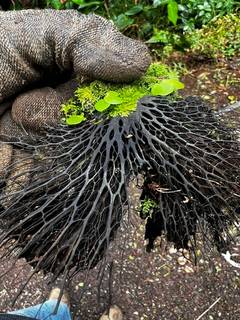
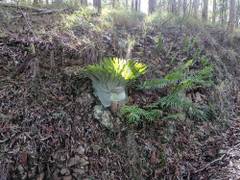
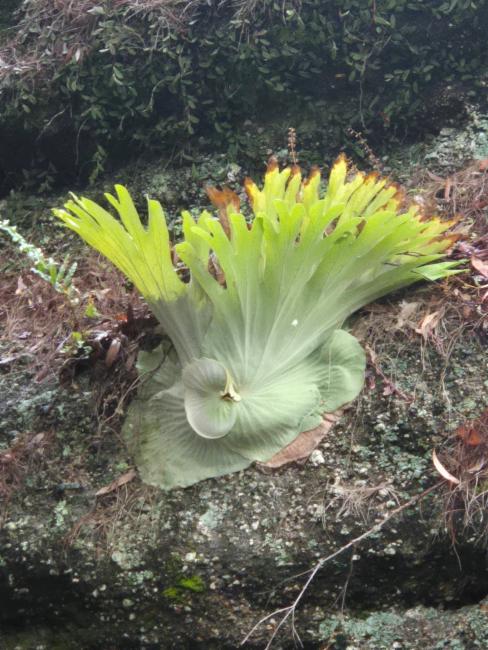
Platycerium is a genus of about 18 species of epiphytic ferns in the family Polypodiaceae, known as staghorn or elkhorn ferns for their forked, antler-shaped fronds. They are native to tropical and subtropical regions of Africa, Southeast Asia, Australia, and South America, where they grow on tree trunks and branches. Each plant bears two kinds of fronds. Flat, rounded sterile fronds, called shield or basal fronds, press against the support, clasp the root mass, and catch falling leaves and water; they age from green to papery brown but remain in place. Above them rise the fertile fronds, grey-green and covered in a soft white down, which fork repeatedly into strap-like lobes 1 to 4 feet (30 to 120 cm) long that carry brown patches of spore cases on their undersides. Plants have no functional ground roots and draw moisture and nutrients from rain, humidity, and trapped debris. The genus needs warmth, humidity, and bright, filtered light, and most species tolerate no frost. P. bifurcatum and P. superbum are widely grown, usually mounted on boards or grown in baskets. The basal fronds protect the root mass and stay on the plant even after they turn brown.
Native Range
Platycerium is native to tropical and subtropical Africa, Southeast Asia, northern Australia, and South America. Plants grow as epiphytes on trees in humid forests, with P. bifurcatum extending into cooler subtropical parts of eastern Australia.Suggested Uses
Platycerium is grown as a mounted wall plant indoors and in greenhouses and conservatories, and in frost-free climates fixed to trees or grown in hanging baskets. The forked fronds make it a sculptural foliage plant for shaded, humid spots.How to Identify
Appearance
Size & Dimensions
Height1' - 4'
Width/Spread1' - 4'
Bloom Information
As a fern, Platycerium does not flower. It reproduces by spores borne in brown patches on the undersides or tips of the fertile fronds, released mainly in warm, humid weather. New fronds emerge through the warmer months.
Detailed Descriptions
Foliage Description
Grey-green fertile fronds; brown basal shieldsGrowing Conditions
Sun Requirements
Needs bright indirect light. Keep it out of direct sun, which can scorch the leaves.
• Bright indirect light: a bright spot near a window, with no direct sun on the leaves
Care & Maintenance
Care Guide
Platycerium grows mounted on a board or in a basket with a pad of sphagnum or coir around its roots rather than in a pot of soil. It needs bright, indirect light, warmth above 50 F (10 C), and humidity, with most species damaged by frost. Watering is done by soaking the mount or root pad and letting it approach dryness before the next soak, as constant wetness rots the basal fronds. The soft white down on the fronds reduces water loss. Light feeding during the growing season supports the large fronds. P. bifurcatum tolerates cooler, drier conditions than most and survives brief dips near freezing in sheltered spots.Pruning
Platycerium needs little pruning. Browned or dead fertile fronds are trimmed at the base, while the basal shield fronds are left in place even when brown because they shelter the roots. Pups can be separated from a clump to start new plants.Container Growing
Suitable for container growing
Minimum container size: 1 gallons