Image 1 of 7
Plant Reference
1 / 7
Platycerium, Genus, bifurcatum, Species,
- Genus & species
staghorn fern
Australia, Southeast Asia, and Polynesia; epiphytic on tree trunks in rainforest
Overview
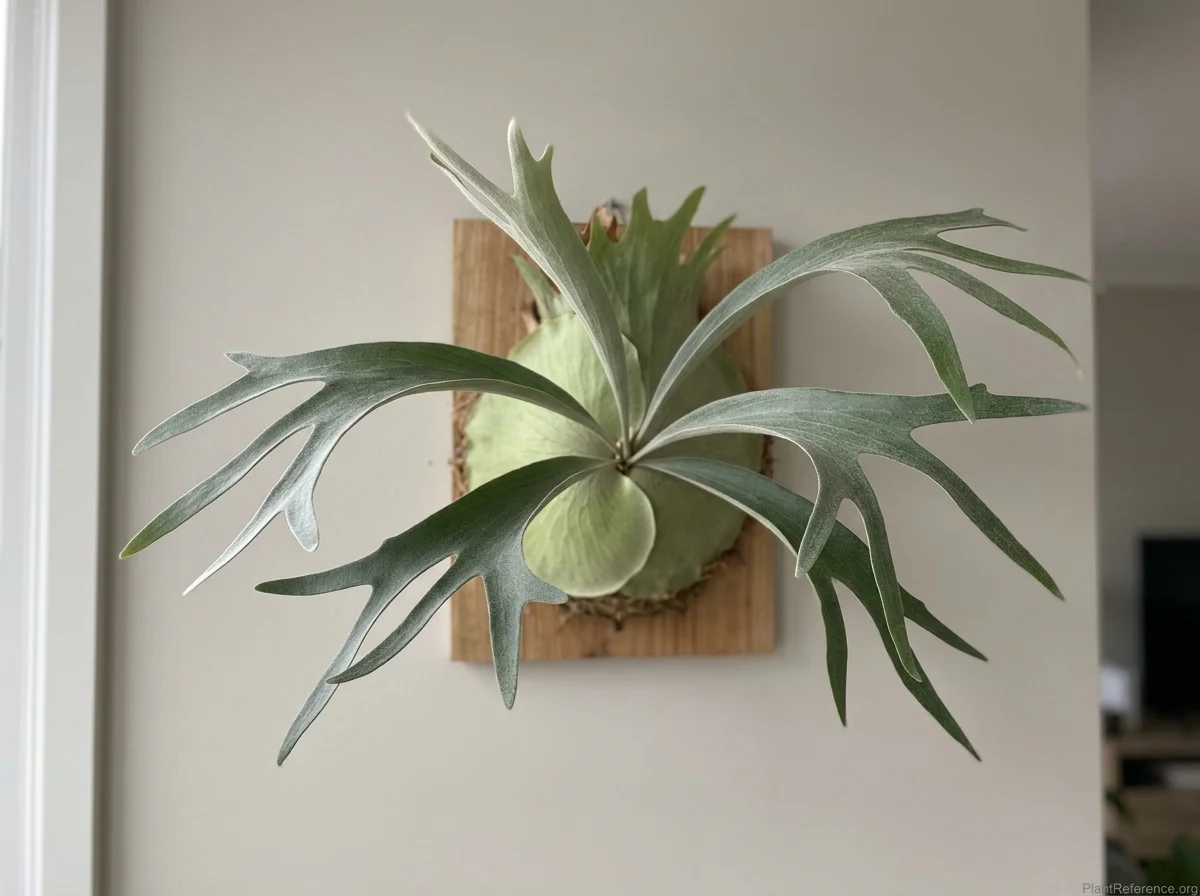
Platycerium bifurcatum is the staghorn fern, growing 24-36 inches (60-90 cm) when mounted. The species produces two distinct frond types: (1) gray-green, thick, forked (bifurcating) fertile fronds that project outward, resembling deer antlers (the species name 'bifurcatum' means 'twice-forked'); and (2) flat, round basal shield fronds that press against the mounting surface, collecting water and organic debris. Shield fronds turn brown as they age and are replaced by new green shields growing over them; the brown shields are living tissue and must not be removed. Epiphytic: grows on tree trunks in nature, not in soil. Typically mounted on wooden boards, bark slabs, or hung in wire baskets lined with sphagnum moss. Watered by soaking the entire mount in a bucket or running under a shower for several minutes, then allowed to drain completely. More drought-tolerant than thin-fronded ferns; the thick fertile fronds and shield structure reduce water loss. Non-toxic to cats and dogs. Native to Australia, Southeast Asia, and Polynesia. The mounting requirement and two-frond-type structure separate the species from other commonly grown ferns.
Native Range
Platycerium bifurcatum is native to Australia, Southeast Asia, and Polynesia; epiphytic.Suggested Uses
Mounted on wooden boards, bark slabs, or in wire baskets with sphagnum moss. Hung on walls or from ceiling brackets in bright indirect light. Not grown in standard pots with soil. Suited to covered patios, bathrooms, and well-lit interior walls.How to Identify
Appearance
Size & Dimensions
Height2' - 3'
Width/Spread2' - 3'
Bloom Information
Ferns do not produce flowers. Spore patches (sori) form as brown fuzzy areas on the undersides of fertile frond tips.
Detailed Descriptions
Foliage Description
Gray-green; thick forked (bifurcating) fertile fronds resembling antlers; flat round brown basal shield fronds pressed against the mounting surfaceGrowing Conditions
Sun Requirements
Requires 4-6 hours of direct sunlight daily
• Full Sun: 6+ hours of direct sunlight
• Partial Shade: 3-6 hours of direct sunlight
• Full Shade: Less than 3 hours of direct sunlight