Pinguicula, Genus, spp., Multiple species,
- Genus
- Multiple species
butterwort
Northern Hemisphere and montane Latin America
SunFull Sun – Part Shade
WaterHigh
Overview
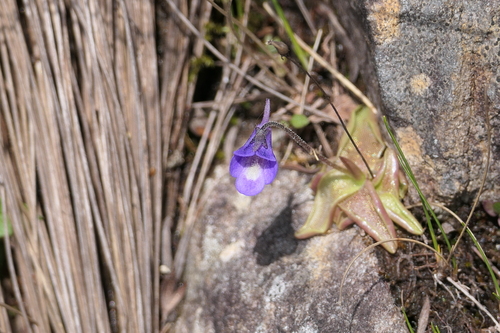
Pinguicula is a genus of about eighty carnivorous perennial herbs in the bladderwort family Lentibulariaceae, found in wet, nutrient-poor habitats across the Northern Hemisphere and in the mountains of Central and South America. Plants form low rosettes 1-6 inches (2.5-15 cm) across of soft, yellow-green leaves whose upper surfaces are coated with sticky glands; small insects that land are held fast and digested, supplementing the plant in soils low in nutrients and giving rise to the common name butterwort. Single flowers are carried above the rosette on slender leafless stalks 2-12 inches (5-30 cm) tall; each is two-lipped with a backward-pointing spur, in shades of violet, purple, pink, white, or yellow. Bloom comes mainly in spring and summer. Temperate species die back to a resting bud in winter, while warm-climate Mexican species form a separate succulent, non-carnivorous rosette in the dry season. Pinguicula grows on bogs, dripping rocks, fens, and seepage slopes, and its need for constant moisture, low nutrients, and bright light makes it intolerant of ordinary potting soil and of mineral-rich tap water.
Native Range
Pinguicula occurs across North America, Europe, and northern Asia, and through the mountains of Mexico, Central America, and the northern Andes. It grows in bogs, fens, wet meadows, and on continually moist or dripping rock faces.Suggested Uses
Grown in bog gardens, terrariums, and shallow trays among other carnivorous plants, and on moist tufa or rock in cool greenhouses. Used as a curiosity and for catching small flying insects indoors.How to Identify
Appearance
Size & Dimensions
Height2" - 1'
Width/Spread1" - 6"
Bloom Information
Flowering occurs mainly in spring and early summer, with each rosette producing one to several stalks bearing a single flower. Warm-climate species can flower across a longer season. Flowers last several days, and dry capsules follow, releasing many small seeds.
Detailed Descriptions
Flower Description
Violet, pink, white, or yellowFoliage Description
Yellow-greenGrowing Conditions
Sun Requirements
Requires 3-8 hours of direct sunlight daily
• Full Sun: 6+ hours of direct sunlight
• Partial Shade: 3-6 hours of direct sunlight
• Full Shade: Less than 3 hours of direct sunlight
Water & Climate
Water Needs
Care & Maintenance
Care Guide
Grow Pinguicula in bright light to part shade in a constantly moist, nutrient-poor medium such as peat or its substitutes mixed with sand or perlite, or on damp rock. Water with rain, distilled, or reverse-osmosis water, as the minerals in tap water and fertilizers harm the roots. Stand pots in shallow trays of pure water during active growth, easing off as temperate species form their winter resting buds. Temperate species need a cool, just-moist winter dormancy, while Mexican species are kept frost-free and drier in winter during their succulent phase. Insects caught on the leaves supply nutrients, so feeding is unnecessary. None of the species tolerate drying out while in growth.Pruning
Pick off dead leaves and spent flower stalks to limit mold on the sticky rosettes. No cutting back is required, as the plant renews its rosette naturally. Old leaves are left in place on temperate species as they form their winter buds.Container Growing
Suitable for container growing
Minimum container size: 1 gallons