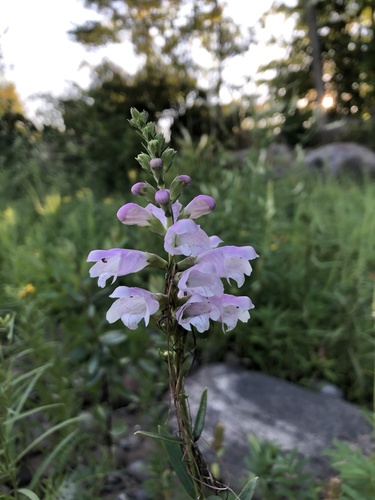
Physostegia, Genus, spp., Multiple species,
- Genus
- Multiple species
dragonheads and obedient plants
Overview
Physostegia is a genus of about 12 species of upright herbaceous perennials in the mint family, Lamiaceae, native to North America and known as obedient plants or false dragonheads. Plants grow from spreading rhizomes into clumps of square stems 2 to 4 feet (60 to 120 cm) tall, clothed in narrow, toothed, paired leaves. In late summer and autumn the stems carry dense, upright spikes of tubular, two-lipped flowers in pink, rosy purple, lilac, or white. The common name obedient plant comes from the flowers: when pushed to one side on their hinged stalks, they stay in the new position for a time rather than springing back. P. virginiana is the species usually grown and has given rise to many garden cultivars, including compact and white forms. Plants grow easily in moist, sunny sites and spread readily by underground runners, sometimes forming wide colonies that crowd neighbours. The flowers draw bees, butterflies, and hummingbirds, and the spikes are cut for arrangements. Most species are cold-hardy and die back to the ground in winter. The genus is grown for its late-season flower spikes, though its spreading roots make it better in robust borders and wild plantings than in tight, formal beds.
Native Range
Physostegia is native to North America, ranging across much of the United States and into Canada and northern Mexico. P. virginiana grows over a wide area of eastern and central North America in moist meadows, prairies, stream banks, and damp woodland edges. The plants are typically found on moist to wet ground.Suggested Uses
Obedient plant is grown in late-season borders, prairie and meadow plantings, and damp or rain gardens, where the upright pink to white spikes extend the flowering season into autumn. The flowers draw bees, butterflies, and hummingbirds and are cut for the vase. Its spreading habit suits naturalistic and robust plantings rather than small, tidy borders.How to Identify
Appearance
Size & Dimensions
Height2' - 4'
Width/Spread2' - 3'
Bloom Information
Flowering comes in late summer and autumn, roughly August to October, when most other perennials are fading. The spikes open from the base upward over several weeks. Removing spent spikes can prompt some side branching and reduces self-seeding, and the flowers are followed by small nutlets.
Detailed Descriptions
Flower Description
Pink, rosy purple, lilac, or whiteFoliage Description
GreenGrowing Conditions
Sun Requirements
Requires 5-9 hours of direct sunlight daily
• Full Sun: 6+ hours of direct sunlight
• Partial Shade: 3-6 hours of direct sunlight
• Full Shade: Less than 3 hours of direct sunlight
Care & Maintenance
Care Guide
Physostegia grows in full sun to part shade in moist, fertile soil and tolerates damp and seasonally wet ground better than most border perennials. Plants spread by rhizomes and grow most strongly in rich, moist conditions, where they can become invasive and may need a barrier or regular division to contain. A soil pH from about 5.5 to 7.0 suits them. In dry or lean soil they stay more compact and spread less. They are cold-hardy, surviving in roughly USDA zones 3 to 9, and die back over winter. Tall stems may flop in shade or rich ground and can be staked or cut back early to keep them upright.Pruning
Cutting the stems back by about a third in late spring produces shorter, sturdier, self-supporting plants. Spent flower spikes are removed after bloom to limit self-seeding, and the dead top growth is cleared in late autumn or winter. Lifting and dividing clumps every few years renews them and controls their spread.Container Growing
Suitable for container growing
Minimum container size: 3 gallons
