Phyllota, Genus, phylicoides, Species,
- Genus & species
common phyllota
Overview
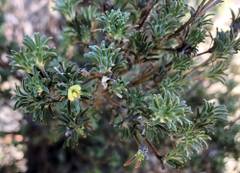
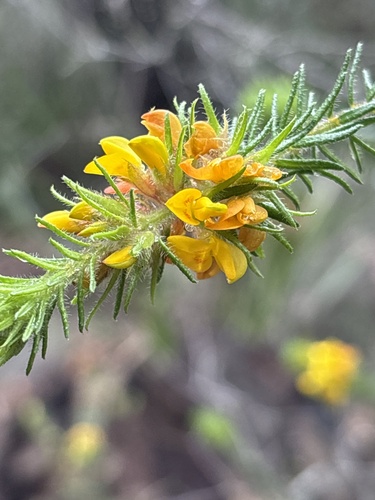
Phyllota phylicoides is an evergreen shrub in the Fabaceae family growing 1.5-5 feet (0.5-1.5 m) tall with an upright, wiry habit. The narrow heath-like leaves are 0.2-0.6 inch (5-15 mm) long with margins rolled under, crowded along the stems and slightly rough to the touch. Yellow pea flowers about 0.4 inch (1 cm) across, marked with red to brown on the standard petal, are clustered toward the stem tips from late autumn through spring. Small hairy pods follow, each holding one or two seeds. Growth is moderate, with plants reaching mature size in 2-3 years. As a legume it fixes nitrogen through root nodules and grows on low-fertility soils. The plant is generally short-lived, persisting 6-10 years, and lower stems become bare and woody with age.
Native Range
Native to eastern Australia, mainly in New South Wales with extensions into Queensland. Grows in heathland and dry sclerophyll woodland on shallow, sandy soils derived from sandstone.Suggested Uses
Planted in native and habitat gardens, rockeries, and low-water plantings on sandy soils, spaced 18-30 inches (45-75 cm) apart. The winter and spring flowers draw native bees and other insects. The short lifespan limits its use where long-term permanence is needed.How to Identify
Appearance
Size & Dimensions
Height1'6" - 5'
Width/Spread1'6" - 3'
Bloom Information
Detailed Descriptions
Flower Description
yellow with red markingsFoliage Description
greenGrowing Conditions
Sun Requirements
Requires 5-10 hours of direct sunlight daily
• Full Sun: 6+ hours of direct sunlight
• Partial Shade: 3-6 hours of direct sunlight
• Full Shade: Less than 3 hours of direct sunlight
Care & Maintenance
Care Guide
Grows in full sun to light shade on shallow, free-draining sandy soil of low fertility. Water through the first summer after planting; established plants tolerate dry periods of several weeks. As a legume it forms nitrogen-fixing root nodules and needs no added fertilizer. Root rot from Phytophthora cinnamomi develops on poorly drained sites and causes wilting and dieback. Plants are short-lived and lower stems become bare with age.Pruning
Light tip pruning after flowering keeps the shrub dense and slows the bare, woody growth at the base. Cutting into old leafless wood regenerates slowly. Spent flower clusters need no removal for plant health.Pruning Schedule
Prune: October–November
late spring
Container Growing
Suitable for container growing
Minimum container size: 3 gallons