Phyllota, Genus, spp., Multiple species,
- Genus
- Multiple species
phyllota
Overview
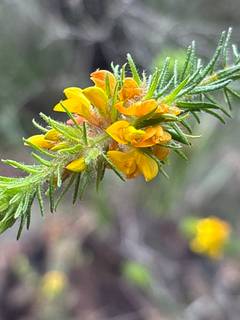
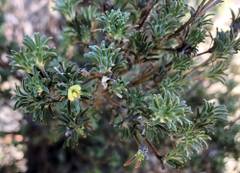
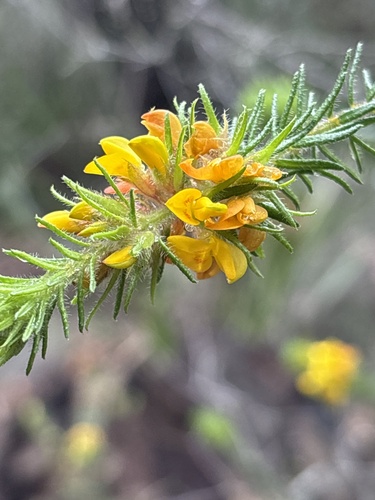
Phyllota is a genus of about ten evergreen shrubs in the pea family Fabaceae, endemic to Australia, where they grow in heath, sandy woodland, and open forest. Plants are wiry, erect to spreading shrubs 12-79 inches (30-200 cm) tall, with small, narrow, often crowded leaves whose margins roll under, giving the stems a heath-like look. The pea-shaped flowers are yellow with reddish or brownish markings on the back of the upright standard petal, in the yellow-and-red pattern common to many Australian peas, and are borne singly in the leaf axils or clustered toward the branch tips. Flowering occurs mainly in late winter and spring, followed by small, hairy pods each holding one or two seeds. Phyllota grows on nutrient-poor, sandy or gravelly acidic soils with sharp drainage, conditions typical of Australian heathland, and like many members of the family it fixes nitrogen through root nodules. The genus needs free drainage and low soil phosphorus, and it is short-lived and prone to root rot on heavy or fertile soils, which limits garden use to native plantings and freely drained banks.
Native Range
Phyllota is endemic to Australia, occurring chiefly in New South Wales, Victoria, Queensland, and South Australia. It grows in coastal and inland heath, sandy woodland, and dry sclerophyll forest on acidic soils.Suggested Uses
Used in Australian native gardens, heath and rockery plantings, and on dry, sharply drained banks. Suited to low-water and habitat plantings on sandy acidic soils.How to Identify
Appearance
Size & Dimensions
Height1' - 6'7"
Width/Spread1' - 5'
Bloom Information
Flowering is concentrated in late winter and spring, roughly August through November in its native range, when the stems are lined with yellow-and-red pea flowers. Bloom lasts several weeks. Small hairy pods ripen through late spring and early summer.
Detailed Descriptions
Flower Description
Yellow with red markingsFoliage Description
GreenGrowing Conditions
Sun Requirements
Requires 6-10 hours of direct sunlight daily
• Full Sun: 6+ hours of direct sunlight
• Partial Shade: 3-6 hours of direct sunlight
• Full Shade: Less than 3 hours of direct sunlight
Care & Maintenance
Care Guide
Grow Phyllota in full sun on light, sandy or gravelly, sharply drained acidic soil low in phosphorus, mirroring its heathland habitat. Water to establish, after which the genus tolerates dry periods and resents prolonged wetness and phosphorus-rich fertilizers. Heavy clay and poorly drained sites bring on root rot quickly. Plants suit raised or sloping ground and rockeries where water drains away rapidly. A light tip prune after flowering keeps growth dense, and a low-phosphorus native fertilizer can be used sparingly if at all. Most species tolerate light frost but are damaged by hard freezes.Pruning
Tip prune lightly after flowering to encourage branching and a compact habit. Cutting hard into old leafless wood often fails to reshoot, so pruning stays within green growth. No heavy pruning is needed.Container Growing
Suitable for container growing
Minimum container size: 3 gallons