Image 1 of 3
1 / 3
Photinia × fraseri
red tip photinia
Hybrid of garden origin — {P. glabra} (Japan) × {P. serratifolia} (China); first noted in Birmingham, Alabama, USA
Overview
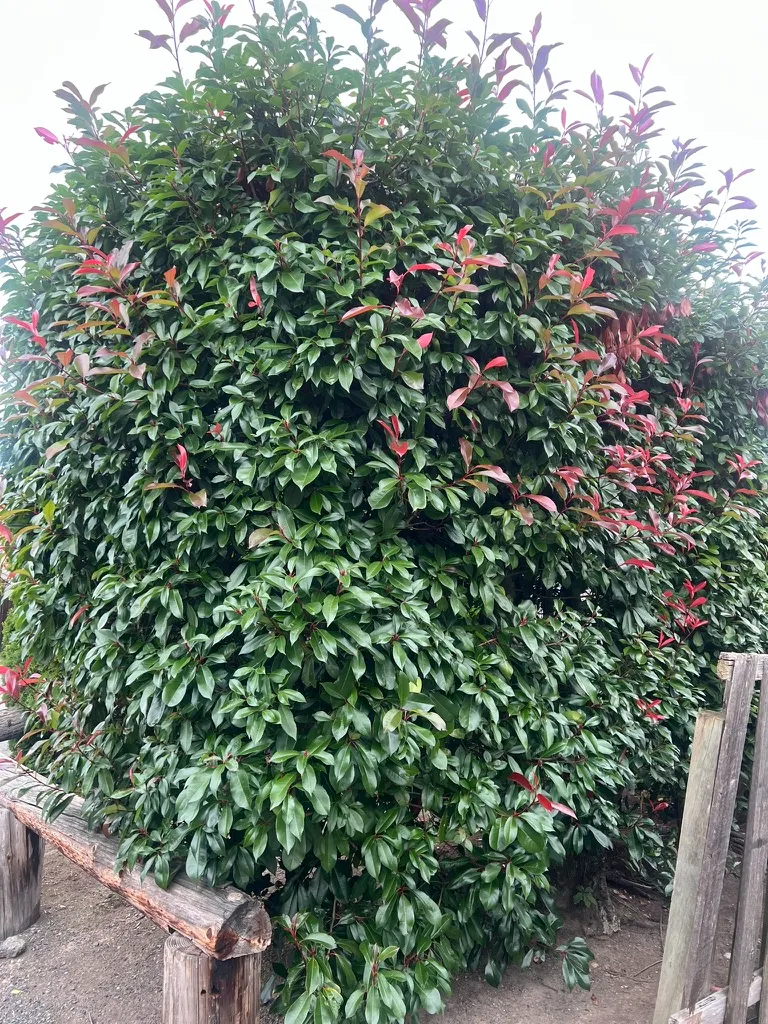
Photinia x fraseri is red tip photinia (Fraser photinia), an upright evergreen shrub growing 10-15 feet (3-4.5 m) tall and 8-12 feet (2.4-3.6 m) wide. White flowers in flat-topped corymbs 3-6 inches (7-15 cm) in March-April (3 weeks). Brilliant red to copper-red new growth — each flush emerges vivid red before maturing to glossy dark green; repeated shearing produces multiple red flushes from spring through fall. In Rosaceae spp.. A hybrid: P. glabra × P. serratifolia. First noted in Birmingham, Alabama. Formerly the most popular evergreen hedge in the SE US. Susceptible to Entomosporium leaf spot (Entomosporium mespili) — circular red-brown spots and defoliation in warm humid climates. This Entomosporium susceptibility is the primary limitation and caused massive decline in plantings. Worst with overhead irrigation and poor air circulation. Not deer-resistant. Drought-tolerant once established. Non-toxic. Zones 7-9. Full sun (6+ hours). Growth rate is fast.
Native Range
Hybrid of garden origin — P. glabra (Japan) × P. serratifolia (China). First noted in Birmingham, Alabama, USA.Suggested Uses
Grown as an evergreen formal hedge, screen, or specimen, and in containers of at least 10 gallons (38 L), spaced 8-12 feet (2.4-3.6 m). Red new growth. Susceptible to Entomosporium. Not deer-resistant. Non-toxic. Zones 7-9.How to Identify
Appearance
Size & Dimensions
Height10' - 15'
Width/Spread8' - 12'
Reaches mature size in approximately 5 years
Bloom Information
Mid spring (March-April). White 5-petaled flowers 0.3 inch (8 mm) in flat-topped corymbs 3-6 inches (7-15 cm). Strong odor. 3 weeks. Often sheared off before bloom. Bee-visited.
Detailed Descriptions
Flower Description
White, small, 0.3 inch (8 mm), 5-petaled, in flat-topped corymbs 3-6 inches (7-15 cm); March-April; the flowers have a strong odor (described as unpleasant by some); often sheared off before bloom to promote more red new growthFoliage Description
Brilliant red to copper-red new growth (the primary feature — each flush of growth emerges vivid red before maturing to glossy dark green); glossy dark green mature, oblong to obovate, 2-4 inches (5-10 cm); repeated shearing produces multiple flushes of red new growth from spring through fallGrowing Conditions
Sun Requirements
Requires 6-10 hours of direct sunlight daily
• Full Sun: 6+ hours of direct sunlight
• Partial Shade: 3-6 hours of direct sunlight
• Full Shade: Less than 3 hours of direct sunlight
Care & Maintenance
Care Guide
Full sun (6-10 hours). Well-drained soil pH 5.5-7.5. Drought-tolerant once established. Susceptible to Entomosporium leaf spot — avoid overhead irrigation, improve air circulation, remove fallen infected leaves. Shear tips after each red flush matures for continuous red display. Not deer-resistant. Non-toxic. Zones 7-9.Pruning
Shear tips after each flush of red new growth matures to green (April-July) to stimulate another red flush. The repeated shearing is the standard maintenance. Tolerates hard renovation pruning to 12-18 inches (30-45 cm).Pruning Schedule
J
F
M
A
M
J
J
A
S
O
N
D
early springlate springsummer
Container Growing
✓ Suitable for container growing
Minimum container size: 10 gallons