Phormium, Genus, tenax, Species,
- Genus & species
New Zealand flax
New Zealand (North and South Islands) and Norfolk Island; coastal flats, swamp margins, and lowland forests at low elevations
Overview
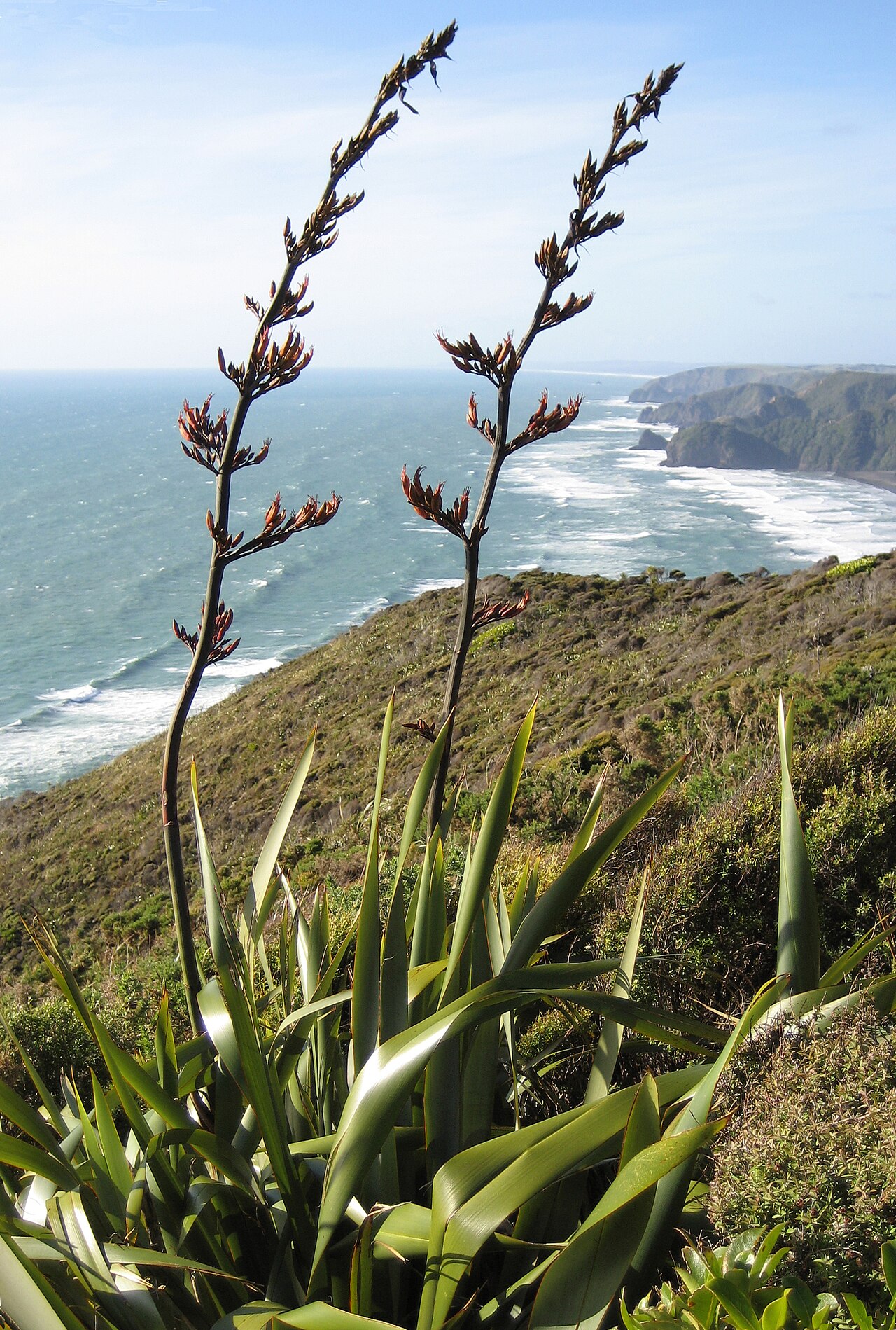
Phormium tenax is a clumping evergreen perennial in the family Asphodelaceae growing 5–10 feet (1.5–3 m) tall and 4–8 feet (1.2–2.4 m) wide from a fibrous-rooted crown that produces a fan-shaped clump of stiff sword-shaped foliage. Despite the common name New Zealand flax and the visual resemblance of the long fibrous leaves to true flax (Linum usitatissimum, the source of linen and linseed oil), the species is not related to true flax — Asphodelaceae is the asphodel family in the order Asparagales and includes Aloe, Kniphofia, and Asphodelus, while true flax is in the family Linaceae. The specific epithet tenax is from Latin meaning tough or holding fast and refers to the durable fiber strength of the leaves, which has supported the species' use as a fiber crop across the Pacific region for centuries. The Māori common name harakeke is the species' name in te reo Māori, and the leaf fiber (muka) has been processed for centuries by Māori weavers for the production of cordage, mats (whāriki), baskets (kete), cloaks (kākahu), and ceremonial textiles — the cultural significance of harakeke in Māori material culture is the basis for the species' inclusion in traditional knowledge teaching across Aotearoa New Zealand. Leaves are blue-green to dark olive-green on the upper surface with an orange-red keel (the raised midrib) on the underside, sword-shaped, stiff, 3–5 feet (90–150 cm) long, and 2–5 inches (5–13 cm) wide, held in a fan-shaped V-cross-section clump that arches at the leaf tips. Cultivars range from bronze ('Bronze Baby'), burgundy ('Platt's Black'), copper, cream-striped ('Cream Delight'), and pink-striped ('Sundowner', 'Maori Queen', 'Jester') foliage forms — the colored-leaf cultivars are typically less cold-hardy than the green species type and may be damaged at temperatures the species type tolerates. Dull red to orange-red tubular flowers 1–2 inches (2.5–5 cm) long open in large branched panicles on stiff erect flowering stalks 6–15 feet (1.8–4.5 m) tall that rise well above the foliage from June through August, and the flowers are nectar-rich and bird-pollinated — visited by hummingbirds in North American gardens and by tūī, bellbird, and other endemic nectar-feeding birds in the species' native New Zealand range. Limitation: the species is hardy only to about 15 °F (−9 °C) and is restricted to USDA zone 8 through zone 10 — this limited cold hardiness is the primary climatic restriction and excludes the species from most of the continental United States outside the Pacific Coast and the Gulf Coast. Sharp leaf edges cut unprotected skin during handling and pruning operations, and thick leather gloves and long sleeves are warranted during any maintenance task. Tolerates coastal salt spray, sustained wind, poor soil, and drought once established. Native to New Zealand. Hummingbird-visited. Deer-resistant. Non-toxic.
Native Range
Native to New Zealand (North and South Islands) and Norfolk Island, growing on coastal flats, swamp margins, and in lowland forests at low elevations. The species is one of the iconic plants of the Aotearoa New Zealand flora and a foundation species in coastal and wetland ecosystems where the dense clumps supply nesting habitat for native birds and the flowering stalks supply a critical late-spring and summer nectar source for endemic nectar-feeding birds (tūī, bellbird, kākā). The cultural significance of harakeke in Māori material culture — for cordage, weaving, and ceremonial textiles — is the basis for the species' inclusion in traditional knowledge teaching across Aotearoa New Zealand and for the cultivation of named harakeke pā (specific cultivar collections) in marae gardens.Suggested Uses
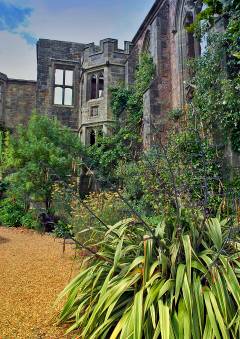
Used as an architectural specimen perennial, coastal landscape planting, screen, container specimen in containers of at least 10 gallons (38 L), Mediterranean-climate dry-garden anchor, and hummingbird-feeding planting at 4–8 foot (1.2–2.4 m) spacing between plants in USDA zones 8 through 10. The bold sword-shaped foliage in fan-shaped clumps, the colored-leaf cultivar palette (bronze, burgundy, copper, cream-striped, pink-striped), the tall summer flower stalks rising 6–15 feet above the foliage, and the tolerance of coastal salt spray, sustained wind, and drought combine to make the species a foundation architectural perennial for coastal Pacific Coast gardens, Mediterranean-climate dry gardens, and large container plantings. USDA zones colder than zone 8 are unsuitable for in-ground plantings because of the limited cold hardiness, and gardeners in zones 6 and 7 should grow the species in large containers that can be moved to a frost-free location or to a heated greenhouse for the winter months. Active pedestrian traffic positions are unsuitable because the sharp leaf edges cut unprotected skin during accidental contact.How to Identify
Appearance
Size & Dimensions
Height5' - 10'
Width/Spread4' - 8'
Bloom Information
Dull red to orange-red tubular flowers 1–2 inches (2.5–5 cm) long open in large branched panicles on stiff erect flowering stalks 6–15 feet (1.8–4.5 m) tall that rise well above the foliage from June through August across a 4-week bloom period. The flowers are nectar-rich and bird-pollinated — visited by hummingbirds in North American gardens and by tūī, bellbird, and other endemic nectar-feeding birds in the species' native New Zealand range. Pendulous brown seed capsules follow the flowers and persist on the dried flower stalks through fall and winter, supplying a secondary architectural feature in the off-season.
Detailed Descriptions
Flower Description
dull red to orange-red tubular flowers 1-2 inches (2.5-5 cm) long carried in large branched panicles on stiff erect flowering stalks 6-15 feet (1.8-4.5 m) tall that rise well above the foliage in June through August; the flowers are nectar-rich and bird-pollinated — visited by hummingbirds in North American gardens and by tūī, bellbird, and other endemic nectar-feeding birds in the species' native New Zealand rangeFoliage Description
blue-green to dark olive-green on the upper surface with an orange-red keel (the raised midrib) on the underside; sword-shaped stiff leaves 3-5 feet (90-150 cm) long and 2-5 inches (5-13 cm) wide held in a fan-shaped V-cross-section clump that arches at the leaf tips; cultivars range from bronze and burgundy to copper to cream-striped and pink-striped foliage forms ('Bronze Baby', 'Sundowner', 'Maori Queen'); the leaf fiber (muka in Māori) has been processed for centuries by Māori weavers for the production of cordage, mats, baskets, and ceremonial textiles, and the cultural significance of harakeke in Māori material culture is the basis for the species' Māori common nameGrowing Conditions
Sun Requirements
Requires 4-10 hours of direct sunlight daily
• Full Sun: 6+ hours of direct sunlight
• Partial Shade: 3-6 hours of direct sunlight
• Full Shade: Less than 3 hours of direct sunlight
Care & Maintenance
Care Guide
Site in full sun to partial shade with 4–10 hours of direct sun per day in well-drained loam, clay, or sand soil with a pH of 5.5–8.0. The species tolerates coastal salt spray, sustained wind, poor soil, and drought once the root system is established — the wide tolerance combined with the bold sword-shaped foliage makes the species a foundation perennial for coastal landscape design. The species is hardy only to about 15 °F (−9 °C) and is restricted to USDA zones 8 through 10, and the colored-leaf cultivars (bronze, burgundy, cream-striped, pink-striped) are typically less cold-hardy than the green species type. Spent flower stalks are removed at the base after bloom and old browned or damaged leaves are cut at the base in late spring (April or May) to maintain a tidy clump. Sharp leaf edges cut unprotected skin during handling, and thick leather gloves and long sleeves are warranted during any pruning or maintenance task. Non-toxic. Deer-resistant. Hardy in USDA zones 8–10.Pruning
Spent flower stalks are removed at the base after the summer bloom finishes and once the seed capsules have ripened (or earlier if the dried stalks are not wanted as an off-season feature). Old browned, cold-damaged, or wind-tattered leaves are cut at the base in late spring (April or May) before the new growth flush emerges, and complete renovation by cutting the entire clump to within 6–12 inches (15–30 cm) of the ground every 4–5 years supports vigorous regrowth from the crown. Thick leather gloves and long sleeves are warranted during any pruning or maintenance task because the sharp leaf edges cut unprotected skin during handling.Pruning Schedule
Prune: April–May
late spring
Container Growing
Suitable for container growing
Minimum container size: 10 gallons