Pellaea, Genus, spp., Multiple species,
- Genus
- Multiple species
Americas, Africa, Asia, and the Pacific
Overview
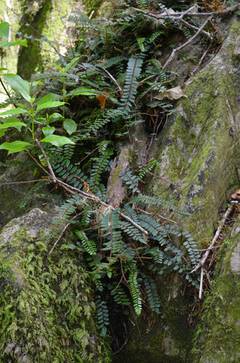
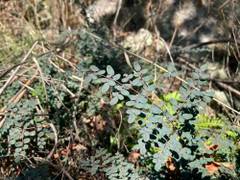
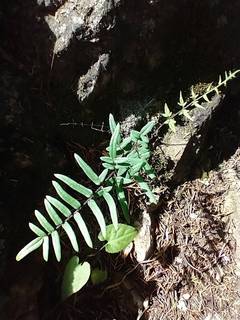
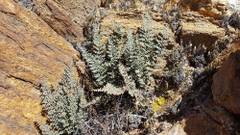
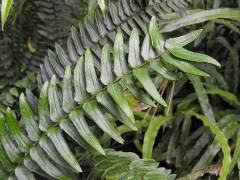
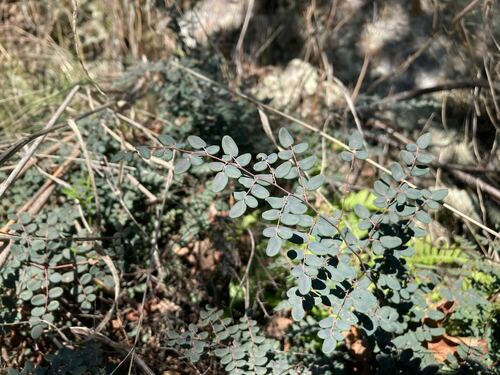
Pellaea is a genus of about 40 cliffbrake ferns in the family Pteridaceae, found on rock outcrops and in dry, often calcareous habitats across the Americas, Africa, Asia, and the Pacific. Unlike most ferns, the genus favors sun-exposed, well-drained rock crevices rather than damp shade. Plants form compact tufts from short rhizomes, with leathery, once- or twice-pinnate fronds 4-24 inches (10-60 cm) long. The pinnae are small, rounded to oblong, and blue-green to gray-green, carried on dark, wiry purple-black to brown stalks that give the group the name rock brakes. Reproduction is by spores, which form in marginal sori protected by the rolled-under leaf edge. P. atropurpurea, the purple cliffbrake, grows on limestone across eastern North America, while P. rotundifolia, the button fern of New Zealand, is grown indoors for its round, beaded leaflets. Many species are evergreen and curl their fronds during drought, reviving when moisture returns. The genus needs sharp drainage and declines in standing water, so heavy or wet soils cause rapid loss. Slow growth and a preference for mineral, alkaline substrates separate it from typical woodland ferns.
Native Range
Pellaea has a near-global distribution centered on the Americas, with strong representation in the southwestern United States, Mexico, and the Andes, plus species in southern Africa, Asia, New Zealand, and the Pacific. Species grow on cliffs, rocky slopes, and limestone outcrops in dry to seasonally dry climates.Suggested Uses
Pellaea is grown in rock gardens, crevice gardens, stone walls, and troughs with alkaline grit, and tender species are kept as houseplants. The drought tolerance suits dry, sunny rock plantings where most ferns struggle.How to Identify
Appearance
Size & Dimensions
Height4" - 2'
Width/Spread6" - 1'6"
Colors
Foliage Colors
Fall Foliage Colors
Bloom Information
Pellaea produces no flowers and reproduces by spores. Sori form along the rolled-under margins of fertile fronds through summer and release spores at maturity. New fronds unfurl from the rhizome crown in spring.
Detailed Descriptions
Foliage Description
blue-green to gray-greenGrowing Conditions
Sun Requirements
Requires 3-8 hours of direct sunlight daily
• Full Sun: 6+ hours of direct sunlight
• Partial Shade: 3-6 hours of direct sunlight
• Full Shade: Less than 3 hours of direct sunlight
Water & Climate
Water Needs
Drought Tolerance
Drought tolerant when established
Care & Maintenance
Care Guide
Pellaea grows in part sun to part shade with sharp, fast drainage and neutral to alkaline, gritty or rocky soil. The genus tolerates drought once established and curls its fronds in dry spells, so excess moisture is more damaging than dryness. Standing water and heavy soils cause crown rot. Hardiness varies widely, from frost-hardy species such as P. atropurpurea to tender, frost-sensitive ones grown as houseplants. Limestone chips or grit worked into the planting mix support the genus, which declines in acidic, waterlogged ground. Few pests affect the leathery foliage.Pruning
Remove withered or frost-damaged fronds in late winter before new growth appears. Evergreen species need only the removal of tattered older fronds through the year. Congested clumps can be divided in spring.Container Growing
Suitable for container growing
Minimum container size: 1 gallons