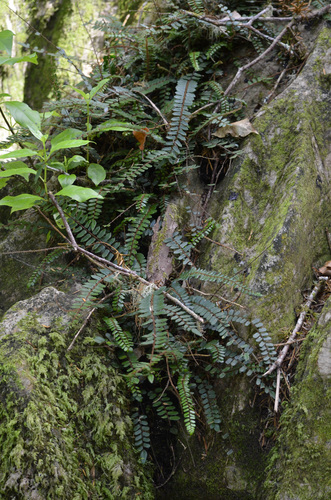
Pellaea, Genus, rotundifolia, Species,
- Genus & species
button fern
New Zealand (both islands) and southeastern Australia, in shaded moist-but-drained sites among rocks and on shaded forest banks
Overview
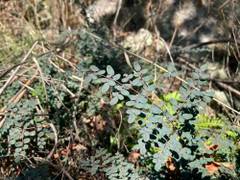
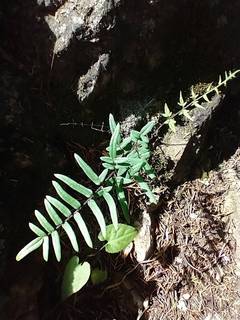
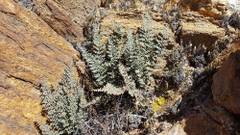
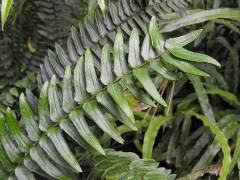
Pellaea rotundifolia is the button fern — a small evergreen fern from New Zealand and Australia grown indoors and as a shaded outdoor plant in mild climates, reaching 8–15 inches (20–38 cm) tall and 12–18 inches (30–45 cm) wide as a low spreading clump. The species epithet 'rotundifolia' translates as 'round-leaved' and refers to the small rounded pinnae (leaflets) that compose the frond — a leaf-shape character uncommon among ferns, which more often have lance-shaped or finely divided pinnae. Each frond is 8–14 inches (20–35 cm) long and carries 15–30 pairs of leathery dark green button-shaped pinnae 0.4–0.6 inch (10–15 mm) across, alternating along a wiry dark brown to black rachis (frond stem). New fronds emerge with reddish-brown hairs on the rachis and uncoiling fiddleheads, typical of the fern life cycle. The plant grows from short creeping rhizomes at or just below the soil surface and forms a low spreading mat over 2–3 years rather than a discrete clump. Cultural needs differ from most indoor ferns: P. rotundifolia is more drought-tolerant than the typical Adiantum (maidenhair) or Nephrolepis (Boston fern) and tolerates 1–2 weeks of dry soil without severe damage, but it does not tolerate the heavy soaking these other ferns prefer — over-watering causes root rot. Cultural failure modes are over-watering (the leading cause of decline), full sun exposure (fronds scorch above 4 hours direct), and chlorosis from chronic alkaline tap water. Non-toxic to dogs and cats. Hardy outdoors in USDA zones 9–11.
Native Range
Pellaea rotundifolia is native to New Zealand (both islands) and southeastern Australia, where it grows in shaded, moist-but-drained sites among rocks and on shaded forest banks at low to mid elevations.Suggested Uses
Used as a small indoor specimen for desks, side tables, bathrooms, and shaded shelves in containers of 1–2 gallons (4–8 liters). The drought tolerance suits households where most ferns fail from inconsistent watering. Combines with smaller foliage houseplants such as Pilea peperomioides, Peperomia cultivars, and Calathea for layered low-light indoor groupings. Suitable for households with cats and dogs that browse foliage due to non-toxic status. Outdoors in USDA zones 9–11 used as a small evergreen ground cover in shaded rock gardens.How to Identify
Appearance
Size & Dimensions
Height8" - 1'3"
Width/Spread1' - 1'6"
Colors
Foliage Colors
Fall Foliage Colors
Bloom Information
Ferns do not flower; the species reproduces by spores produced on the underside of mature pinnae. Indoor specimens occasionally produce fertile fronds with brown spore patches along the pinna margins; the foliage is the year-round display.
Detailed Descriptions
Foliage Description
Leathery dark green rounded button-shaped pinnae 0.4-0.6 inch (10-15 mm) across in 15-30 pairs alternating along a wiry dark brown to black rachisGrowing Conditions
Sun Requirements
Requires 1-4 hours of direct sunlight daily
• Full Sun: 6+ hours of direct sunlight
• Partial Shade: 3-6 hours of direct sunlight
• Full Shade: Less than 3 hours of direct sunlight
Care & Maintenance
Care Guide
Place in bright indirect light at 100–300 foot-candles or in deep shade; direct sun above 4 hours scorches the fronds. Water when the top 1 inch (2.5 cm) of soil has dried; the plant tolerates short dry periods better than most indoor ferns but does not tolerate the constantly wet soil that other ferns prefer. Soil mix should be free-draining and slightly acidic to neutral (peat-based potting mix amended with 25–30 percent perlite at pH 6.0–7.0). Indoor humidity above 40 percent reduces frond-tip browning, but the species tolerates lower humidity than most ferns and survives in standard household conditions of 30–40 percent. Use room-temperature filtered water; cold tap water and chlorinated water cause chlorosis on new fronds within 2–4 weeks of repeated exposure. Feed at half the label rate with a balanced liquid fertilizer monthly during active growth (spring through early autumn) and skip feeding in winter.Pruning
Cut spent yellowing or browned fronds at the base of the rachis with clean scissors. Lift and divide the rhizomes every 3–4 years if the clump becomes overcrowded; sections with 3–5 fronds and a portion of the rhizome establish quickly in fresh potting mix.Container Growing
Suitable for container growing
Minimum container size: 1 gallons