Pavonia, Genus, lasiopetala, Species,
- Genus & species
rose pavonia
South-central United States and northeastern Mexico
Overview
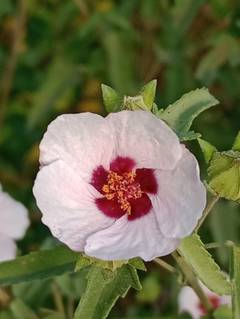
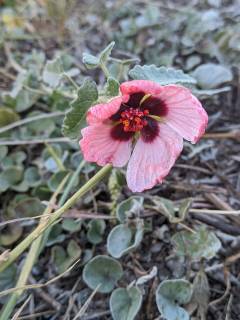
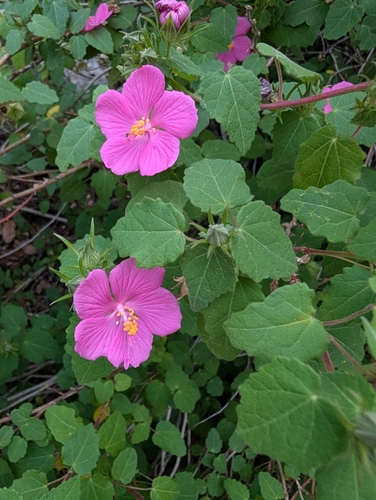
Pavonia lasiopetala is a short-lived subshrub in the mallow family, growing 2-4 feet (60-120 cm) tall and 2-3 feet (60-90 cm) wide. The base turns woody with age while the upper stems stay slender and herbaceous, producing an open, somewhat sprawling form. Leaves are triangular to heart-shaped, 1-2 inches (2.5-5 cm) long, with toothed margins and a covering of soft hairs that gives the foliage a grey-green tone. Flowers are pink, cup-shaped, and five-petaled, about 1 inch (2.5 cm) across, resembling small hibiscus blooms. Each flower opens in the morning and closes by mid-afternoon, lasting a single day, but new buds open in succession from spring until frost. The species grows on limestone soils of central and southern Texas and adjacent Mexico, tolerating heat and drought once established. It reseeds freely, often forming small colonies, and individual plants are typically short-lived, declining after two to three years. The open habit can become leggy by late summer without cutting back. Hardy in USDA zones 7 to 9, it dies back in hard winters and resprouts from the base in spring.
Native Range
Native to central and southern Texas and northeastern Mexico, where it grows on limestone hills, rocky slopes, and caliche soils of the Edwards Plateau and Rio Grande Plains.Suggested Uses
Used in native and pollinator gardens, xeriscapes, and informal borders, spaced 24-36 inches (60-90 cm) apart. Suits rock gardens and dry slopes where its drought tolerance and long bloom season cover bare ground. Grows in containers of 3 gallons or larger on patios.How to Identify
Appearance
Size & Dimensions
Height2' - 4'
Width/Spread2' - 3'
Colors
Flower Colors
Foliage Colors
Bloom Information
Blooms from spring through fall, roughly April to October in warm regions, with peak flowering in late spring and again after summer rains. Each bloom lasts one day, opening in the morning and closing by mid-afternoon, while the plant flowers continuously over a long season. Flowering slows during the hottest, driest weeks and resumes when moisture returns.
Detailed Descriptions
Foliage Description
grey-greenGrowing Conditions
Sun Requirements
Requires 6-10 hours of direct sunlight daily
• Full Sun: 6+ hours of direct sunlight
• Partial Shade: 3-6 hours of direct sunlight
• Full Shade: Less than 3 hours of direct sunlight
Care & Maintenance
Care Guide
Grow in full sun to part shade in well-drained soil; it tolerates poor, rocky, and alkaline ground and declines in wet conditions. Water established plants deeply but infrequently, as the species is drought tolerant once rooted. Rich soil or frequent irrigation produces soft, floppy growth. In zones 7 to 9 it survives winter outdoors, dying to the ground in hard freezes and returning from the base. It reseeds readily, so seedlings can be transplanted or thinned to control spread. No serious pests or diseases affect it, though root rot can occur in heavy, soggy soils.Pruning
Cut plants back by one-third to one-half in late winter or early spring to encourage dense, branching growth and more flowers. A lighter shearing in midsummer reduces legginess and prompts a fresh flush of bloom. Remove dead wood as new growth emerges.Pruning Schedule
Prune: February–March
early spring
Container Growing
Suitable for container growing
Minimum container size: 3 gallons