Image 1 of 17
1 / 17
Plant Reference
Paris, Genus, quadrifolia, Species,
- Genus & species
herb paris
Europe and temperate Asia — from the British Isles east through Russia to Japan; moist deciduous woodlands, often on calcareous (limestone) soils
Overview
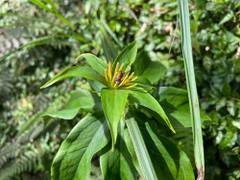
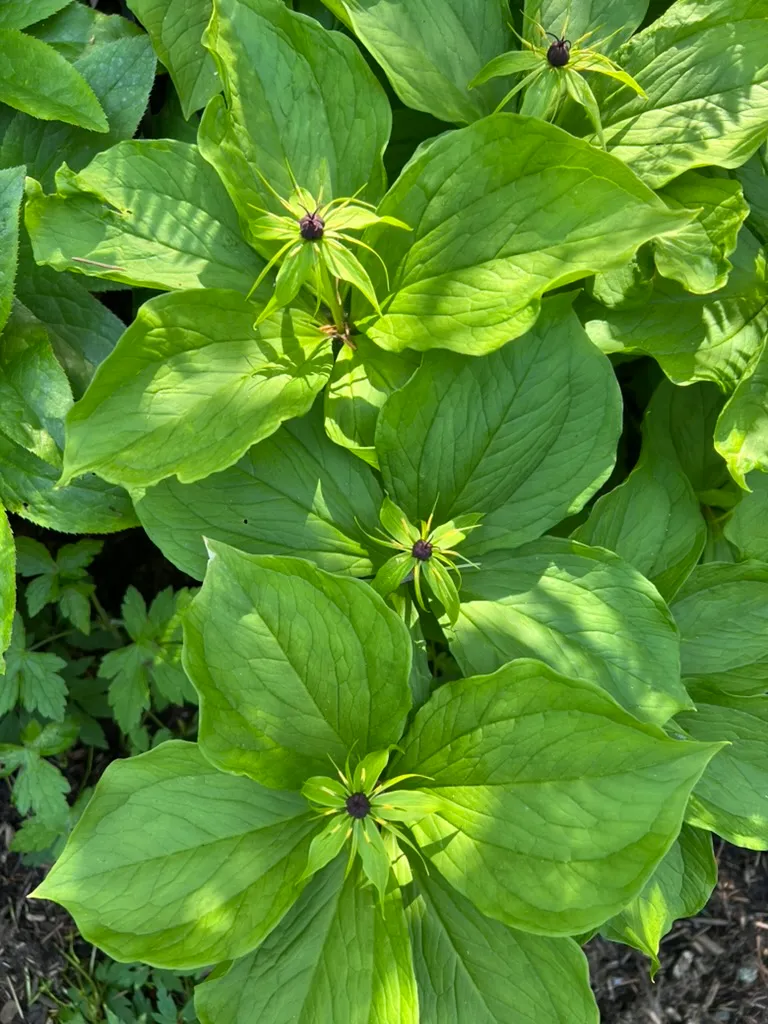
Paris quadrifolia is herb Paris (true lover's knot), a small clumping deciduous perennial growing 10-16 inches (25-40 cm) tall and 6-10 inches (15-25 cm) wide. A solitary star-like flower 1-1.5 inches (2.5-4 cm) with 4 threadlike yellow-green petals, 4 green sepals, and 8 golden stamens at the center of a precise 4-leaved whorl in May-June (3 weeks). Mid-green broadly oval net-veined leaves 3-5 inches (7-13 cm). In Melanthiaceae. Paris = equal (parts in fours). Quadrifolia = four-leaved. The entire plant is organized in precise fours: 4 leaves, 4 petals, 4 sepals, 8 stamens (2 × 4). A single dark blue-black berry at the center of the whorl in summer-fall. Native to Europe and temperate Asia in moist deciduous woodlands, often on calcareous soils. Closely related to Trillium (parts in threes). Very slow to establish — 3-5 years from division, longer from seed. This extremely slow growth rate is the primary limitation. Not drought-tolerant. All parts toxic (steroidal saponins — paristyphnin). Deer-resistant (toxicity). Zones 4-8. Full shade to part shade. Growth rate is very slow.
Native Range
Native to Europe and temperate Asia — from the British Isles east through Russia to Japan. Found in moist deciduous woodlands, often on calcareous (limestone) soils.Suggested Uses
Grown in woodland gardens, shade rock gardens, and botanical collections, spaced 6-10 inches (15-25 cm). Four-part symmetry. Dark berry. Very slow-growing. Calcareous soil. Toxic. Zones 4-8.How to Identify
Appearance
Size & Dimensions
Height10" - 1'4"
Width/Spread6" - 10"
Bloom Information
Late spring (May-June). Solitary star-like flower 1-1.5 inches (2.5-4 cm) with 4 threadlike yellow-green petals, 4 green sepals, and 8 golden stamens. 3 weeks. Bee-visited. Dark blue-black berry follows.
Detailed Descriptions
Flower Description
4 narrow yellow-green inner petals (threadlike), 4 green outer sepals, 8 prominent golden stamens; solitary, star-like, 1-1.5 inches (2.5-4 cm) across, at the center of the leaf whorl; followed by a dark blue-black berry 0.3-0.5 inch (8-13 mm)Foliage Description
Mid-green, broadly oval, net-veined, 3-5 inches (7-13 cm); 4 leaves arranged in a single precise horizontal whorl (quadrifolia = four leaves) at the top of the stem — the symmetrical four-part geometry is the diagnostic featureGrowing Conditions
Sun Requirements
Requires 1-3 hours of direct sunlight daily
• Full Sun: 6+ hours of direct sunlight
• Partial Shade: 3-6 hours of direct sunlight
• Full Shade: Less than 3 hours of direct sunlight
Care & Maintenance
Care Guide
Full shade to part shade (1-3 hours). Moist humus-rich soil pH 6.5-7.5 (tolerates calcareous). Not drought-tolerant. Very slow to establish. Do not disturb. Remove dead foliage in fall (November). All parts toxic (steroidal saponins). Deer-resistant. Zones 4-8.Pruning
Remove dead foliage in fall (November). No other pruning needed. Do not divide or disturb unless well-established (5+ years).Pruning Schedule
Prune: November
fall