Image 1 of 16
1 / 16
Plant Reference
Paris, Genus, polyphylla, Species,
- Genus & species
multi-leaf paris
Overview
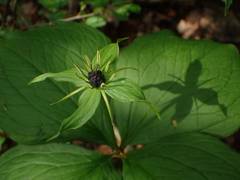
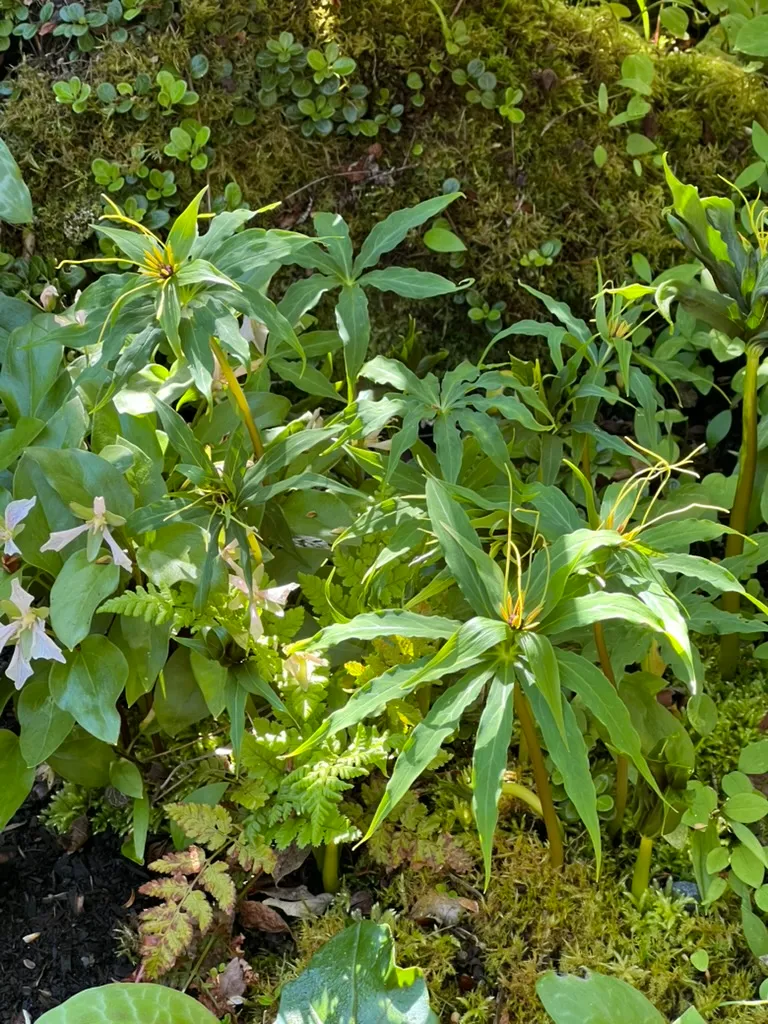
Paris polyphylla is multi-leaf paris, growing 12–36 inches (30–90 cm) tall from a single unbranched stem and 9–15 inches (23–38 cm) wide. A single whorl of 6–12 lance-shaped dark green leaves 4–8 inches (10–20 cm) at the stem summit — the symmetrical radial whorl is the genus trait. A single complex flower sits above the leaf whorl: 4–6 green outer tepals (sepal-like, the same length as the leaves), 4–6 yellow-green threadlike inner tepals (filamentous), and a central swollen ovary with radiating purple stigmatic rays. The flower structure resembles a geometric star pattern. Bright red fleshy berry cluster 1 inch (2.5 cm) at the stem summit in fall — consumed by birds. In the family Melanthiaceae — related to Trillium (which has a 3-part whorl; Paris has 4–12-part whorls). The thick starchy rhizome is used in traditional Chinese medicine under the name 'chonglou' (Rhizoma Paridis) — the medicinal demand has driven overharvesting, and wild populations are declining across China. All parts contain steroidal saponins — toxic to humans and animals. Slow-growing from the rhizome — 5–7 years from seed to flowering-size plant. Native to China, the Himalaya, and Southeast Asia, growing in moist mountain forest understory. Partial shade to full shade. Humus-rich well-drained soil. Consistent moisture. Deer-resistant (toxic). Zones 6–9. Growth rate is very slow.
Native Range
Native to China, the Himalaya, and Southeast Asia, growing in moist mountain forest understory at moderate to high elevations. Wild populations are declining due to overharvesting for traditional Chinese medicine.Suggested Uses
Grown in woodland gardens and shaded borders in zones 6–9. The geometric whorl-and-flower structure and the fall berry cluster are the seasonal features. Related to Trillium. Slow-growing. All parts toxic. Deer-resistant.How to Identify
Appearance
Size & Dimensions
Height1' - 3'
Width/Spread9" - 1'3"
Bloom Information
Detailed Descriptions
Flower Description
Green outer tepals; yellow-green threadlike inner tepals; central ovary with radiating purple stigmasFoliage Description
Dark green, lance-shaped, in a single whorl of 6-12 leaves at the stem summitGrowing Conditions
Sun Requirements
Tolerates up to 3 hours of direct sunlight daily
• Full Sun: 6+ hours of direct sunlight
• Partial Shade: 3-6 hours of direct sunlight
• Full Shade: Less than 3 hours of direct sunlight
Care & Maintenance
Care Guide
Partial shade to full shade. Humus-rich well-drained soil. Consistent moisture. Slow-growing (5–7 years from seed to flowering). All parts toxic (steroidal saponins). The rhizome is used in traditional Chinese medicine (overharvested in the wild). Deer-resistant. Zones 6–9.Pruning
No pruning. Allow the berry cluster to develop in fall. Remove dead stems after the plant goes dormant. Do not disturb the thick rhizome.Pruning Schedule
Prune: November
fall
Container Growing
Suitable for container growing
Minimum container size: 3 gallons