Paraserianthes, Genus, spp., Multiple species,
- Genus
- Multiple species
crested wattle
Overview
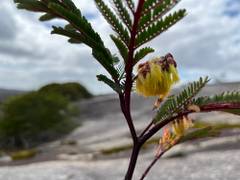
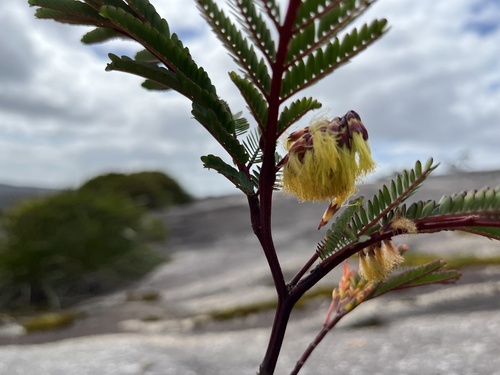
Paraserianthes is a genus of evergreen trees and large shrubs in the family Fabaceae, native to Australia and Indonesia, with P. lophantha the most familiar species. The plants grow quickly to 15 to 30 feet (4.5 to 9 m), forming a spreading canopy on one or several trunks. The leaves are bipinnate and fern-like, 4 to 12 inches (10 to 30 cm) long, divided into many small green leaflets that fold partly at night. From late winter into spring, dense cylindrical spikes 1 to 3 inches (2.5 to 8 cm) long carry many small cream to pale yellow flowers made up mostly of long stamens. Flattened brown pods 2 to 5 inches (5 to 13 cm) long follow, holding several hard seeds. As with other legumes, the roots fix nitrogen and let the trees grow on poor soils. The genus grows in full sun on a wide range of well-drained soils and tolerates wind, coastal exposure, and short dry spells once established. Growth is fast but the wood is brittle and the trees are short-lived, often declining within fifteen to twenty years. P. lophantha self-seeds heavily and has naturalized as a weed outside its native range in parts of Australia, New Zealand, and southern Africa.
Native Range
Paraserianthes is native to southwestern and eastern Australia and to parts of Indonesia. The trees grow in coastal scrub, open forest, and disturbed ground on a range of well-drained soils.Suggested Uses
Paraserianthes is grown as a fast screen, shade tree, and shelter or nurse plant on poor soils in warm climates. The winter-to-spring flowers support bees and birds. Because it self-seeds heavily, it is used in contained settings rather than near bushland where it can naturalize.How to Identify
Appearance
Size & Dimensions
Height15' - 30'
Width/Spread15' - 25'
Bloom Information
Flowering occurs from late winter into spring, roughly July to October in the southern hemisphere native range. The cream to pale yellow flowers form cylindrical bottlebrush-like spikes and draw bees and birds. Flattened pods follow and ripen through summer, splitting to scatter seed.
Detailed Descriptions
Flower Description
cream to pale yellowFoliage Description
greenGrowing Conditions
Sun Requirements
Requires 6-12 hours of direct sunlight daily
• Full Sun: 6+ hours of direct sunlight
• Partial Shade: 3-6 hours of direct sunlight
• Full Shade: Less than 3 hours of direct sunlight