Image 1 of 6
1 / 6
Plant Reference
Parahebe, Genus, perfoliata, Species,
- Genus & species
koromiko
Southeastern Australia (New South Wales, Victoria, Australian Capital Territory)
Overview
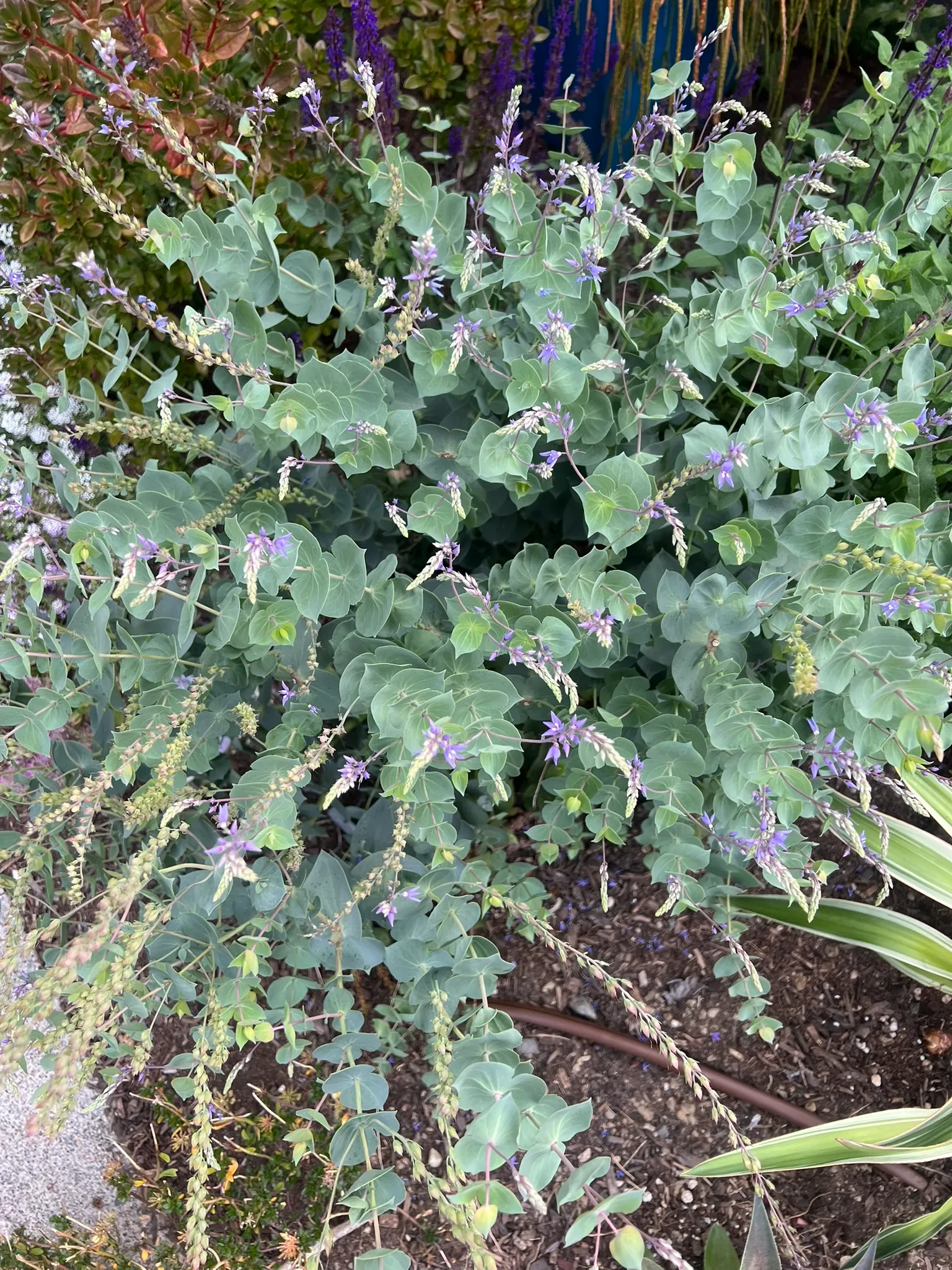
Parahebe perfoliata (synonyms Veronica perfoliata, Derwentia perfoliata) is an evergreen sprawling subshrub reaching 18–30 inches (45–75 cm) tall and 24–36 inches (60–90 cm) wide, with an arching to trailing habit. Leaves are perfoliate: the stem passes directly through the center of each paired, fused leaf base, so each leaf appears threaded onto the stem rather than attached at a petiole. Leaf pairs are spaced 1–2 inches (2.5–5 cm) apart along the stem, producing a line of round-oval, leathery, blue-gray leaves 0.8–1.5 inches (2–4 cm) wide that read as beads on a string from viewing distance. Flowers are blue-purple, small, 0.3–0.4 inch (8–10 mm) across, borne in loose terminal racemes of 10–20 flowers from July through September over a 6–8 week window. Growth rate is moderate; the plant reaches full mature size in 3 growing seasons. Hardy to USDA zone 8. Not known to be toxic to pets or humans. The perfoliate leaf arrangement occurs in few temperate garden plants outside this species, some Eucalyptus juvenile foliage, and a handful of Silphium and Bupleurum species — the habit-and-leaf combination keeps this species visually separate from most garden perennials.
Native Range
Parahebe perfoliata is native to southeastern Australia — New South Wales, Victoria, and the Australian Capital Territory — occurring on rocky montane forest slopes, cliff faces, and stream bank outcrops at 2,000–5,000 feet (600–1,500 m) elevation.Suggested Uses
Used in rock gardens, raised beds, gravel gardens, retaining-wall tops, and trailing over ledges at 18–24 inch (45–60 cm) spacing. The perfoliate blue-gray leaves read most clearly when arching stems can cascade over an edge or against a darker backdrop at viewing distance of 3–8 feet (0.9–2.4 m), where the strung-bead pattern resolves visually. Sharp drainage and lean soil requirements rule out heavy clay sites and rich border positions. The plant does not grow well in wet soils, climates below USDA zone 8, heavy clay, or shade positions.How to Identify
Appearance
Size & Dimensions
Height1'6" - 2'6"
Width/Spread2' - 3'
Bloom Information
Loose terminal racemes of 10–20 small blue-purple flowers 0.3–0.4 inch (8–10 mm) across appear from July through September over a 6–8 week window. The blue-purple flower color pairs with the blue-gray foliage to carry a consistent cool color palette across the whole plant during bloom.
Detailed Descriptions
Flower Description
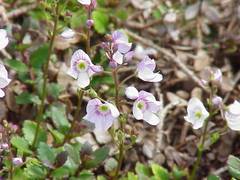
Blue-purple; small 0.3-0.4 inch flowers in loose terminal racemes of 10-20 flowers; July-SeptemberFoliage Description
Blue-gray; round to oval, 0.8-1.5 inches wide; leathery; perfoliate (stem passes through center of each paired fused leaf base); pairs spaced 1-2 inches apart along arching stemsGrowing Conditions
Sun Requirements
Requires 6-10 hours of direct sunlight daily
• Full Sun: 6+ hours of direct sunlight
• Partial Shade: 3-6 hours of direct sunlight
• Full Shade: Less than 3 hours of direct sunlight
Care & Maintenance
Care Guide
Grow in full sun with 6 or more hours of direct light in well-drained lean sand, loam, or chalk at pH 6.0–7.5. Sharp drainage is non-negotiable: the species rots in soils that hold water over winter, which is the main failure mode on clay or seasonally wet sites. The blue-gray foliage color saturates most strongly under lean conditions with low nitrogen; rich garden soil produces greener, looser growth with muted color. Water deeply through the first growing season to establish, then rely on natural rainfall — the plant is drought-tolerant once rooted. No fertilization is needed. Cut back stems by one-third to one-half in early spring (March–April) to maintain compact arching habit and prevent woody legginess. Hardy to USDA zone 8.Pruning
Cut back stems by one-third to one-half in early spring (March–April) as new growth emerges. Remove winter-damaged stems at the base. Deadhead spent racemes during the July–September bloom to tidy the planting. The plant tolerates hard spring cutback and regrows vigorously from the crown over 6–8 weeks after pruning.Pruning Schedule
Prune: March–April
early spring
Container Growing
Suitable for container growing
Minimum container size: 3 gallons