Parahebe, Genus, catarractae, Species,
- Genus & species
speedwell hebe
New Zealand (North and South Islands; rocky streamsides, cliff faces, damp rocky ground)
Overview
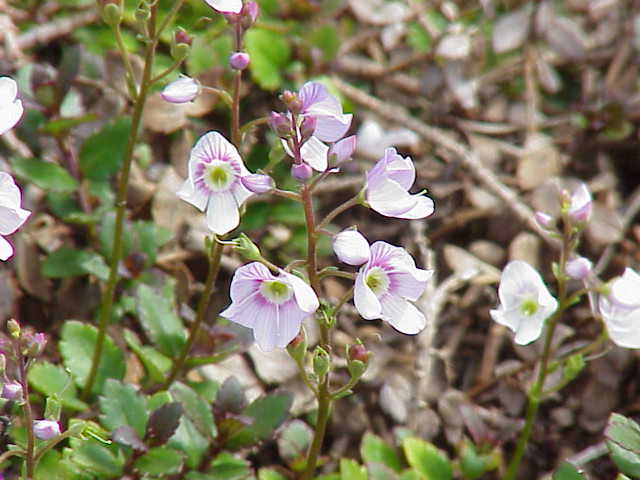
Parahebe catarractae (now reclassified as Veronica catarractae under recent phylogenetic revisions) is a low semi-evergreen sprawling subshrub reaching 6–12 inches (15–30 cm) tall with a spread of 12–24 inches (30–60 cm) and a mounding-to-trailing habit. Native to New Zealand, where the species grows on rocky streamsides and cliff faces, this subshrub opens loose racemes of small saucer-shaped flowers across a long bloom window from June through October. Each flower runs 0.3–0.5 inches (8–13 mm) across, white to pale lavender with reddish-purple veining and a darker central eye, giving the planting a narrow-textured floral appearance at close range. Opposite ovate-to-lanceolate leaves run 0.5–1 inch (1.3–2.5 cm) long, dark green in color, with serrate margins, and often tint bronze-purple in cold weather. Growth rate runs moderate. Hardy to zone 7. Tree lifespan runs short at 3–5 years, but the species self-seeds in favorable garden conditions and maintains colony presence through seedling recruitment.
Native Range
Parahebe catarractae is native to New Zealand across both North and South Islands, growing on rocky streamsides, cliff faces, and damp rocky ground. The species has recently been reclassified under phylogenetic revisions to Veronica catarractae, though the older Parahebe name remains in common horticultural use. The cliff-face native ecology translates in garden cultivation to a requirement for sharp drainage combined with tolerance of periodic drought once the root system establishes.Suggested Uses
Planted in rock gardens, raised beds, wall tops, or border fronts at 12–18 inch (30–45 cm) spacing in zone-7-and-warmer gardens. The long bloom window from June through October runs rare among small subshrubs of the species' compact scale and supplies the species' primary ornamental feature. Sharp drainage is required through winter because wet soil conditions cause crown rot and shorten lifespan. Short 3-to-5-year lifespan is offset by self-seeding that maintains the planting's presence across successive plant generations. Wet winter soils and cold climates below zone 7 are poor fits for the species.How to Identify
Appearance
Size & Dimensions
Height6" - 1'
Width/Spread1' - 2'
Bloom Information
Loose racemes of saucer-shaped flowers 0.3–0.5 inches (8–13 mm) across open in white to pale lavender coloration with reddish-purple veining and a darker central eye from June through October. The species runs among the longer-blooming small subshrubs in temperate cultivation, with a fresh bloom window of 12–16 weeks that covers the entire summer season and extends into mid-autumn. Regular deadheading of spent flower racemes extends the bloom window.
Detailed Descriptions
Flower Description
White to pale lavender with reddish-purple veining and a darker eye; saucer-shaped 0.3-0.5 inch; June-OctoberFoliage Description
Dark green; ovate to lanceolate 0.5-1 inch; serrate margins; opposite arrangement; bronze-purple tint in cold weatherGrowing Conditions
Sun Requirements
Requires 4-10 hours of direct sunlight daily
• Full Sun: 6+ hours of direct sunlight
• Partial Shade: 3-6 hours of direct sunlight
• Full Shade: Less than 3 hours of direct sunlight
Care & Maintenance
Care Guide
Full sun to partial shade in moist well-drained soil (pH 5.5–7.0) matches the species' cultivation needs. Hardy to zone 7 (0°F / −18°C). Good soil drainage is essential because wet winter conditions cause crown rot and shorten the species' already-limited garden lifespan. Tree lifespan runs short at 3–5 years, but the species self-seeds in favorable garden positions and maintains colony presence through seedling recruitment. Light cutback in spring maintains the compact mounding habit and encourages fresh growth from the woody base.Pruning
The species is cut back by roughly one-third in early spring to maintain compact form and stimulate fresh growth from the woody base. Winter-damaged growth is removed at the same time. The woody base becomes leggy after 3–4 years of growth, and replacement planting from self-sown seedlings or fresh container-grown plants may be needed on roughly a 4-year cycle to maintain the planting's appearance.Pruning Schedule
Prune: March–April
early spring
Container Growing
Suitable for container growing
Minimum container size: 2 gallons