Panax, Genus, notoginseng, Species,
- Genus & species
Sanqi
Overview
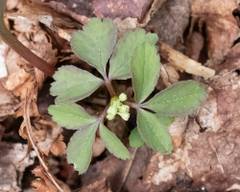
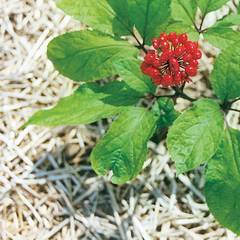
Panax notoginseng is a deciduous perennial herb growing from a knobby, tuberous root to 12–24 inches (30–60 cm) tall and 8–12 inches (20–30 cm) wide. A single unbranched stem carries a whorl of 3–6 palmately compound leaves, each divided into 3–7 elliptic leaflets 2–5.5 inches (5–14 cm) long with finely toothed margins. Stems and leaves die back in autumn, and new shoots emerge in March–April. A terminal umbel of 80–100 small greenish-yellow flowers, each about 0.1 inch (3 mm) across, opens on a stalk above the leaves in June–August. Fruits are red berries about 0.3 inch (8 mm) wide holding 1–3 seeds, ripening in autumn, and the seeds lose viability when dried. Roots reach harvest size after 3 years or more. Active growth occurs at 59–77°F (15–25°C), leaves scorch in direct sun, and plants decline in waterlogged soil.
Native Range
Native to southwestern China, in Yunnan and Guangxi, and known mainly from cultivation in shaded montane sites at 3,900–6,500 feet (1,200–2,000 m) elevation. Wenshan Prefecture in Yunnan is the center of commercial production.Suggested Uses
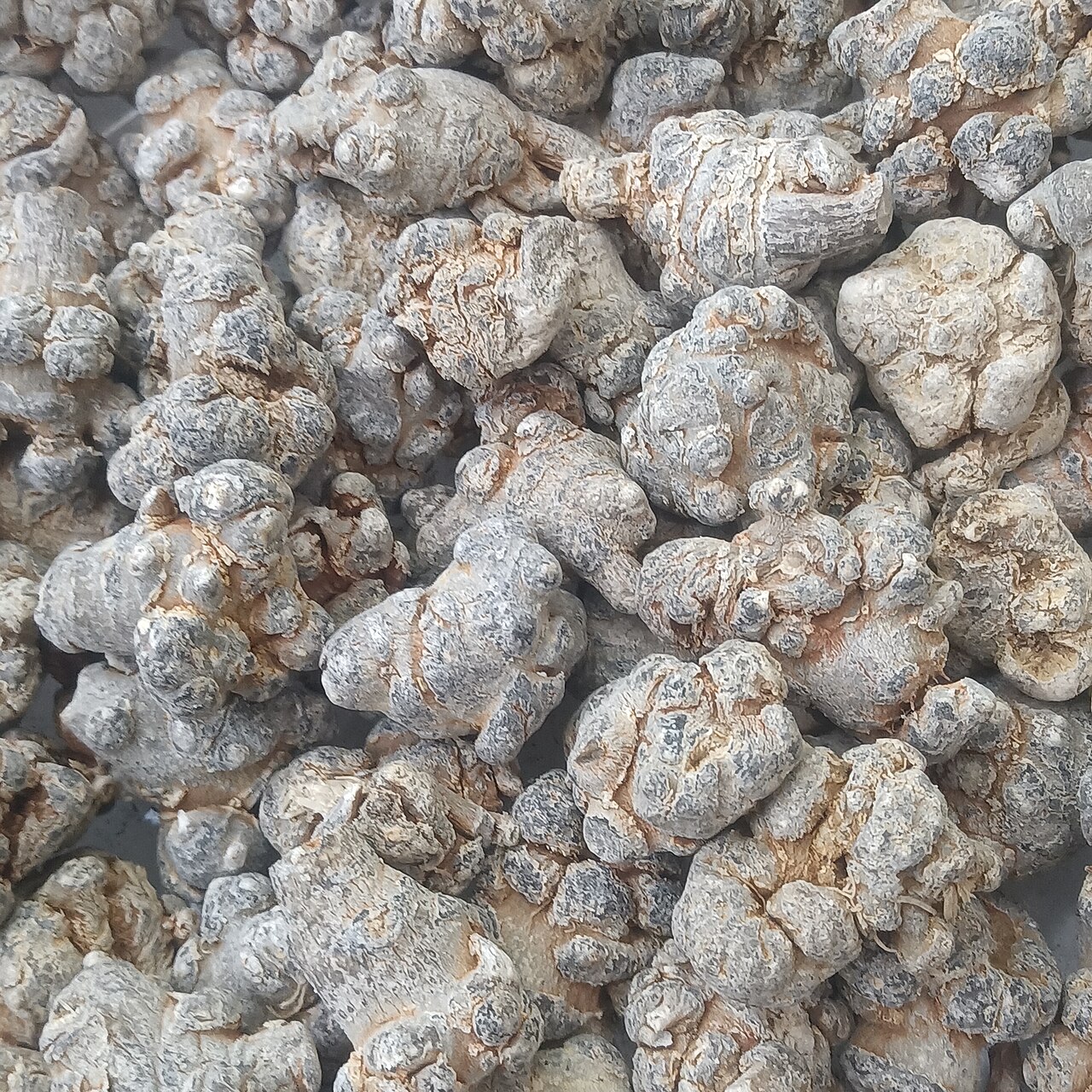
Grown in shaded woodland gardens at 6–8 inch (15–20 cm) spacing in zones 8–9. The dried root is a traditional Chinese medicine known as sanqi or tianqi, and is grown commercially in Yunnan under shade structures. Slow growth and shade requirements limit use in conventional borders.How to Identify
Appearance
Size & Dimensions
Height1' - 2'
Width/Spread8" - 1'
Bloom Information
Flowers open June–August in zones 8–9. Plants begin flowering in their second or third year from seed. Total bloom lasts 4–6 weeks. Flower stalks are commonly removed in root production to direct growth into the root.
Detailed Descriptions
Foliage Description
GreenGrowing Conditions
Sun Requirements
Tolerates up to 2 hours of direct sunlight daily
• Full Sun: 6+ hours of direct sunlight
• Partial Shade: 3-6 hours of direct sunlight
• Full Shade: Less than 3 hours of direct sunlight
Care & Maintenance
Care Guide
Plants grow under 70–80% shade in loose, humus-rich loam at pH 5.5–6.5 with sharp drainage. Soil is kept evenly moist, and waterlogging for even a few days causes root rot. Anthracnose and Phytophthora root rot are common problems in cultivation. Active growth occurs at 59–77°F (15–25°C), and leaves scorch in direct sun. Seeds are sown fresh in autumn at 2 inches (5 cm) spacing, and roots are harvested after 3 years.Pruning
No structural pruning is practiced. Flower stalks are cut at the base in the first and second flowering years in root production to direct growth into the root. Dead stems are cut at ground level in late autumn.Pruning Schedule
Prune: November
fall