Image 1 of 3
1 / 3
© FloraFarm GmbH / Katharina Lohrie, some rights reserved (CC-BY) · Wikimedia Commons
Panax, Genus, ginseng, Species,
- Genus & species
Asian ginseng
Northeastern China, the Korean Peninsula, and the Russian Far East
Overview
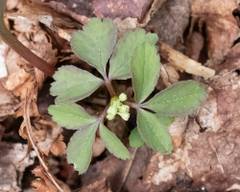
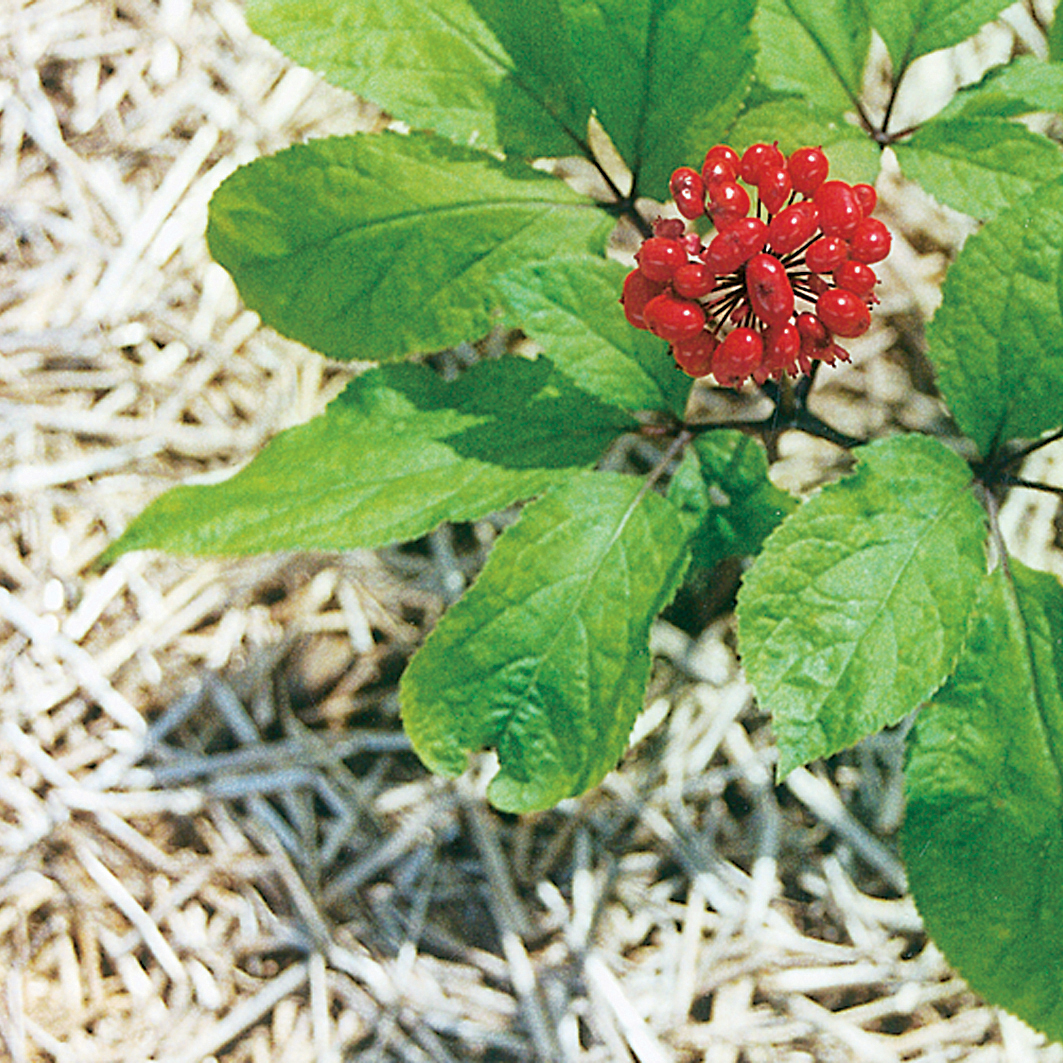
Panax ginseng is a herbaceous perennial 12-24 inches (30-60 cm) tall and 12-18 inches (30-45 cm) wide, growing from a fleshy branched taproot that reaches 2-6 inches (5-15 cm) long and 0.5-1 inch (1.3-2.5 cm) thick after several seasons. A single stem carries a whorl of 3-5 palmately compound leaves at its top, each divided into 5 toothed leaflets, the two lowest leaflets 1-2 inches (2.5-5 cm) long and the three upper ones 3-6 inches (7.5-15 cm). A solitary umbel of 15-30 greenish-white flowers, each about 0.1 inch (3 mm) across, rises on a stalk from the centre of the leaf whorl in June and July, followed by bright red drupes 0.3 inch (8 mm) across that ripen from August. Plants add one stem scar to the root neck each year, and the number of leaflets increases with age, from a single 3-leaflet leaf in the first season to the full whorl by year 4. The root reaches harvestable size in 4-6 years, and cultivation over that period demands 70-90 percent shade, cool soil, and control of root rot, which limits production to specialised growers. Seed requires 18-22 months of alternating warm and cold stratification before it germinates. Wild populations across the native range are severely depleted, and the species is listed on CITES Appendix II.
Native Range
Panax ginseng is native to northeastern China, the Korean Peninsula, and the Russian Far East, growing in the shaded understorey of mixed broadleaf and Korean pine forest on cool north-facing slopes. Wild plants are now rare across this range as a result of long-term collection, and populations in Russia are protected. Almost all material in trade comes from field cultivation in Jilin province, South Korea, and neighbouring regions rather than from wild collection.Suggested Uses
Grown in forest-farmed beds and under shade cloth in USDA zones 3-7 at 6-8 inch (15-20 cm) spacing, and in woodland gardens as a shade understorey plant. The dried root has been used in Chinese and Korean traditional medicine for centuries and is sold whole, sliced, and as an extract; anyone taking prescribed medication should consult a physician before using it, as ginseng interacts with anticoagulants and some diabetes medicines. Red berries are eaten by woodland birds and are not part of the harvest.How to Identify
Appearance
Size & Dimensions
Height1' - 2'
Width/Spread1' - 1'6"
Bloom Information
Flowering runs from June to early July in the fourth or later season, lasting about 2-3 weeks. Plants under 3 years old produce no flower stalk. Fruit ripens from green to bright red between August and September and holds on the plant for 3-5 weeks before dropping. Foliage yellows and dies back by late September, leaving the site bare until shoots emerge in late April.
Detailed Descriptions
Foliage Description
Mid-greenGrowing Conditions
Sun Requirements
Requires 1-3 hours of direct sunlight daily
• Full Sun: 6+ hours of direct sunlight
• Partial Shade: 3-6 hours of direct sunlight
• Full Shade: Less than 3 hours of direct sunlight
Care & Maintenance
Care Guide
Growth requires 70-90 percent shade under a forest canopy or artificial shade cloth, with 1-3 hours of dappled light; direct midday sun scorches the leaflets within days. Soil should be a cool, humus-rich, free-draining forest loam at a pH of 5.0-6.0, with a 2-3 inch (5-7.5 cm) leaf litter mulch maintained year-round to hold soil temperature below 68F (20C) in summer. Watering to supply about 1 inch (2.5 cm) a week keeps the root growing without saturating the crown, and soil that stays wet brings Alternaria blight and Phytophthora root rot, the main causes of crop loss. Seed is sown 0.5 inch (1.3 cm) deep in autumn and takes 18-22 months to emerge, while stratified seed or 1-year-old roots planted in autumn shorten that wait. Plants are spaced 6-8 inches (15-20 cm) apart in beds and left undisturbed for 4-6 years until the root is lifted. Deer, rodents, and slugs browse the tops heavily, and unfenced plantings in deer country are commonly stripped before the plants reach flowering age.Pruning
P. ginseng forms a single annual stem and needs no pruning. Growers producing roots remove the flower umbel in June once it appears, which redirects growth from seed production into the root and increases root weight over the season. Where seed is wanted, the umbel is left to ripen and the tops are cut at ground level after they yellow in autumn. Dead foliage is cleared from the bed each autumn, since it carries Alternaria spores into the following season.Pruning Schedule
Prune: June & October
summerfall