Oxytropis, Genus, lambertii, Species,
- Genus & species
Lambert's locoweed
Great Plains and western United States
Overview
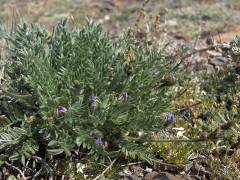
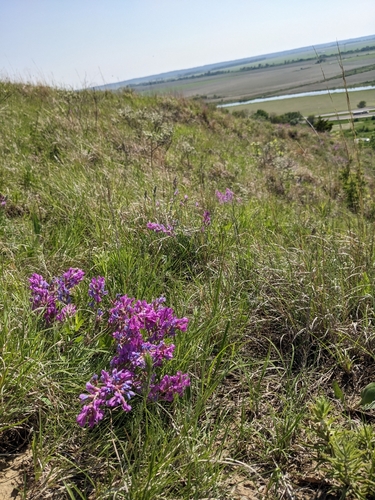
Oxytropis lambertii is a tufted, stemless perennial that grows from a deep taproot and woody crown, forming low clumps 4-12 in (10-30 cm) tall. The leaves rise directly from the crown and are pinnately compound with 7 to 19 narrow leaflets, each 0.4-1.2 in (1-3 cm) long and densely covered in silky, silvery-gray hairs. From May to July the plant sends up leafless flower stalks topped with spikes of 10 to 25 pea-shaped flowers, rose-pink to magenta or purple, each 0.6-1 in (1.5-2.5 cm) long, with a small pointed beak on the keel that separates the genus from true milkvetches. Inflated, papery pods follow, splitting to release seed. It grows on dry shortgrass prairie, plains, and rocky slopes, deep-rooted against drought. The silvery foliage and rose-purple flower spikes contrast with the bare prairie ground. All parts contain the alkaloid swainsonine, which accumulates in grazing animals and causes a poisoning known as locoism; the plant is a recognized hazard on western rangeland. Its deep taproot makes established plants slow to transplant or divide.
Native Range
Native to the Great Plains and interior western United States and adjacent Canada, from Minnesota and Manitoba west to Montana and south through the plains to Texas, New Mexico, and Arizona. It grows on dry shortgrass prairie, plains, and rocky hills.Suggested Uses
Used in dry prairie restorations, rock gardens, and xeric native plantings for late-spring color. On rangeland it is managed as a toxic weed because the foliage poisons horses, cattle, and sheep.How to Identify
Appearance
Size & Dimensions
Height4" - 1'
Width/Spread6" - 1'
Colors
Bloom Information
Detailed Descriptions
Flower Description
rose-pink to purpleFoliage Description
silvery-grayGrowing Conditions
Sun Requirements
Requires 6-12 hours of direct sunlight daily
• Full Sun: 6+ hours of direct sunlight
• Partial Shade: 3-6 hours of direct sunlight
• Full Shade: Less than 3 hours of direct sunlight