Ostrya, Genus, virginiana, Species,
- Genus & species
American hophornbeam
Overview
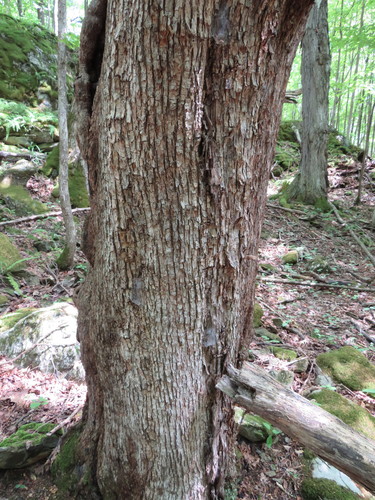
Ostrya virginiana is a small deciduous tree in the Betulaceae growing 25-40 feet (7.5-12 m) tall with a rounded crown, usually found as an understory tree in eastern North American forests. The bark is grey-brown and breaks into narrow, shaggy, vertical strips that loosen at both ends. The birch-like leaves are 2-5 inches (5-13 cm) long, oval with doubly toothed edges, turning yellow in autumn. Drooping male catkins form in autumn and open the following spring, while female flowers develop into hanging clusters of papery, hop-like sacs, each enclosing a small nutlet, that ripen tan in late summer. The wood is dense and very hard, which gives the tree its other common name, ironwood. It grows slowly and tolerates shade, but it is slow to recover from damage and difficult to transplant once established. Hardy in USDA zones 3-9, it grows in full sun to partial shade in well-drained soil and tolerates dry, rocky ground. Native to eastern North America, Ostrya virginiana grows on slopes, ridges, and in mixed woodland from Canada to the Gulf and into Central America.
Native Range
Ostrya virginiana is native to eastern North America, from Nova Scotia and Ontario south to Florida and west to the eastern Great Plains, with populations into Mexico and Central America. It grows on dry slopes, ridges, and in mixed hardwood forests as an understory tree.Suggested Uses
Grown as a small shade and understory tree in woodland and native gardens, on slopes, and along woodland edges. The slow growth and modest size suit smaller yards and spaces beneath taller trees.How to Identify
Appearance
Size & Dimensions
Height25' - 40'
Width/Spread20' - 30'
Bloom Information
Male catkins form in autumn and hang through winter, opening in spring, typically April to May, as the leaves expand. Female flowers are small and easy to overlook. Hop-like fruiting clusters develop through summer and ripen tan by late summer.
Detailed Descriptions
Flower Description
green to brownFoliage Description
green, turning yellow in fallGrowing Conditions
Sun Requirements
Requires 4-8 hours of direct sunlight daily
• Full Sun: 6+ hours of direct sunlight
• Partial Shade: 3-6 hours of direct sunlight
• Full Shade: Less than 3 hours of direct sunlight
Care & Maintenance
Care Guide
Ostrya virginiana grows in full sun to partial shade and tolerates most well-drained soils with a pH of 5.0-7.5, including dry, rocky ground. Established trees tolerate drought and need little supplemental water. It grows slowly and is hard to move once established, so it is set out young in its final position. It has few serious pests or diseases. It needs little pruning or fertilizer. The dense wood resists storm breakage.Pruning
Prune in winter or early spring to remove dead, crossing, or damaged branches and to lift the lower crown. The naturally tidy form needs little shaping. The hard wood is slow to seal large cuts, so removing smaller branches is gentler on the tree.Pruning Schedule
Prune: February
winter