Osmunda, Genus, regalis, Species, 'Purpurascens', Cultivar,
- Genus & species
- Cultivar
purple royal fern
Near-cosmopolitan (Europe, Africa, Asia, Americas; temperate/subtropical wetlands)
Overview
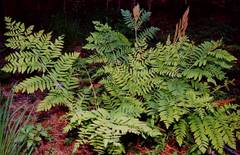
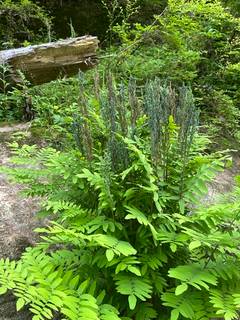
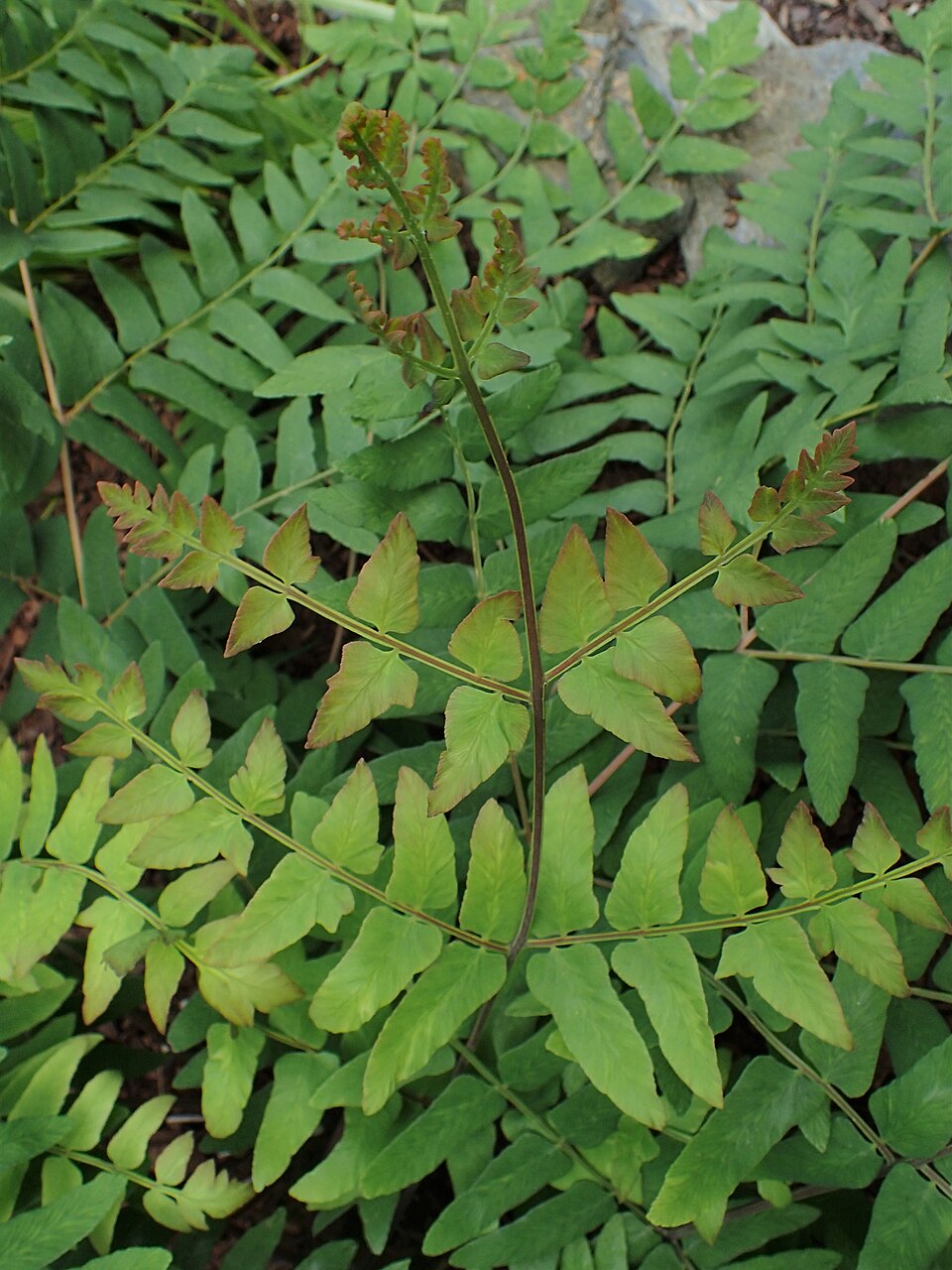
Osmunda regalis 'Purpurascens' is a deciduous fern reaching 3-5 feet (0.9-1.5 m) tall with a spread of 2-4 feet (0.6-1.2 m) and a vase-shaped, upright habit. This cultivar of the royal fern is distinguished by strongly purple-tinted new growth: the spring croziers and young fronds emerge deep purple-bronze to wine-purple before maturing to green by midsummer. The fronds are bipinnately compound, 24-48 inches (60-120 cm) long, with broadly oblong pinnules 0.5-1 inch (1.3-2.5 cm) long. The stipes (stems) and rachis retain a purplish tint throughout the season. Fertile fronds produce brown, tassel-like sporangia clusters at the frond tips in summer. Growth rate is slow. Hardy to zone 3. Larger than 'Cristata' (which reaches 2-3 feet) and closer to the species in size. Requires consistently moist to wet, acidic conditions.
Native Range
Osmunda regalis is native to Europe, Africa, Asia, and the Americas in temperate and subtropical wetlands, bogs, and stream banks. 'Purpurascens' is a cultivar selected for purple new growth.Suggested Uses
Planted at pond edges, stream banks, or in moist borders at 24-36 inch (60-90 cm) spacing. The purple spring growth is the distinguishing feature—site where emerging croziers are visible. Larger than 'Cristata'. Requires moist-to-wet acidic conditions. Not suitable for dry or alkaline sites.How to Identify
Appearance
Size & Dimensions
Height3' - 5'
Width/Spread2' - 4'
Bloom Information
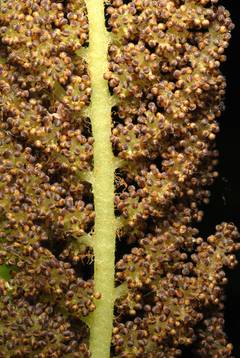
Ferns do not flower. Fertile fronds produce brown tassel-like sporangia clusters at frond tips in June-August. Spores ripen and disperse by late summer.
Detailed Descriptions
Foliage Description
Spring: deep purple-bronze to wine-purple new growth; matures to green; purplish stipes/rachis year-round; bipinnate 24-48 inchesGrowing Conditions
Sun Requirements
Requires 2-5 hours of direct sunlight daily
• Full Sun: 6+ hours of direct sunlight
• Partial Shade: 3-6 hours of direct sunlight
• Full Shade: Less than 3 hours of direct sunlight
Care & Maintenance
Care Guide
Plant in partial shade in consistently moist to wet, acidic soil (pH 4.5-6.0). Hardy to zone 3. Full shade reduces the purple coloring intensity. Thrives at pond edges and stream banks. Does not tolerate drought. Acidic, humus-rich soil required.Pruning
Remove spent fronds in late autumn or early spring before new croziers emerge. No other pruning needed.Pruning Schedule
Prune: March
early spring
Container Growing
Suitable for container growing
Minimum container size: 7 gallons