Image 1 of 5
1 / 5
Plant Reference
Osmunda, Genus, regalis, Species,
- Genus & species
royal fern
Nearly cosmopolitan — eastern North America, Europe, Asia, Africa, Central and South America; bog margins, stream banks, wet meadows, and swamp forests on every inhabited continent
Overview
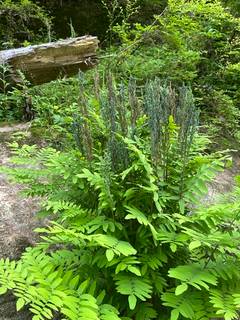
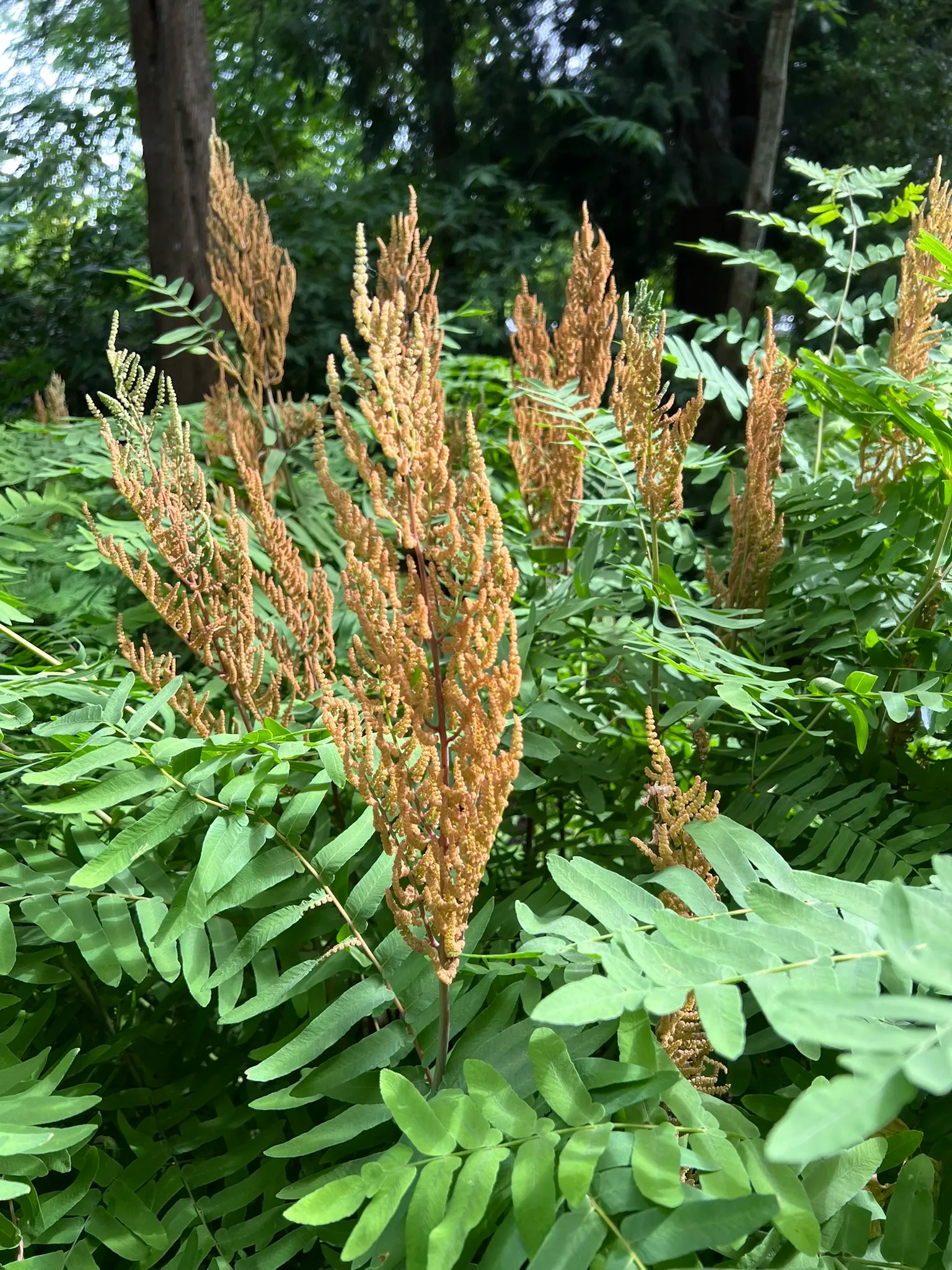
Osmunda regalis is a large clumping deciduous fern in the family Osmundaceae growing 2–6 feet (60–180 cm) tall and 2–4 feet (60–120 cm) wide from a slowly expanding fibrous root crown that develops over many years into a prominent mounded mass at the soil surface. The specific epithet regalis is Latin for royal and gives the species the common name royal fern. Fronds are bipinnate with widely spaced oblong pinnules 1–2 inches (2.5–5 cm) long that resemble the leaflets of locust (Gleditsia) or honey locust more closely than the finely divided fronds of most garden ferns, and this open widely-spaced pinnule arrangement gives the fronds an airy open texture that is quite different from the feathery lacy texture associated with fern foliage. New croziers emerge in spring with a pinkish-bronze tint that fades to bright green as the fronds expand and mature through summer, and the foliage turns yellow-gold to russet in fall before dying back to the crown for the winter dormancy. Fertile fronds carry dense rusty-brown plumes of sporangia at the frond tips that stand above the sterile foliage and resemble dried flower clusters — this is the source of the alternate common name flowering fern, even though ferns do not produce flowers and the rusty-brown plumes are clusters of sporangia (spore-bearing structures) rather than floral organs. The family Osmundaceae is among the oldest fern families with a fossil record extending to the Permian period approximately 260 million years ago, and living Osmunda fronds closely resemble Permian and Mesozoic fossils in their overall architecture. The species has a nearly cosmopolitan distribution, growing on every inhabited continent — eastern North America, Europe, Asia, Africa, and Central and South America — on bog margins, stream banks, wet meadows, and in the shaded understory of swamp forests where the soil is permanently moist to saturated. Limitation: the species calls for permanently moist to wet acidic soil (pH 4.5–6.5) and does not tolerate drought at any stage of growth, and this absolute wet-soil requirement is the main cultural limitation — the species fails on well-drained garden positions and in any soil that dries out during the summer growing season. The fibrous root crown builds up over many years and produces what is known as osmunda fiber, a coarse fibrous root material that was historically harvested and used as an orchid potting medium before synthetic alternatives replaced it in the commercial orchid industry. Non-toxic and deer-resistant.
Native Range
Nearly cosmopolitan — the species grows on every inhabited continent including eastern North America, Europe, Asia, Africa, and Central and South America. Found on bog margins, stream banks, wet meadows, and in the shaded understory of swamp forests where the soil is permanently moist to saturated on acidic substrates. In eastern North America the species ranges from Newfoundland and Quebec south through the Appalachian region to Florida and west to the Ozarks of Missouri and Arkansas.Suggested Uses
Used along stream banks, at bog and pond margins, in rain gardens, in wet woodland gardens, and at the edges of constructed wetlands at 2–4 foot (60–120 cm) spacing between plants. The bipinnate locust-like fronds, the pinkish-bronze spring croziers, the rusty-brown terminal fertile plumes, and the yellow-gold to russet fall color carry the species through four seasons of interest on permanently wet sites where most other ornamental plants cannot grow. Companion plantings of Carex (sedges), Iris versicolor (blue flag iris), Caltha palustris (marsh marigold), and other wetland perennials pair well with the species on bog and stream-bank positions. Well-drained garden positions, dry summer positions, and any site where the soil dries out during the growing season are unsuitable because of the absolute wet-soil requirement of the species.How to Identify
Appearance
Size & Dimensions
Height2' - 6'
Width/Spread2' - 4'
Bloom Information
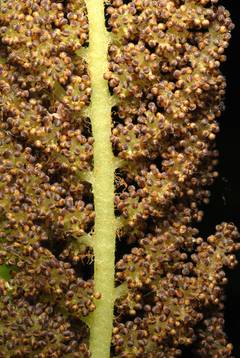
The species is a fern and does not produce flowers or bloom. Fertile fronds carry dense rusty-brown plumes of sporangia at the frond tips in midsummer (June and July), and the spores are released by wind through the summer months. The fertile plumes resemble dried flower clusters and are the source of the alternate common name flowering fern.
Detailed Descriptions
Foliage Description
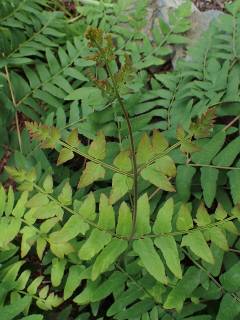
pinkish-bronze on emergence (the uncoiling croziers carry a coppery tint in spring), maturing to bright green through summer; bipinnate fronds with widely spaced oblong pinnules 1-2 inches (2.5-5 cm) long that resemble locust (Gleditsia) leaflets more closely than typical fern fronds; fall color ranges through yellow-gold to russet before the fronds die back for winterGrowing Conditions
Sun Requirements
Requires 2-8 hours of direct sunlight daily
• Full Sun: 6+ hours of direct sunlight
• Partial Shade: 3-6 hours of direct sunlight
• Full Shade: Less than 3 hours of direct sunlight
Care & Maintenance
Care Guide
Site in partial shade to full sun with 2–8 hours of direct sun per day — full sun is tolerated only where the soil is permanently moist to wet, and afternoon shade extends the foliage display in warm continental climates. Permanently moist to wet acidic soil with a pH of 4.5–6.5 is an absolute requirement because the species does not tolerate drought at any stage of growth and fails on well-drained positions that dry out during the summer growing season. Bog margins, stream banks, rain garden positions, and other permanently saturated sites are the suited planting positions, and supplemental irrigation through the full growing season is needed on any position that is not naturally wet. Dead fronds are cut to the ground in early spring (March) before the new croziers emerge from the fibrous crown. Non-toxic and deer-resistant. Hardy in USDA zones 3–9.Pruning
Dead fronds from the previous growing season are cut to the ground in early spring (March) before the new croziers emerge from the fibrous root crown. The cut material is removed to the compost pile or left as mulch over the dormant crown. No other pruning is needed through the growing season because the fronds develop naturally from the crown and the species does not call for shaping or thinning cuts.Pruning Schedule
Prune: March
early spring