Orobanche, Genus, spp., Multiple species,
- Genus
- Multiple species
broomrapes
Temperate Northern Hemisphere; Mediterranean, the Middle East, and central Asia
HardinessZones 5–10
Overview
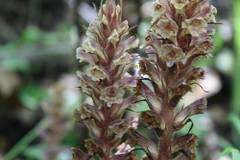
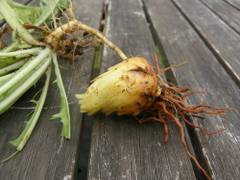
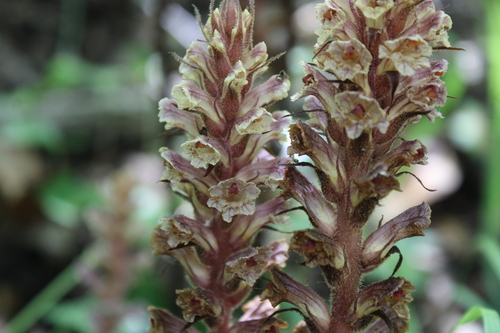
Orobanche is a genus of roughly 150 species of parasitic flowering plants in the family Orobanchaceae, distributed mainly across the temperate Northern Hemisphere, with centers of diversity in the Mediterranean region and western Asia. The plants lack chlorophyll and produce no green tissue; instead they attach to the roots of host plants through a swollen structure called a haustorium and draw water and nutrients directly from the host. Above ground, each plant is a fleshy erect stem 4-28 inches (10-70 cm) tall in shades of yellow, brown, purple, or straw, clothed in small scale-like leaves rather than functional foliage. Tubular two-lipped flowers, resembling those of snapdragons, are borne in a dense spike and range from cream and yellow to violet and purple-brown. Each plant can release tens of thousands of dust-like seeds that stay viable in the soil for many years and germinate only when they detect chemical signals from a suitable host root. Host range varies, with some species attacking a narrow set of plants and others parasitizing many. Several species, including O. crenata and O. cumana, are agricultural weeds that reduce yields of legumes, sunflower, and other crops across the Mediterranean and central Asia. Because the plants depend entirely on a living host, they cannot be cultivated as ordinary garden plants.
Native Range
Orobanche is native across the temperate and subtropical Northern Hemisphere, with the greatest diversity in the Mediterranean basin, the Middle East, and western and central Asia. A smaller number of species occur in North America and Africa.Suggested Uses
The genus is not grown ornamentally and has no garden uses; it is studied chiefly as a parasitic weed of crops and as an example of plant parasitism. A few species feature in botanical and ecological research on host-parasite relationships.How to Identify
Appearance
Size & Dimensions
Height4" - 2'4"
Width/Spread2" - 6"
Bloom Information
Flowering occurs mainly in late spring and summer, broadly April to August depending on species and host cycle. Each spike opens its tubular flowers from the base upward over several weeks. Seed capsules ripen soon after flowering and split to release very large quantities of tiny seeds.
Detailed Descriptions
Flower Description
cream, yellow, violet, to purple-brownFoliage Description
yellow to brown scales; no green foliage