Ophrys, Genus, spp., Multiple species,
- Genus
- Multiple species
bee orchids
Europe, Mediterranean, North Africa, Western Asia
Overview
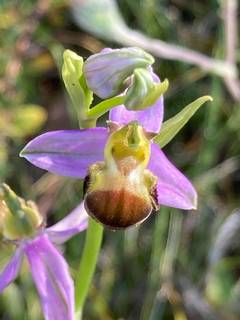
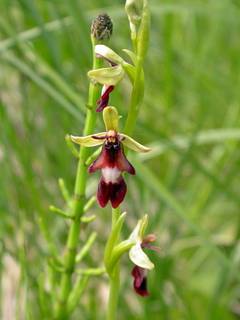
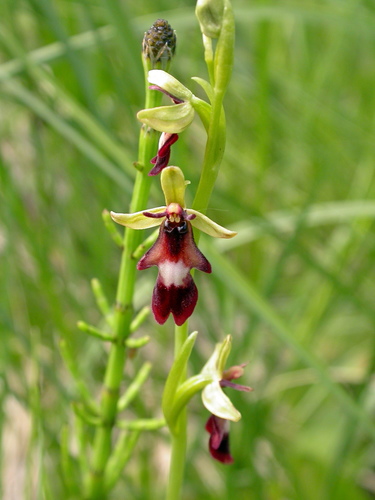
Ophrys is a genus of terrestrial orchids in the family Orchidaceae, comprising roughly 30 to 150 species depending on classification, native to Europe, North Africa, and western Asia. Plants grow from a pair of underground tubers and reach 4 to 16 inches (10 to 40 cm) tall, with a basal rosette of strap-shaped leaves that appears in autumn and a slender spike of a few flowers in spring. The flowers are the defining feature: the lower lip, or labellum, is enlarged, velvety, and patterned to resemble the body of a female bee, wasp, or fly, while the upper sepals are usually green, pink, or white. This resemblance draws male insects, which attempt to mate with the flower and transfer pollen in the process, a pollination strategy known as pseudocopulation. The genus grows in grassland, scrub, open woodland, and rocky slopes, usually on lime-rich, low-nutrient soils, and depends on symbiotic soil fungi to germinate and grow. A limitation across the genus is this dependence on specific fungi and pollinators, which makes the plants difficult to cultivate and intolerant of disturbance to their habitat.
Native Range
Ophrys is native to Europe, the Mediterranean basin, North Africa, and western Asia. The genus reaches its greatest diversity around the Mediterranean, where species grow in calcareous grassland, garrigue, and open pine woodland.Suggested Uses
Ophrys species are grown in specialist alpine houses, raised beds, and unimproved wildflower grassland on calcareous soil. The genus is used in conservation and meadow-restoration plantings and is studied in botanic collections for its insect-mimicking flowers.How to Identify
Appearance
Size & Dimensions
Height4" - 1'4"
Width/Spread2" - 6"
Bloom Information
Ophrys flowers in spring, roughly March through June depending on species and latitude, with Mediterranean species blooming earlier than those farther north. Each spike carries a few flowers that open in succession from the base. After flowering, the foliage withers and the plant rests underground through the dry summer.
Detailed Descriptions
Flower Description
brown, green, pink, and whiteFoliage Description
greenGrowing Conditions
Sun Requirements
Requires 4-8 hours of direct sunlight daily
• Full Sun: 6+ hours of direct sunlight
• Partial Shade: 3-6 hours of direct sunlight
• Full Shade: Less than 3 hours of direct sunlight
Care & Maintenance
Care Guide
Across the genus, Ophrys grows in full sun to light shade on sharply drained, lime-rich soils low in nutrients, with an alkaline pH of about 7.0 to 8.5. The plants depend on symbiotic mycorrhizal fungi and are difficult to transplant or grow from seed without them. Summer dormancy requires dry conditions, and tubers rot in soil kept moist after the foliage dies back. Where grown, plants are placed in unimproved grassland or alpine beds and left undisturbed. Fertilizer and rich soil reduce the plants persistence rather than aiding them. Cultivation is generally limited to specialist growers and botanic collections.Pruning
No routine pruning is required. Spent flower spikes can be left so seed can ripen and disperse, or removed once flowering ends. The withering foliage is left in place to die down naturally as the plant enters summer dormancy.Container Growing
Suitable for container growing
Minimum container size: 1 gallons