Image 1 of 2
1 / 2
© János Korom Dr. from Wien, Austria, some rights reserved (CC-BY-SA) · Wikimedia Commons
Olea, Genus, spp., Multiple species,
- Genus
- Multiple species
olives
Mediterranean Basin, Africa, southern Asia, Australasia
Overview
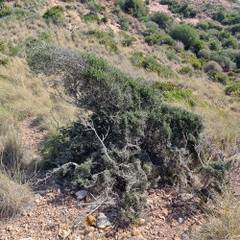
Olea is a genus of about 30 to 40 species of evergreen trees and shrubs in the family Oleaceae, distributed across the Mediterranean Basin, Africa, southern Asia, and Australasia. Plants carry opposite, leathery, lance-shaped leaves 1 to 4 inches (2.5 to 10 cm) long that are grey-green above and silvery-scaled beneath. Mature size ranges from low shrubs of 6 to 10 feet (1.8 to 3 m) to trees reaching 30 to 50 feet (9 to 15 m), most developing a short, often gnarled trunk and a rounded, spreading crown. Small four-petalled flowers, cream to white and lightly fragrant, open in branched clusters from the leaf axils in late spring. These are followed by oval drupes that ripen from green through red to black, the fruit of O. europaea being the cultivated olive. The genus is slow-growing and long-lived, with some olive trees surviving many centuries. Olea tolerates heat, drought, and poor rocky soils but is damaged by hard frost, which limits it to warm-temperate and subtropical regions. O. europaea is grown commercially for oil and table fruit, while species such as O. capensis are cut in Africa as hardwood timber. Plants withstand heavy pruning and resprout from old wood.
Native Range
Olea ranges naturally across the Mediterranean Basin, much of Africa, southern and eastern Asia, and into Australia and the Pacific. O. europaea is native to the Mediterranean region, where it has been cultivated for thousands of years.Suggested Uses
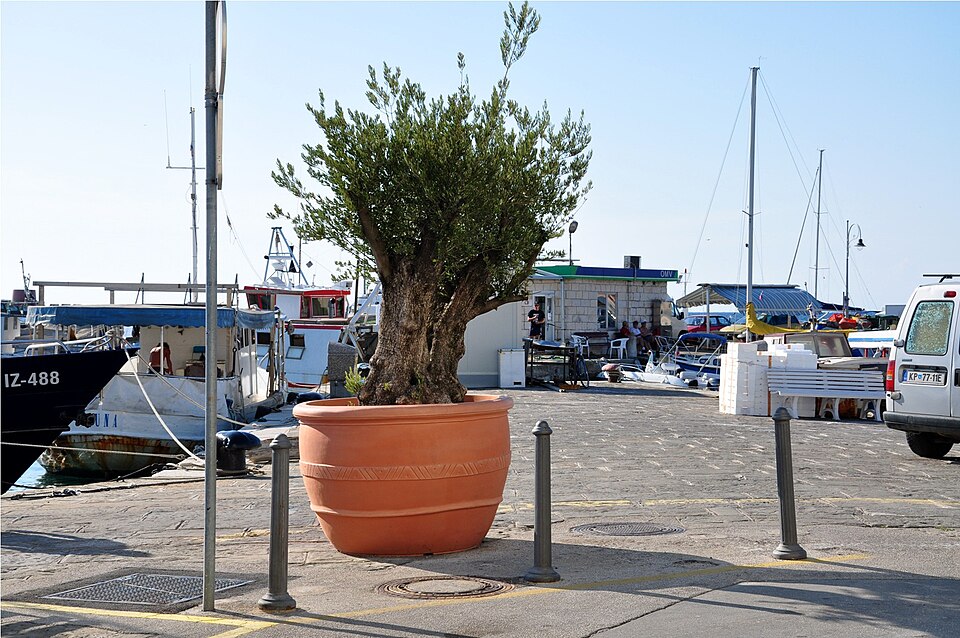
Olea is grown as an evergreen landscape tree, a clipped hedge or standard, a container specimen, and, in the case of O. europaea, as an orchard crop for oil and fruit. Its drought tolerance suits it to dry gardens and Mediterranean-style plantings.How to Identify
Appearance
Size & Dimensions
Height6' - 50'
Width/Spread10' - 30'
Bloom Information
Flowering occurs in late spring, generally May to June in the Northern Hemisphere. The small fragrant flowers are wind- and insect-pollinated, and fruit develops through summer to ripen in autumn and early winter.
Detailed Descriptions
Flower Description
Cream to whiteFoliage Description
Grey-green above, silvery beneathGrowing Conditions
Sun Requirements
Requires 6-12 hours of direct sunlight daily
• Full Sun: 6+ hours of direct sunlight
• Partial Shade: 3-6 hours of direct sunlight
• Full Shade: Less than 3 hours of direct sunlight
Care & Maintenance
Care Guide
Olea grows in full sun and free-draining soil, tolerating drought, heat, alkaline ground, and rocky or shallow sites once established. Young plants need regular watering through their first seasons, after which most species are highly drought-tolerant. Hard frost below about 15 F (minus 9 C) damages foliage and stems, so the genus is limited to zones 8 and warmer or grown under protection. Plants accept container culture and clipping, including training as standards or hedges. Fruiting can be heavy and may drop and stain paving beneath the canopy. Feeding is rarely needed in reasonable soils, and waterlogged ground is the main cause of decline.Pruning
Olea tolerates hard pruning and resprouts readily from old wood. Thinning and shaping in late winter or early spring before new growth removes crossing or congested branches and opens the crown. Trees grown for fruit are pruned to keep the canopy open and within reach.Pruning Schedule
Prune: February–March
winterearly spring
Container Growing
Suitable for container growing
Minimum container size: 10 gallons