Nothoscordum, Genus, spp., Multiple species,
- Genus
- Multiple species
false garlic
Americas, most diverse in South America
Overview
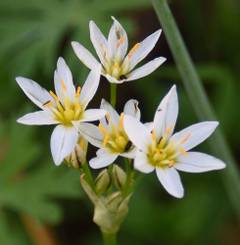
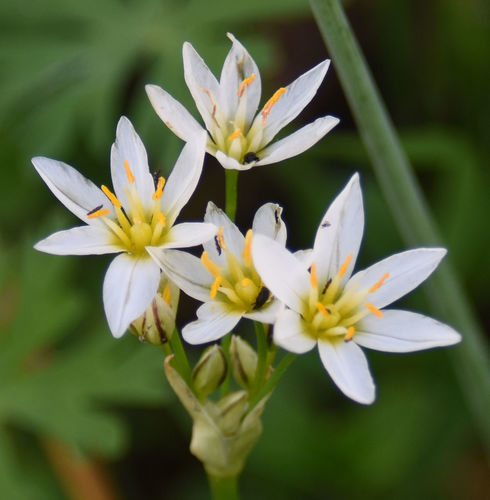
Nothoscordum is a genus of about 20 species of bulbous perennials in the family Amaryllidaceae, native to the Americas, with the greatest variety in South America and several species in the southern United States. Plants grow from small bulbs and produce a tuft of narrow, flat, grassy leaves 4-16 in (10-40 cm) long that resemble those of onions but, unlike true onions and garlic, give off no oniony smell when crushed. A leafless flowering stalk carries an umbel of star-shaped six-petalled flowers in white, cream, or yellow, often with a green or brown midvein, each about 0.5-0.8 in (12-20 mm) across. Bloom comes mainly in spring, with some species flowering again after summer rain. Small capsules of black seeds follow. The genus grows in grassland, open woodland, rocky slopes, and disturbed ground. Several species, especially N. gracile, multiply rapidly through many small offset bulbs and have become persistent garden and lawn weeds that are hard to dig out cleanly. N. bivalve is a spring wildflower of central and southern North America.
Native Range
The genus is native to the Americas, from the southern and central United States through Mexico and Central America to South America, where it is most diverse. Species grow in grassland, open woods, rocky slopes, and disturbed ground.Suggested Uses
The better-behaved species are grown in rock gardens, gravel gardens, and the front of borders for spring flowers, and N. bivalve is used in native wildflower and meadow plantings. Container growing is used to enjoy the flowers while limiting the spread of the weedier kinds.How to Identify
Appearance
Size & Dimensions
Height4" - 1'4"
Width/Spread3" - 6"
Bloom Information
Flowering is mainly in spring, when umbels of star-shaped white, cream, or yellow flowers open on bare stalks above the leaves. Some species flower a second time after summer or autumn rain. Seed capsules ripen within a few weeks, adding to spread by the many offset bulbs.
Detailed Descriptions
Flower Description
white, cream, or yellow with green or brown midveinFoliage Description
greenGrowing Conditions
Sun Requirements
Requires 4-10 hours of direct sunlight daily
• Full Sun: 6+ hours of direct sunlight
• Partial Shade: 3-6 hours of direct sunlight
• Full Shade: Less than 3 hours of direct sunlight
Care & Maintenance
Care Guide
Plants grow in full sun to light shade and in most well-drained soils, tolerating poor and dry ground once established. They are undemanding and drought-tolerant during summer dormancy in the spring-flowering species. The main drawback is spread, as the offset bulbs and self-seeding move plants into lawns and beds, where fragments left in the soil regrow. No feeding is needed on average soils. Lifting and dividing is rarely required and tends to scatter the small bulbs further. Container culture keeps the spreading species contained.Pruning
Spent flower stalks are cut off before seed sets to limit self-seeding in the weedy species. Faded leaves are left to die back so the bulb can build reserves for the next season.Pruning Schedule
late spring
Container Growing
Suitable for container growing
Minimum container size: 1 gallons