Nigella, Genus, damascena, Species,
- Genus & species
Love-in-a-mist
Southern Europe, North Africa, and southwestern Asia.
SunFull Sun
Overview
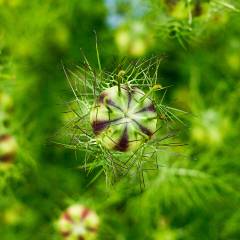
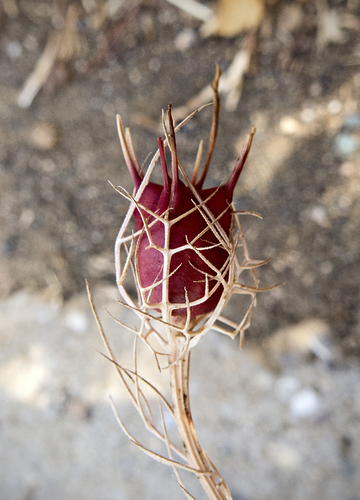
Nigella damascena is a cool-season annual reaching 12-24 inches (30-60 cm) tall and 6-9 inches (15-23 cm) wide with an upright, branched, airy habit. The species name references Damascus, Syria. Foliage is bright green and thread-like, finely dissected into filament-like segments 0.04-0.08 inch (1-2 mm) wide, forming a mist of feathery bracts around each flower and seedpod. Five-petaled flowers 1-1.5 inches (2.5-4 cm) across open sky blue, pale blue, white, or pink from late May through July, each flower nestled inside a collar of feathery involucral bracts. Individual flowers last 5-7 days. Inflated balloon-like seedpods 1-1.5 inches (2.5-4 cm) with maroon-striped ribs develop after petal drop and persist on the plant for 6-8 weeks, carrying the visual display into autumn; the pods are used fresh and dried. Plants complete the full life cycle in 55-70 days from germination and die after seed set. The species self-sows reliably on open, well-drained soil and establishes persistent self-sown colonies in favorable sites. Seeds contain the alkaloid damascenine; ingestion in quantity is toxic. Plants transplant poorly because of a deep taproot; successful establishment is from direct-sown seed.
Native Range
Nigella damascena is native to southern Europe, North Africa, and southwestern Asia, where it grows as a weedy annual on disturbed ground, field edges, and rocky slopes. The species has naturalized in scattered sites across temperate North America and Australia from garden escapes.Suggested Uses
Direct-sown in cottage gardens, cutting gardens, and mixed annual borders at 8 inch (20 cm) spacing. The feathery foliage and balloon-like seedpods extend the ornamental window past bloom. Common seed mixes include the 'Persian Jewels' series, which produces blue, white, pink, and rose flowers in the same planting. Seeds contain damascenine and are toxic to humans if ingested in quantity. Not grown in wet soils or heavy clay, where germination is poor and plants damp off.How to Identify
Appearance
Size & Dimensions
Height1' - 2'
Width/Spread6" - 9"
Bloom Information
Five-petaled flowers 1-1.5 inches (2.5-4 cm) across open late May through July in spring-sown plantings, with peak bloom in June. Individual flowers last 5-7 days. Successive sowings every 3 weeks extend the bloom period into August. Inflated balloon-like seedpods develop after petal drop and persist on the plant for 6-8 weeks, shifting the ornamental display from flower to pod through August and September.
Detailed Descriptions
Flower Description
Sky blue, pale blue, white, or pink five-petaled flowers 1-1.5 inches (2.5-4 cm) across, nestled in a feathery involucral bract collarFoliage Description
Bright green, thread-like, finely dissected into filament-like segments 0.04-0.08 inch (1-2 mm) wide; surrounds flowers and seedpods as a feathery collarGrowing Conditions
Sun Requirements
Requires 6-10 hours of direct sunlight daily
• Full Sun: 6+ hours of direct sunlight
• Partial Shade: 3-6 hours of direct sunlight
• Full Shade: Less than 3 hours of direct sunlight
Care & Maintenance
Care Guide
Plants grow in full sun in lean, well-drained soil with a pH of 6.0-7.5, including chalk. Direct-sown seed is the only reliable planting method; the deep taproot breaks on transplanting and seedlings started in cell packs establish poorly. Seeds are sown in fall for overwintering plants in USDA zones 7-10, or in early spring as soon as soil can be worked in zones 3-6; germination takes 10-14 days at 55-65°F (13-18°C). Successive sowings every 3 weeks through May extend the bloom season into August. Plants are short-lived at 8-10 weeks of active growth and die after seed set. Self-sown seedlings appear the following spring in open soil.Pruning
Cutting spent flowers extends bloom by 1-2 weeks; leaving them on the plant produces the inflated balloon-like seedpods, which are the secondary ornamental feature. Pods cut when fully inflated and still green dry well for arrangements if hung upside down for 2 weeks in a warm dry space. A portion of pods left to mature drops seed and produces a self-sown stand the following spring. Plants are pulled after seed set.Pruning Schedule
Prune: July–August
summer
Toxicity Warning
Toxic to humansPlanting Guide
Planting Methods & Timing
Planting Method
direct sow
Direct Sow Timing
Direct sow in fall for overwintering plants in USDA zones 7-10, or in early spring as soon as the soil can be worked in zones 3-6. Successive sowings every 3 weeks through May extend bloom. Seeds germinate in 10-14 days at 55-65°F (13-18°C).
Days to Maturity
55–70 days
Plant Spacing
8 inches