Nigella, Genus, spp., Multiple species,
- Genus
- Multiple species
Love-in-a-mist
Mediterranean, Europe, North Africa, and southwestern Asia
SunFull Sun
Overview
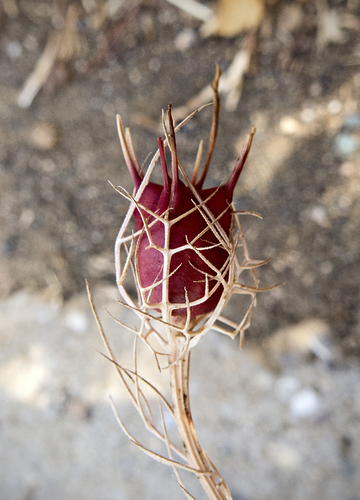
Nigella is a genus of about 20 species of annual herbs in the buttercup family (Ranunculaceae), native to the Mediterranean region, Europe, North Africa, and southwestern Asia. Plants grow 20-60 cm (8-24 in) tall on slender, branching stems clothed in thread-like, finely divided leaves. Solitary flowers open in blue, white, pink, or purple, and in N. damascena they sit within a ruff of feathery green bracts that give the common name love-in-a-mist. The flowers are followed by inflated, horned seed capsules that dry to a papery brown and are used in flower arrangements. N. sativa, known as black cumin or black seed, is grown for its small black seeds used as a spice and in traditional remedies. Plants grow quickly from seed, flower in cool weather, and self-sow freely where the capsules are left to scatter. Bloom is brief on each plant, and the genus does not transplant well because of its taproot.
Native Range
Nigella is native to the Mediterranean basin, southern Europe, North Africa, and southwestern to Central Asia, growing on disturbed ground, fields, and rocky slopes.Suggested Uses
Grown in cottage gardens, annual borders, and cutting gardens for both the flowers and the inflated seed pods, which are used fresh or dried. N. sativa is grown as a culinary and medicinal seed crop. Plants are sown in drifts and thinned to 15-20 cm (6-8 in) apart.How to Identify
Appearance
Size & Dimensions
Height8" - 2'
Width/Spread6" - 9"
Bloom Information
Detailed Descriptions
Flower Description
blue, white, pink, or purpleFoliage Description
bright greenGrowing Conditions
Sun Requirements
Requires 6-8 hours of direct sunlight daily
• Full Sun: 6+ hours of direct sunlight
• Partial Shade: 3-6 hours of direct sunlight
• Full Shade: Less than 3 hours of direct sunlight
Water & Climate
Water Needs
Drought Tolerance
Drought tolerant when established
Care & Maintenance
Care Guide
Most species grow in full sun on light, well-drained soil at a neutral to slightly alkaline pH and tolerate poor, dry ground. Seed is sown where plants are to grow, in autumn in mild areas or early spring elsewhere, because the taproot does not recover from transplanting. Seedlings withstand light frost and grow fast in the cool part of the season, fading as summer heat arrives. Little feeding is needed, and overly rich soil produces leafy growth at the expense of flowers. Pests and diseases are few, though damp, crowded plantings can develop root rot.Pruning
Spent flowers can be removed to prolong bloom, or left in place to form the decorative seed pods. Plants are pulled once they yellow and dry at the end of the season. Leaving a few capsules to split ensures self-sown seedlings the following year.Container Growing
Suitable for container growing
Minimum container size: 2 gallons
