Nicandra, Genus, physalodes, Species,
- Genus & species
Apple-of-Peru
SunFull Sun – Part Shade
WaterMedium
Overview
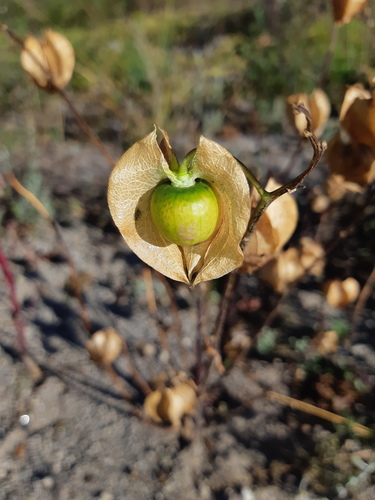
Nicandra physalodes is a bushy annual reaching 2-5 feet (0.6-1.5 m) tall, with stout, branching, ridged stems. Leaves are oval with wavy, coarsely toothed margins, 4-8 inches (10-20 cm) long, mid-green and slightly fleshy. From midsummer to autumn it carries bell-shaped flowers 1-1.6 inches (2.5-4 cm) across, pale blue to violet with a white throat, each lasting about a day and opening for a few hours. The flowers are followed by round, dry berries enclosed in a papery, five-angled, inflated calyx 0.8-1.2 inches (2-3 cm) long that turns green to brown, resembling a small lantern. A single plant can produce thousands of seeds. The plant dies after seeding in autumn. It grows on fertile, disturbed ground and self-seeds freely. All parts contain alkaloids and are toxic if eaten.
Native Range
Native to western South America, particularly Peru and Bolivia. Grows on disturbed, fertile ground, field margins, and waste places. Widely naturalized as a garden escape and weed across temperate and warm regions, including Europe, North America, Africa, and Asia.Suggested Uses
Grown as an annual in borders and cottage gardens for its blue flowers and lantern-like seed pods, which are cut for fresh and dried arrangements, spaced 18-24 inches (45-60 cm) apart. Also grown on disturbed ground as a quick filler. Its heavy self-seeding can make it weedy in open beds.How to Identify
Appearance
Size & Dimensions
Height2' - 5'
Width/Spread1'6" - 3'
Bloom Information
Flowers from July to October. Each pale blue flower opens for only a few hours, usually in the morning, and is pollinated by bees or self-pollinates. Lantern-like fruits develop quickly through late summer and autumn, and a long flowering season keeps flowers and fruit on the plant at the same time.
Detailed Descriptions
Flower Description
pale blue to violet with white throatFoliage Description
mid-greenGrowing Conditions
Sun Requirements
Requires 6-12 hours of direct sunlight daily
• Full Sun: 6+ hours of direct sunlight
• Partial Shade: 3-6 hours of direct sunlight
• Full Shade: Less than 3 hours of direct sunlight
Water & Climate
Water Needs
Care & Maintenance
Care Guide
Grows in full sun to light shade on fertile, moist, well-drained soils, completing its cycle in one season. Seed is sown in spring under cover or direct after the last frost, and seedlings grow quickly to flowering size. Tolerates a range of soils but grows tallest on rich, cultivated ground. It self-seeds heavily, and volunteer seedlings appear the following year wherever seed has fallen. Autumn frost kills the plants. Aphids and whitefly can build up on sheltered plants. All parts contain tropane and other alkaloids and are toxic to people and animals if eaten.Pruning
Tall plants can be staked or cut back in summer to keep them bushy, though this is rarely needed. Removing the lantern fruits before they ripen reduces self-seeding. Plants left to seed produce many volunteer seedlings the next year.Container Growing
Suitable for container growing
Minimum container size: 3 gallons
Toxicity Warning
Toxic to pets and humansPlanting Guide
Planting Methods & Timing
Planting Method
both
Indoor Start
6 weeks before last frost
Direct Sow Timing
spring after the last frost
Days to Maturity
70–100 days
Plant Spacing
20 inches