Nicandra, Genus, spp., Multiple species,
- Genus
- Multiple species
shoo-fly plant
Western South America (Peru and the Andean region)
SunFull Sun – Part Shade
WaterMedium
Overview
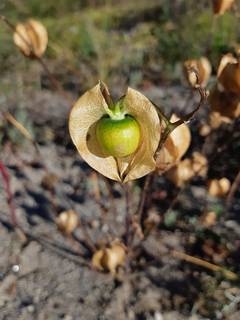
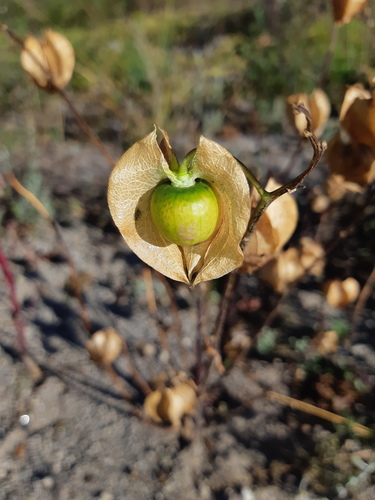
Nicandra is a genus in the nightshade family (Solanaceae) usually treated as monotypic, holding only Nicandra physalodes, the shoo-fly plant or apple of Peru. It is a fast-growing annual reaching 0.5-1.5 m (20-60 in) tall, with erect, branching, ridged stems and alternate, coarsely toothed and lobed leaves 10-20 cm (4-8 in) long. From summer into autumn it carries solitary, bell-shaped flowers 2.5-4 cm (1-1.6 in) across, pale blue to violet with a white throat, each opening for only a few hours around midday. The flowers are followed by dry, papery, five-angled inflated calyces that enclose a brown berry, much like the lanterns of Physalis. The plant self-seeds freely and has naturalised as a weed of waste ground and gardens across temperate and subtropical regions worldwide. Foliage and unripe fruit contain solanaceous alkaloids and are mildly poisonous if eaten. The common name reflects a traditional belief that the plant repels flies, though the effect is slight.
Native Range
Nicandra physalodes is native to western South America, centred on Peru and the surrounding Andean region. From there it has spread as a naturalised weed across Europe, Asia, Africa, North America, and Australia, colonising cultivated ground, roadsides, and waste places. It now grows far more widely as an escape than within its original range.Suggested Uses
Grown as a fast annual in borders, cottage gardens, and cutting beds for its violet bells and lantern-like seed husks, spaced 45-60 cm (18-24 in) apart. The dried husks are cut for indoor arrangements. As a self-seeder, it naturalises readily in open ground.How to Identify
Appearance
Size & Dimensions
Height1'8" - 5'
Width/Spread1'6" - 3'
Bloom Information
Flowering runs from midsummer into autumn, roughly July to October. Each bell-shaped flower opens for only a few hours around midday before closing, with new blooms appearing daily over many weeks. The inflated seed husks follow and persist as the plant dries.
Detailed Descriptions
Flower Description
Pale blue to violet with white throatFoliage Description
Mid-greenGrowing Conditions
Sun Requirements
Requires 6-10 hours of direct sunlight daily
• Full Sun: 6+ hours of direct sunlight
• Partial Shade: 3-6 hours of direct sunlight
• Full Shade: Less than 3 hours of direct sunlight
Water & Climate
Water Needs
Care & Maintenance
Care Guide
Nicandra grows in full sun to light shade on most moist, free-draining soils of moderate to high fertility, with a pH near 6.0 to 7.5. As a frost-tender annual it is sown in spring once the soil warms, flowering the same year and dying with the first autumn frosts. Seed germinates readily, and self-sown plants often appear the following season. Plants need steady moisture for strong growth but tolerate short dry spells. Because it self-seeds heavily, spent plants are often removed before the husks shed seed. It grows in any climate with a frost-free summer long enough to flower and set seed.Pruning
Pinching young plants encourages branching and more flowers. Spent stems and seed husks are cut back in autumn as the annual dies, taken off before seed drops where self-seeding is unwanted. No other pruning applies to this short-lived plant.Toxicity Warning
Toxic to pets and humansPlanting Guide
Planting Methods & Timing
Planting Method
both
Indoor Start
6 weeks before last frost
Direct Sow Timing
After the last frost in spring once soil has warmed
Days to Maturity
70–100 days
Plant Spacing
18 inches