Bougainvillea, Genus, spectabilis, Species,
- Genus & species
bougainvillea
Overview
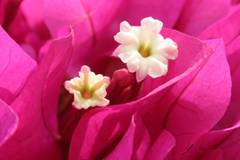
Bougainvillea spectabilis is a thorny flowering vine, growing 120–360 inches (300–900 cm). The colorful display consists of papery bracts (modified leaves) in magenta, purple, red, orange, pink, or white — the true flowers are small tubular white structures 0.5 inch (12 mm) hidden among the bracts. Each cluster contains 3 bracts surrounding 3 true flowers. The papery bracts persist for 4–6 weeks and retain color after drying. Scrambling vine with sharp thorns 0.5–1 inch (12–25 mm) along the stems — the thorns hook onto supports but the vine does not twine or produce aerial roots, so it requires tying to a trellis, arbor, or wall. Blooms in response to drought stress — overwatering and overfertilizing produce vegetative growth at the expense of bracts. A period of dry stress (reduced watering for 3–4 weeks) triggers a new flush of bract production. Named after French navigator Louis Antoine de Bougainville, who circumnavigated the globe in 1766–1769 and encountered the plant in Brazil. Native to Brazil. Full sun (8+ hours) — shade reduces bract production. Drought-tolerant — the roots resent disturbance and waterlogging. Root-bound container plants bloom more heavily. Frost-tender: foliage damage at 32°F (0°C). In the four o'clock family (Nyctaginaceae). Non-toxic. Deer-resistant (thorny). Growth rate is fast. Containers of 5+ gallons (20+ liters). Zones 9–11.
Native Range
Native to Brazil. Named after French navigator Louis Antoine de Bougainville. Widely cultivated in tropical and subtropical regions worldwide.Suggested Uses
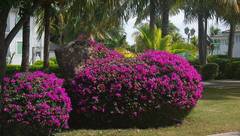
Grown on walls, trellises, arbors, and fences in zones 9–11 (tie to supports — no self-attachment). Containers of 5+ gallons (20+ liters) kept root-bound for heavier blooming. Full sun. Drought stress triggers flowering. Non-toxic. Deer-resistant (thorny).How to Identify
Appearance
Size & Dimensions
Height10' - 30'
Width/Spread8' - 20'
Bloom Information
Detailed Descriptions
Flower Description
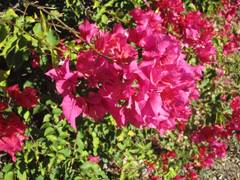
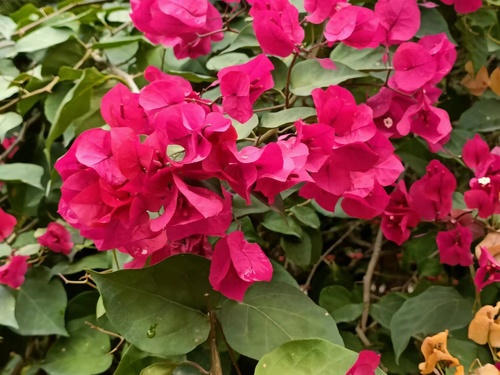
Colored bracts: magenta, purple, red, orange, pink, white (true flowers are small white tubes)Foliage Description
Medium green, ovateGrowing Conditions
Sun Requirements
Requires 8-10 hours of direct sunlight daily
• Full Sun: 6+ hours of direct sunlight
• Partial Shade: 3-6 hours of direct sunlight
• Full Shade: Less than 3 hours of direct sunlight
Care & Maintenance
Care Guide
Full sun (8+ hours). Drought stress triggers flowering — reduce watering for 3–4 weeks to initiate bract flushes. Overwatering produces foliage, not bracts. Sharp thorns — tie to supports (no self-attachment). Root-bound plants bloom more. Frost-tender at 32°F (0°C). Non-toxic. Deer-resistant. Zones 9–11.Pruning
Prune for shape and size in late winter. Cut back by one-third to one-half. Blooms on new growth — pruning promotes branching and more bract flushes. Sharp thorns require thick gloves. Pinch growing tips for bushier growth.Pruning Schedule
Prune: February–March
winter
Container Growing
Suitable for container growing
Minimum container size: 5 gallons