Flowering Shrub
Nerium, Genus, oleander, Species,
- Genus & species
Oleander
Mediterranean Basin through southwestern and southern Asia
Overview
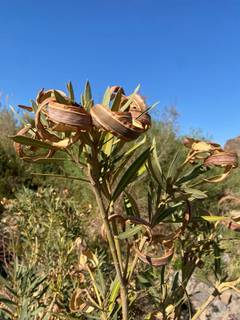
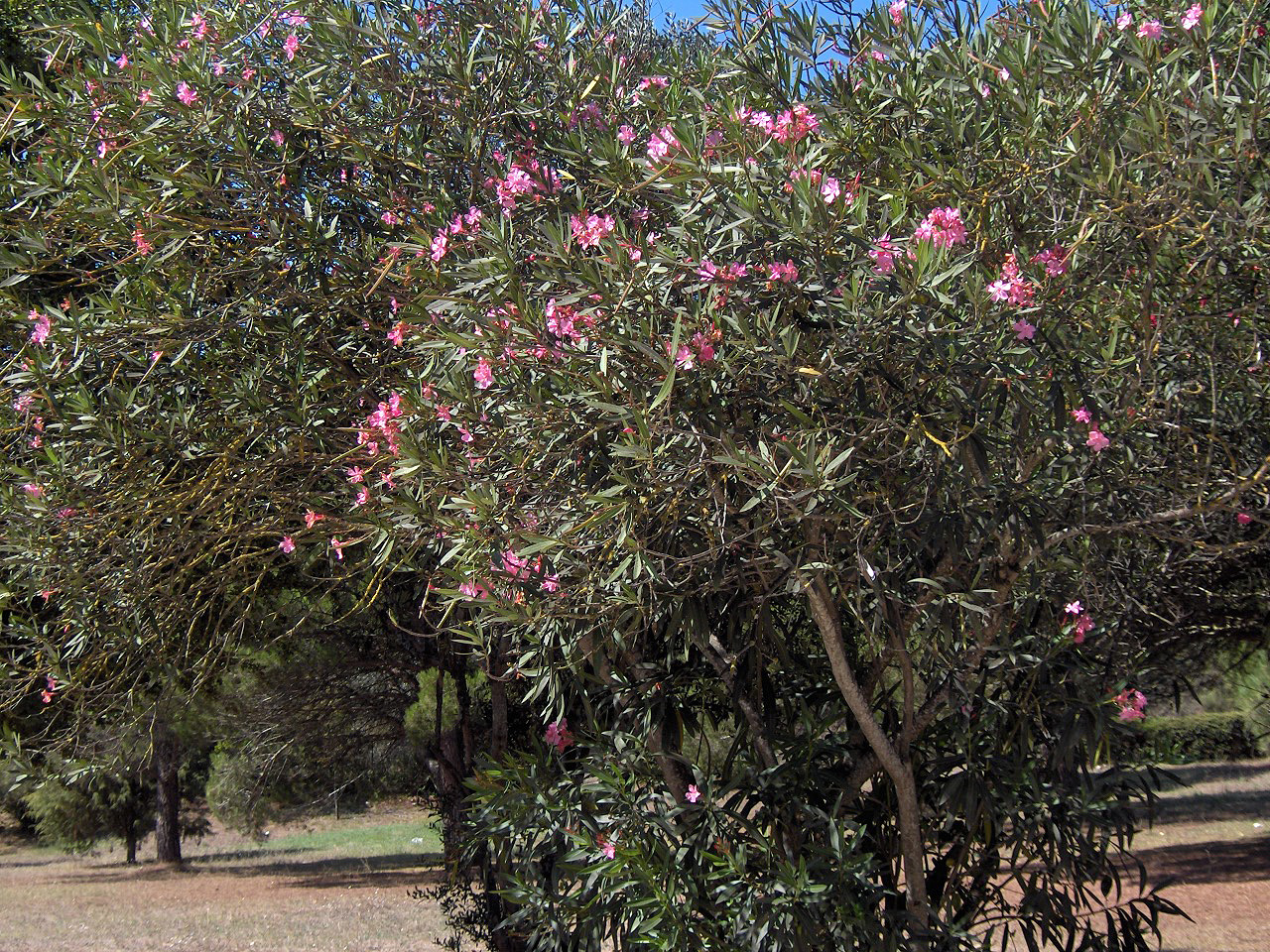
Nerium oleander is a broadleaf evergreen shrub that grows 6–12 feet (1.8–3.7 m) tall and 6–10 feet (1.8–3 m) wide, and reaches 20 feet (6 m) in long-established plantings in frost-free climates. Stems are upright and multi-stemmed, branching from the base. Leaves are narrowly lance-shaped, leathery, 4–8 inches (10–20 cm) long and 0.5–1 inch (1.3–2.5 cm) wide, dark green with a pale midrib, and borne in whorls of three or in opposite pairs. Flowers are 1.5–3 inches (4–8 cm) across, five-lobed, in terminal clusters, in white, pink, red, salmon, or pale yellow depending on the selection, and some forms are double. Fruits are narrow paired follicles 4–7 inches (10–18 cm) long that split to release plumed seeds. All parts of the plant contain cardiac glycosides including oleandrin. Growth tolerates heat, wind, salt spray, and drought once established, but stems are damaged at 15°F (−9°C) and below. Oleander leaf scorch, caused by Xylella fastidiosa, has killed plants across southern California and parts of the southwestern United States.
Native Range
Nerium oleander is native to the Mediterranean Basin and eastward through southwestern and southern Asia, where it grows along dry stream beds and gravelly washes. It has naturalized in warm regions of the Americas, Australia, and southern Africa.Suggested Uses
Nerium oleander is used as a flowering hedge, screen, and windbreak in warm, dry climates, and along highways and coastal sites where salt spray and heat limit other shrubs. It is also grown in containers of 10 gallons (38 L) or larger, with spacing of 5–8 feet (1.5–2.4 m) between hedge plants.How to Identify
Appearance
Size & Dimensions
Height6' - 12'
Width/Spread6' - 10'
Bloom Information
Nerium oleander blooms from late spring through fall, typically May to October in warm climates, on current-season growth. Individual flower clusters persist 1–2 weeks, and plants produce successive clusters over 20 weeks or more. Flowers of some selections are fragrant, and others have no scent.
Detailed Descriptions
Flower Description
White, pink, red, salmon, or pale yellowFoliage Description
Dark green with pale midribGrowing Conditions
Sun Requirements
Requires 6-10 hours of direct sunlight daily
• Full Sun: 6+ hours of direct sunlight
• Partial Shade: 3-6 hours of direct sunlight
• Full Shade: Less than 3 hours of direct sunlight
Care & Maintenance
Care Guide
Nerium oleander grows in full sun, with at least 6 hours of direct light, in soil of pH 6.0–8.0 that drains quickly; it tolerates clay, sand, and alkaline conditions. Established plants need watering once every 1–2 weeks during dry periods, and wet, poorly drained soil promotes root rot. Hardiness is USDA zones 8–11, with dieback occurring below 15°F (−9°C) and regrowth from the base in spring. Fertilizer is applied lightly, as excess nitrogen increases leaf growth at the expense of flowers. Oleander aphids, scale insects, and caterpillars of the oleander moth (Syntomeida epilais) feed on foliage. Leaf debris, sap, and smoke from burning plant material are all toxic.Pruning
Pruning takes place in late winter or early spring, or after the main flush of bloom, removing up to one-third of the oldest stems at ground level to maintain density. Flowers form on new growth, so heavy pruning reduces bloom for the following season only if done in late summer. Cut stems exude sap that irritates skin and eyes, and all pruning debris remains toxic when dry.Pruning Schedule
Prune: February–April
early spring
Container Growing
Suitable for container growing
Minimum container size: 10 gallons