Nerium, Genus, spp., Multiple species,
- Genus
- Multiple species
oleanders
Mediterranean basin, North Africa, and southwest Asia
Overview
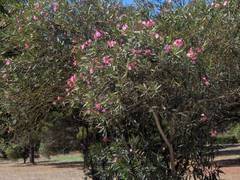
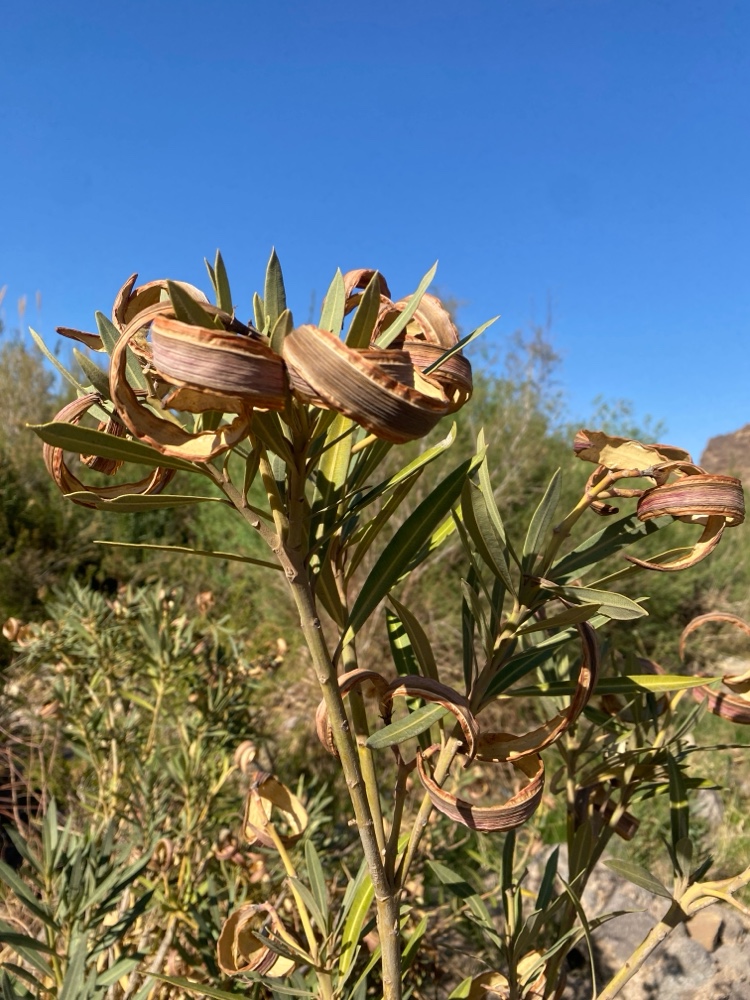
Nerium is a genus in the family Apocynaceae represented by a single widely recognized species, Nerium oleander, an evergreen shrub or small tree native to the Mediterranean basin and southwest Asia. Plants form dense, upright to arching clumps 2-6 m (6.6-20 ft) tall and nearly as wide, with multiple stems rising from the base. The leathery, lance-shaped leaves are 5-21 cm (2-8 in) long, dark green, and arranged in whorls of three along the stems. Showy five-lobed flowers, 2.5-5 cm (1-2 in) across, appear in clusters at the branch tips through summer in white, pink, red, salmon, and pale yellow, and many cultivated forms are double or lightly scented. The fruit is a slender paired pod that splits to release fluffy, wind-borne seeds. Every part of the plant contains cardiac glycosides, chiefly oleandrin, and ingestion of even small amounts can be fatal to people, pets, and livestock; smoke from burning wood and water from cut stems are also poisonous. The species tolerates heat, drought, salt, and poor soil but is killed by hard frost.
Native Range
Nerium oleander is native to the Mediterranean region, North Africa, and southwest Asia, where it grows along seasonal streambeds and rocky watercourses. It has been planted and naturalized through warm-temperate and subtropical regions worldwide.Suggested Uses
Nerium oleander is grown as a flowering hedge, screen, and freeway and median planting in warm climates, and as a container plant moved under cover for winter in cold regions. It is used for erosion control on dry banks and tolerates seaside and roadside conditions. Its toxicity restricts use in gardens shared with children, pets, and grazing animals.How to Identify
Appearance
Size & Dimensions
Height6'7" - 20'
Width/Spread6' - 12'
Bloom Information
Flowering runs through the warm months, late spring to autumn and nearly year-round in frost-free climates, peaking in summer heat. The funnel-shaped flowers are clustered at the branch tips and some forms carry a light fragrance. Bloom is heaviest on plants in full sun and tapers in shade.
Detailed Descriptions
Flower Description
White, pink, red, salmon, pale yellowFoliage Description
Dark greenGrowing Conditions
Sun Requirements
Requires 6-12 hours of direct sunlight daily
• Full Sun: 6+ hours of direct sunlight
• Partial Shade: 3-6 hours of direct sunlight
• Full Shade: Less than 3 hours of direct sunlight
Care & Maintenance
Care Guide
Oleander grows in full sun on almost any well-drained soil and tolerates heat, drought, salt spray, and reflected pavement heat once established. It withstands hard pruning and coastal wind but is damaged below about -7 C (19 F) and killed by prolonged hard freezes, limiting it to USDA zones 8-11. Watering needs are low for established plants, though regular moisture increases flowering. Every part is highly toxic if eaten, and the sap irritates skin and eyes, so the plant is hazardous around children, pets, and livestock. Plants sucker from the base and can be renewed by removing old stems. Caterpillars of the oleander moth and scale insects are the main pests.Pruning
Oleander is pruned in late winter or right after the main flush of bloom, cutting back to a leaf whorl to control size and shape; the toxic sap is a hazard during cutting. Removing one-third of the oldest stems at the base each year renews overgrown plants. Tip-pruning young shoots increases branching and flower clusters.Pruning Schedule
Prune: February–March
wintersummer
Container Growing
Suitable for container growing
Minimum container size: 5 gallons