Nasturtium, Genus, spp., Multiple species,
- Genus
- Multiple species
Watercresses
Europe, North Africa, temperate Asia
Overview
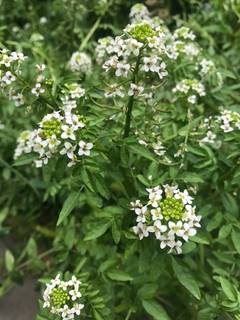
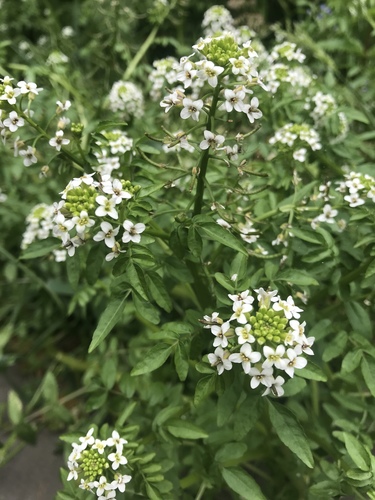
Nasturtium is a small genus of about five aquatic and semi-aquatic perennial herbs in the family Brassicaceae, known above all for watercress, Nasturtium officinale. Despite the name, the genus is unrelated to the garden nasturtium (Tropaeolum). Plants form trailing, hollow, succulent stems that creep and float in shallow water or wet mud, rooting at the nodes, and grow 4–24 in (10–60 cm) long. The dark green leaves are pinnately divided into rounded leaflets with a larger terminal lobe and carry the sharp, peppery flavour of the mustard family. From spring through summer, small four-petalled white flowers about 0.2 in (4–6 mm) across are held in short clusters at the stem tips, followed by slender curved seed pods. Nasturtium grows in cool, clean, flowing or still freshwater — springs, streams, ditches, and watercress beds — in full sun to part shade, and spreads quickly where conditions suit. The foliage is widely eaten raw or cooked, though cress gathered from the wild can carry waterborne parasites and pollutants, and the plants have naturalised and become weedy in waterways well beyond their native range.
Native Range
Nasturtium is native to Europe, North Africa, and temperate Asia, growing in and along cool springs, brooks, and seepages with clean, mineral-rich water. Watercress has been carried around the world as a food plant and has naturalised on every inhabited continent, sometimes choking streams and irrigation channels in mild climates.Suggested Uses
Nasturtium is grown as the salad and culinary herb watercress, raised in flowing water beds, pond margins, wet containers, and even on damp kitchen windowsills. In water gardens it serves as a marginal plant that shelters aquatic life and takes up excess nutrients. Because it can escape and clog waterways, it is contained in managed beds or pots in many regions.How to Identify
Appearance
Size & Dimensions
Height4" - 2'
Width/Spread1' - 3'
Bloom Information
Flowering runs from late spring through summer, roughly May to September, with scattered bloom into autumn in mild climates. Clusters of small white flowers open at the stem tips and give way to narrow, slightly curved seed pods. In frost-free areas with flowing water the plants can grow and flower nearly year-round.
Detailed Descriptions
Foliage Description
dark greenGrowing Conditions
Sun Requirements
Requires 4-12 hours of direct sunlight daily
• Full Sun: 6+ hours of direct sunlight
• Partial Shade: 3-6 hours of direct sunlight
• Full Shade: Less than 3 hours of direct sunlight
Care & Maintenance
Care Guide
Nasturtium grows in cool, clean, slow-moving or still freshwater and in constantly wet soil at the margins of streams, ponds, and springs, in full sun to part shade. Steady moisture and cool temperatures keep the foliage tender, while heat, drought, and flowering can make it bitter and tough. The stems root readily at the nodes, so new plants start easily from cuttings pressed into wet ground, as well as from seed. For eating, cress is grown in clean water or a container of wet soil kept flushed with fresh water rather than gathered from unknown wild sources. Hardy roughly to USDA zone 5, the plants die back in cold winters and regrow from rooted stems in spring. Growth can be rapid enough to clog small watercourses.Pruning
Regular cutting or pinching of the stem tips keeps growth tender, leafy, and productive and delays flowering, which turns the foliage bitter. Plants are sheared back when they become straggly or begin to bloom heavily. Removed stems root easily and can start new plantings.Pruning Schedule
Prune: June–August
summer
Container Growing
Suitable for container growing
Minimum container size: 2 gallons