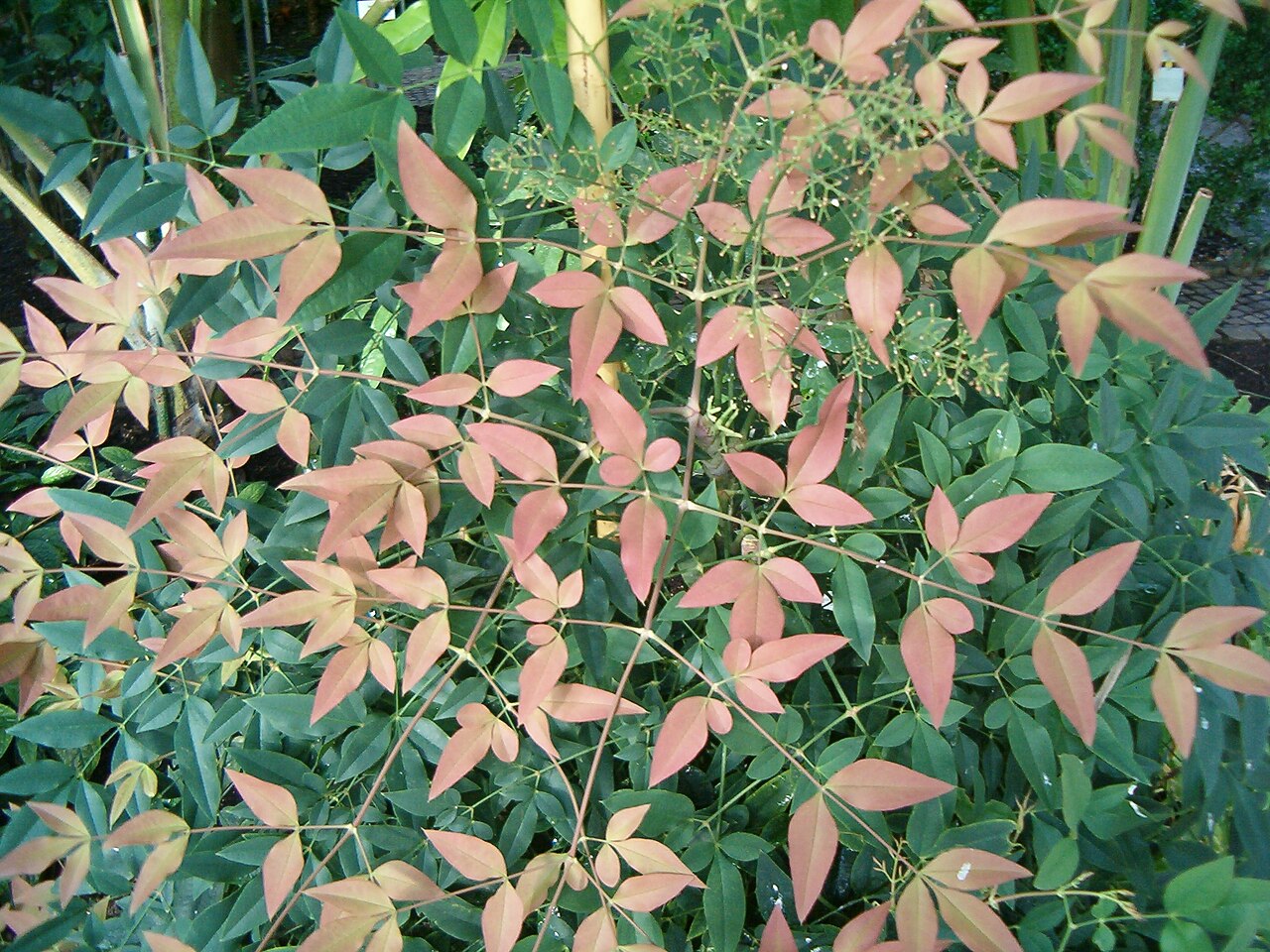
Nandina, Genus, domestica, Species,
- Genus & species
heavenly bamboo
Eastern Asia — China, Japan, and India; mountain forests and thickets at low to middle elevations
Overview
Nandina domestica is an upright broadleaf evergreen shrub in the family Berberidaceae growing 4–8 feet (1.2–2.4 m) tall and 3–5 feet (0.9–1.5 m) wide from a clumping rhizomatous base that produces erect unbranched cane-like stems carrying tiered compound leaves at the stem tips. Despite the common names heavenly bamboo and sacred bamboo and despite the visual resemblance of the cane-like stems and lacy compound foliage to true bamboo, the species is not related to bamboo — Berberidaceae is the barberry family and includes Berberis, Mahonia, and Podophyllum, while true bamboos are in the grass family Poaceae and are unrelated. The specific epithet domestica is from Latin meaning of the household or domesticated and refers to the species' long history of cultivation in Chinese and Japanese gardens, where the species has been planted near temple entrances and household doorways for centuries as an ornamental and as a plant of cultural and religious significance. Leaves are bipinnately to tripinnately compound with lance-shaped leaflets 1–2 inches (2.5–5 cm) long, and the foliage color shifts through the year — bronze-red on the new growth flush in spring, medium green through the summer, and vivid red to scarlet to burgundy through fall and winter with the strongest red color developing on plants in full-sun positions. White small flowers 0.3 inch (8 mm) across with prominent yellow stamens open in loose terminal panicles 6–12 inches (15–30 cm) long in June and July, and bright red persistent berry clusters 0.3 inch (8 mm) across develop from the spent flowers in fall and persist on the plant through the winter months supplying the species' primary fall and winter ornamental display. Limitation: the species is classified as an invasive plant in parts of the southeastern United States — bird-dispersed berries colonize forest understory and disturbed ground, and regional invasive species lists should be consulted before planting in jurisdictions where the species is restricted. The bright red berries contain cyanogenic glycosides (compounds that release hydrogen cyanide when the plant tissue is damaged) and are documented as toxic to cedar waxwings and other native birds that consume large quantities of the berries during winter feeding flocks — a 2009 mass mortality event in Thomas County, Georgia documented dozens of cedar waxwings killed by acute cyanide poisoning after consuming Nandina berries, and sterile-fruited cultivars (such as 'Firepower', 'Gulf Stream', and 'Harbour Dwarf') are the recommended alternatives in regions where wildlife exposure and invasive spread are concerns. All parts of the plant contain berberine and nandenine alkaloids and are toxic to humans, cats, and dogs if ingested. The species tends to become leggy with age as the lower portion of the cane-like stems loses foliage — stagger-pruning by cutting one-third of the oldest leggiest stems to the ground each year is the standard maintenance protocol that maintains a fuller form from top to base. Native to eastern Asia (China, Japan, and India). Drought-tolerant once established. Deer-resistant.
Native Range
Native to eastern Asia — China, Japan, and India — growing in mountain forests and thickets at low to middle elevations. The species has been cultivated in Chinese and Japanese gardens for centuries as a plant of ornamental and cultural significance, planted near temple entrances and household doorways. The species was introduced to western horticulture in the 18th century and has subsequently become a foundation broadleaf evergreen shrub in southern and Pacific Coast gardens of North America. The species has naturalized in parts of the southeastern United States where bird-dispersed berries colonize forest understory and disturbed ground.Suggested Uses
Used in mixed borders, foundation plantings, mass plantings for fall and winter color display, screening plantings, and container specimens in containers of at least 5 gallons (19 L) at 36–60 inch (90–150 cm) spacing between plants in USDA zones 6 through 10. The bronze-red spring flush, the vivid red to scarlet to burgundy fall and winter foliage color, the bright red persistent winter berry clusters, and the bamboo-like cane-like stem silhouette combine for a year-round ornamental shrub with a strong fall and winter seasonal display. Jurisdictions where the species is classified as invasive (parts of the southeastern United States) are unsuitable because of the bird-dispersed seed colonization of native forest understory, and gardeners in those regions should select sterile-fruited cultivars ('Firepower', 'Gulf Stream', 'Harbour Dwarf') that supply the foliage color without the invasive berry spread or the cedar-waxwing toxicity concern. Gardens with active wildlife — particularly winter-feeding cedar waxwings, robins, and other berry-eating birds — should account for the cyanogenic glycoside content of the berries and consider sterile-fruited cultivars or removal of the berry clusters before winter feeding flocks arrive. Households with cats, dogs, or children should account for the berberine and nandenine alkaloid toxicity of all plant parts.How to Identify
Appearance
Size & Dimensions
Height4' - 8'
Width/Spread3' - 5'
Bloom Information
White small flowers 0.3 inch (8 mm) across with prominent yellow stamens open in loose terminal panicles 6–12 inches (15–30 cm) long in June and July across a 3–4 week bloom period. Honeybees and other early-summer pollinators work the flowers for nectar across the bloom window. Bright red persistent berry clusters 0.3 inch (8 mm) across develop from the spent flowers in fall and persist on the plant through the winter months — the berries are the species' primary fall and winter ornamental display, but the bird-dispersed berries are also the mechanism behind the species' invasive spread in the southeastern United States and are documented as toxic to cedar waxwings and other native birds that consume large quantities during winter feeding flocks (the cyanogenic glycoside content of the berries releases hydrogen cyanide when consumed in volume).
Detailed Descriptions
Flower Description
white small flowers 0.3 inch (8 mm) across with prominent yellow stamens carried in loose terminal panicles 6-12 inches (15-30 cm) long in June and July; followed by bright red persistent berry clusters 0.3 inch (8 mm) across that ripen in fall and persist on the plant through the winter months supplying the species' primary fall and winter ornamental displayFoliage Description
bronze-red on the new growth flush in spring; medium green through the summer growing season; vivid red to scarlet to burgundy through the fall and winter months with the strongest red color developing on plants in full-sun positions; bipinnately to tripinnately compound leaves with lance-shaped leaflets 1-2 inches (2.5-5 cm) long carried on erect unbranched cane-like stems that supply a bamboo-like silhouette though the species is not related to true bamboo (which is in the family Poaceae)Growing Conditions
Sun Requirements
Requires 2-8 hours of direct sunlight daily
• Full Sun: 6+ hours of direct sunlight
• Partial Shade: 3-6 hours of direct sunlight
• Full Shade: Less than 3 hours of direct sunlight
Care & Maintenance
Care Guide
Site in part sun to full sun or full shade with 2–8 hours of direct sun per day in well-drained loam, clay, or sand soil with a pH of 5.0–7.5. Full-sun positions develop the strongest red winter foliage color, while shaded positions retain more green coloration through the cool months. Drought tolerance develops once the root system is established. The species is classified as invasive in parts of the southeastern United States — regional invasive species lists should be consulted before planting in jurisdictions where the species is restricted, and sterile-fruited cultivars (such as 'Firepower', 'Gulf Stream', and 'Harbour Dwarf') are the recommended alternatives in regions where wildlife exposure and invasive spread are concerns. The bright red berries are toxic to cedar waxwings and other birds in volume because of cyanogenic glycoside content. All parts contain berberine and nandenine alkaloids and are toxic to humans, cats, and dogs if ingested. Stagger-pruning by cutting one-third of the oldest leggiest stems to the ground each year is the standard maintenance protocol that maintains a fuller form. Deer-resistant. Hardy in USDA zones 6–10.Pruning
The standard maintenance is stagger-pruning by cutting one-third of the oldest leggiest cane-like stems to the ground each year in early spring (February or March), which maintains a fuller form from top to base by replacing the leggy older stems with fresh basal growth that carries foliage from the ground up. Cutting all stems at the same height (formal shearing) produces a flat-topped form and removes the natural cane-like silhouette of the species. Hard renovation pruning back to 6–12 inches (15–30 cm) above the ground is tolerated when an overgrown plant has lost its lower foliage entirely, and regrowth from the base produces a renewed plant within 1–2 growing seasons. Removal of the bright red berry clusters before bird dispersal limits the invasive seed spread in regions where the species has naturalized and reduces the risk of cedar-waxwing toxicity.Pruning Schedule
Prune: February–March
early spring
Container Growing
Suitable for container growing
Minimum container size: 5 gallons
Toxicity Warning
Toxic to pets and humansMore plants in the Berberidaceae family
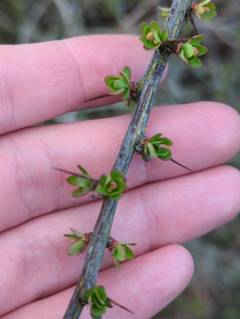 Japanese barberryBerberis thunbergii
 Golden Japanese barberryBerberis thunbergii 'Aurea'
- Purpleleaf or redleaf Japanese barberryBerberis thunbergii f. atropurpurea
- Helmond Pillar Japanese barberryBerberis thunbergii f. atropurpurea 'Helmond Pillar'
- Crimson pygmy barberryBerberis thunbergii f. atropurpurea 'Atropurpurea Nana'
- Rose glow Japanese barberryBerberis thunbergii f. atropurpurea 'Rose Glow'