Mummenhoffia, Genus, alliacea, Species,
- Genus & species
garlic penny-cress
Central and southern Europe and western Asia
SunFull Sun – Part Shade
WaterMedium
Overview
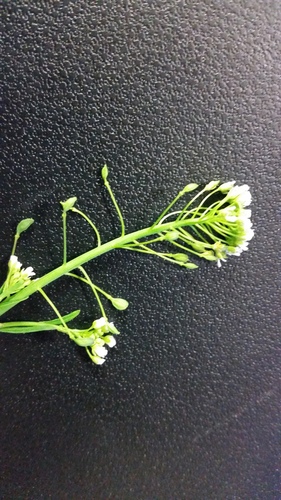
Mummenhoffia alliacea is an erect winter annual reaching 8-24 inches (20-60 cm) tall, with a single stem that may branch above. The lower stem and leaves give off a garlic odor when crushed, the source of the common name. Lower leaves form a rosette and are oblong with shallow teeth; stem leaves are arrow-shaped and clasp the stem with pointed lobes. Small white four-petaled flowers about 0.2 inch (5 mm) across cluster in elongating racemes at the stem tips from April to June. Flat, rounded to heart-shaped seedpods 0.2-0.3 inch (5-8 mm) wide follow along the stem, each notched at the top and holding several seeds. The plant germinates in fall, overwinters as a rosette, flowers in spring, and dies after setting seed. It grows on disturbed ground, field edges, roadsides, and floodplain woods on moist, fertile soil. Native to Europe and western Asia, it has naturalized across parts of the eastern United States, where it can crowd into crop fields and bottomland forests.
Native Range
Mummenhoffia alliacea is native to central and southern Europe and western Asia. It has naturalized in scattered parts of the eastern and central United States, where it grows on disturbed ground, field margins, roadsides, and moist floodplain woods.Suggested Uses
Rarely grown by choice, the plant appears mainly as a naturalized weed of fields and floodplains. Its early flowers offer some nectar to small spring pollinators. Where it spreads into crops or natural areas, it is managed rather than cultivated.How to Identify
Appearance
Size & Dimensions
Height8" - 2'
Width/Spread4" - 10"
Bloom Information
Small white flowers open in lengthening clusters from April to June, atop overwintered rosettes. Each raceme blooms upward over several weeks as seedpods form below. Small bees and flies visit the flowers, though many also self-pollinate.
Detailed Descriptions
Foliage Description
GreenGrowing Conditions
Sun Requirements
Requires 4-10 hours of direct sunlight daily
• Full Sun: 6+ hours of direct sunlight
• Partial Shade: 3-6 hours of direct sunlight
• Full Shade: Less than 3 hours of direct sunlight
Water & Climate
Water Needs
Care & Maintenance
Care Guide
Mummenhoffia alliacea grows as a winter annual on moist, fertile, disturbed soils and is seldom planted on purpose. It germinates in fall, forms an overwintering rosette, and flowers the following spring in full sun to part shade. The plant tolerates a range of soils and a pH near neutral but favors damp, rich bottomland ground. It self-sows heavily and can spread into crop fields and woodland edges. Pulling or cutting plants before the pods ripen prevents the seed set that drives its spread. No fertilizer or special care is needed.Pruning
Pruning is not relevant for this annual weed. Cutting or pulling plants before the seedpods mature limits self-sowing. Pulled plants are easiest to remove when soil is moist in spring.Toxicity
Non-toxicPlanting Guide
Planting Methods & Timing
Planting Method
direct sow
Direct Sow Timing
Fall (overwinters as rosette)