Morus, Genus, alba, Species,
- Genus & species
white mulberry
China (cultivated 4000+ years for silkworm production; widely naturalized and invasive across temperate regions worldwide)
Overview
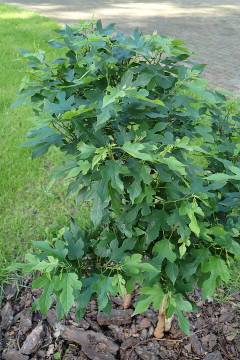
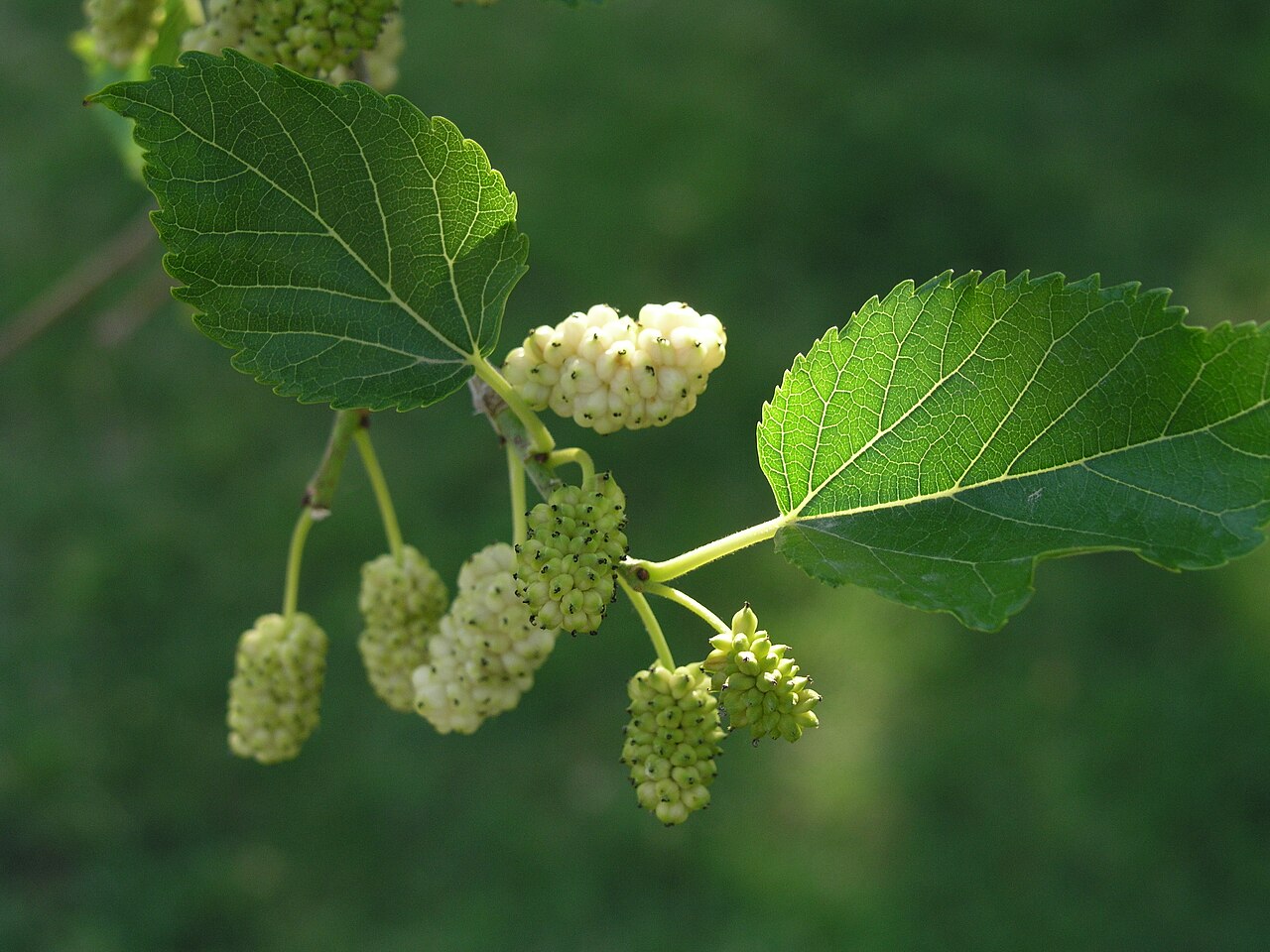
Morus alba is a medium to large deciduous tree reaching 30–50 feet (9–15 m) tall with a spread of 30–50 feet (9–15 m) and a broadly rounded often irregular crown. Native to China, this species was introduced worldwide for silkworm production—Bombyx mori (the commercial silkworm) feeds exclusively on Morus leaves and the expansion of silk industries from China across Asia, Europe, and the Americas carried this tree with them. Alternate simple leaves run highly variable in shape across a single tree: ovate to lobed (sometimes deeply 3- to 5-lobed) foliage can appear on the same branch, 2–6 inches (5–15 cm) long, medium green with a glossy upper surface, and serrate leaf margins. Catkin-like flowers are inconspicuous yellowish-green structures that open in spring. Aggregate fruit 0.5–1 inch (1.3–2.5 cm) long develops cylindrical, ripening whitish to pinkish or purplish depending on individual tree genetics, with sweet but bland flavor compared to the darker-fruited M. nigra. Growth rate is fast. Hardy to zone 4. Widely naturalized and classified as invasive in parts of North America, where the species escapes cultivation and spreads into native plant communities. Fruit stains pavement and structures beneath the canopy. Short-lived tree lifespan of 40–75 years combined with weak wood makes the species susceptible to storm damage.
Native Range
Morus alba is native to China, where the species has been cultivated for silkworm production for more than 4,000 years. The tree has been introduced and naturalized across temperate regions worldwide through the spread of silk industries from China across Asia, Europe, and the Americas. Feral populations now occur across broad portions of North America, and the species is classified as invasive in many eastern and central U.S. states where it competes with and hybridizes with the native red mulberry (Morus rubra).Suggested Uses
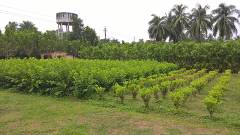
Planted as a shade tree or in agricultural settings for silkworm cultivation at 25–35 foot (7.6–10.7 m) spacing in zone-4-and-warmer gardens where the species is not classified as invasive. Fast growth and extreme site adaptability fit the species to urban and degraded sites where more demanding shade trees struggle. Fruitless male cultivars such as 'Fruitless' and 'Kingan' eliminate the fruit litter problem and reduce seed-based spread in regions where the species is invasive. Invasive status in parts of North America limits the species' use—fruitless male cultivars are the responsible choice where the species is grown in invasive regions. Weak wood, short tree lifespan, and fruit litter limit use as a street or specimen tree in high-value landscape positions. Sites near pavement, pools, patios, parked vehicles, or structures where fruit litter is unacceptable are poor fits for the species.How to Identify
Appearance
Size & Dimensions
Height30' - 50'
Width/Spread30' - 50'
Bloom Information
Inconspicuous yellowish-green catkin-like flowers open in April through May. The species is monoecious or dioecious depending on the individual tree—some trees carry both male and female flowers on the same plant, while others carry only one sex. Aggregate fruit 0.5–1 inch (1.3–2.5 cm) long develops cylindrically and ripens whitish to pinkish or purplish in June through July. Fruit production is prolific and creates significant litter on pavement, patios, vehicles, and structures beneath the canopy through the ripening window.
Detailed Descriptions
Flower Description
Yellowish-green inconspicuous catkins; April-May; aggregate fruit whitish to pinkish or purplish 0.5-1 inch June-JulyFoliage Description
Medium green glossy above; alternate simple highly variable shape (ovate to deeply lobed on same tree) 2-6 inches; yellow autumn colorGrowing Conditions
Sun Requirements
Requires 6-10 hours of direct sunlight daily
• Full Sun: 6+ hours of direct sunlight
• Partial Shade: 3-6 hours of direct sunlight
• Full Shade: Less than 3 hours of direct sunlight
Care & Maintenance
Care Guide
Full sun in well-drained soil (pH 6.0–7.5) matches the species' cultivation needs. Hardy to zone 4 (−30°F / −34°C). The species runs extremely adaptable and tolerates drought, poor soils, urban pollution, summer heat, and a wide range of site conditions that would defeat more demanding tree species. Fast growth rate produces weak wood that runs susceptible to storm breakage in ice events and wind storms. Short tree lifespan of 40–75 years limits the species as a multi-generational landscape investment. The species is widely naturalized and classified as invasive in parts of North America; planting decisions require consultation with local invasive-species regulations before ground is broken in a new position. Fruit litter is significant and affects nearby hard surfaces through the summer ripening period.Pruning
Pruning is done in late winter while the tree is dormant—the species bleeds sap freely when cut during the spring sap-rise period, so late-winter dormant pruning supports clean healing of cut surfaces. Dead, crossing, and damaged branches are removed. Structural pruning of the weak wood reduces storm-damage risk on mature trees. The species tolerates pollarding and coppicing—cut-back regrowth runs vigorous and clean. Spring pruning while sap is flowing is avoided.Pruning Schedule
Prune: January–February
winter