Morus, Genus, spp., Multiple species,
- Genus
- Multiple species
mulberries
Temperate and subtropical Asia, the Americas, and Africa (greatest diversity in eastern Asia)
Overview
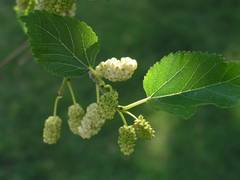
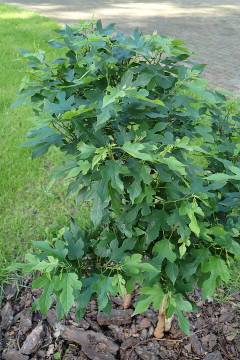
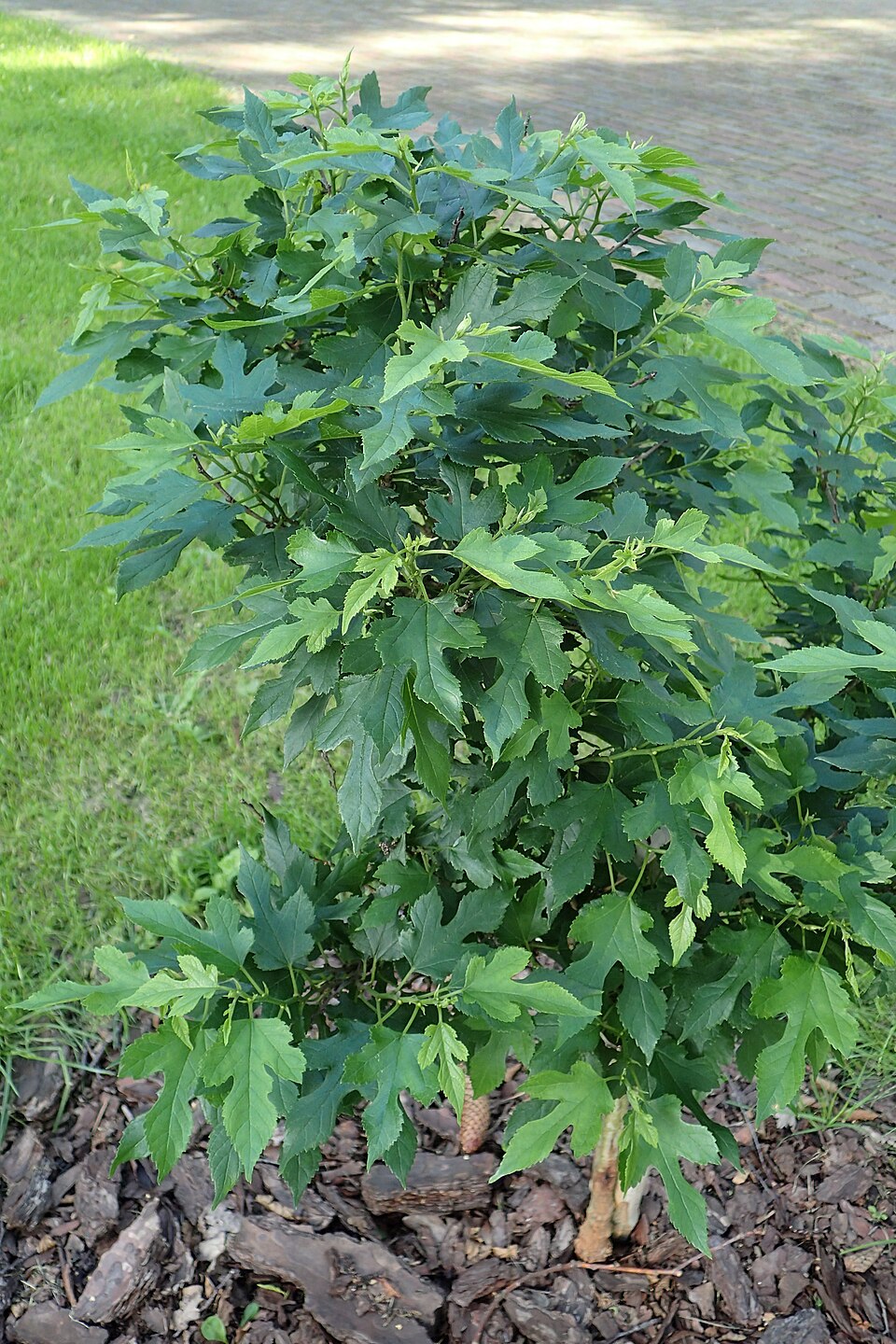
Morus is a genus of about 10 to 16 species of deciduous trees and shrubs in the Moraceae family, native to temperate and subtropical Asia, the Americas, and Africa. Trees reach 20-60 feet (6-18 m) tall with a broad, spreading, rounded crown and milky sap in the stems and leaves. Leaves are alternate and variable, even on one tree, ranging from unlobed hearts to deeply mitten- or multi-lobed blades with toothed edges, and they turn yellow in fall. Small green flowers hang in short catkins in spring; most species are wind-pollinated, and trees may be male, female, or both. Female flowers develop into the familiar blackberry-like fruit, a cluster of tiny drupes that ripens white, red, or black and is sweet and edible. The genus grows quickly, but the wood is weak and the heavy fruit stains pavement, cars, and clothing, and birds spread the seeds widely. White mulberry (M. alba), introduced from Asia for silkworm culture, has become an invasive weed tree across much of North America and hybridizes with the native red mulberry (M. rubra). The catkins of M. alba also release wind-borne pollen that triggers allergies.
Native Range
Morus is native to temperate and subtropical Asia, the Americas, and Africa, with the greatest diversity in eastern Asia. North America has one native species, red mulberry (M. rubra), of eastern woodlands, while white mulberry (M. alba) is a widespread Asian introduction.Suggested Uses
Grown as fruit and shade trees in yards and orchards, with fruitless cultivars used as street and lawn trees. The leaves of white mulberry feed silkworms, and the sweet fruit is eaten fresh or made into preserves and pies. Birds and other wildlife feed heavily on the fruit.How to Identify
Appearance
Size & Dimensions
Height20' - 60'
Width/Spread20' - 45'
Bloom Information
Flowering occurs in spring, generally April and May, as the leaves emerge. Small green flowers hang in short catkins, with male and female catkins often on separate trees and pollen carried by wind. The flowers offer no display. Fruit ripens from late spring into summer, dropping heavily over several weeks.
Detailed Descriptions
Flower Description
green to yellow-greenFoliage Description
greenGrowing Conditions
Sun Requirements
Requires 6-12 hours of direct sunlight daily
• Full Sun: 6+ hours of direct sunlight
• Partial Shade: 3-6 hours of direct sunlight
• Full Shade: Less than 3 hours of direct sunlight