Moraea, Genus, setifolia, Species,
- Genus & species
paper glasstulp
Overview
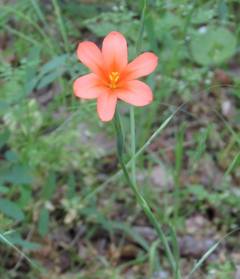
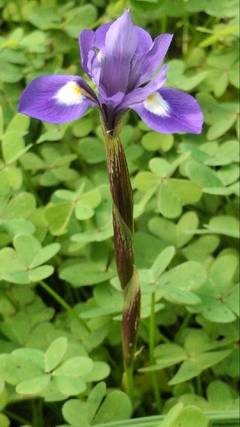
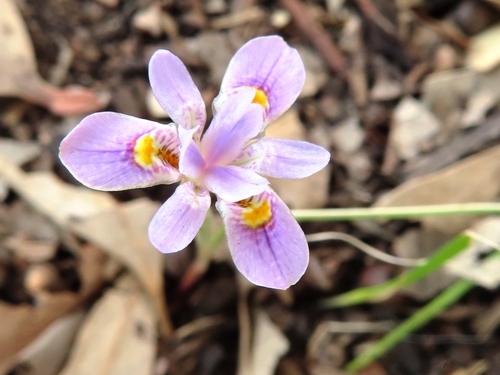
Moraea setifolia is a small cormous perennial 4-12 inches (10-30 cm) tall with one or two slender, thread-like leaves that often lie along the ground. In spring it produces small flowers about 0.8-1.2 inches (2-3 cm) across in pale lilac, blue, or cream, marked with darker veins and a yellow centre. Each flower opens in the afternoon and lasts only a short time, with new flowers following over several weeks. It grows from a small corm wrapped in fibrous tunics and forms cormels that help it spread. Moraea setifolia is native to South Africa and has naturalised as a weed in southern Australia, where it grows in pasture, roadsides, and disturbed sandy ground. Like other Cape tulips in the genus, it can be toxic to grazing livestock. The foliage dies back to the corm in summer, and the corms persist in the soil, which makes naturalised stands hard to remove.
Native Range
Moraea setifolia is native to the Cape region of South Africa. It has naturalised in southern Australia, mainly in South Australia and Western Australia, where it grows on disturbed and grazed land with winter rainfall.Suggested Uses
Moraea setifolia has no horticultural use and is treated as a weed across its naturalised range. It is regarded as a pasture and roadside weed rather than a garden plant, partly because of its toxicity to livestock.How to Identify
Appearance
Size & Dimensions
Height4" - 1'
Width/Spread4" - 8"
Bloom Information
Flowering occurs in spring, mainly September to November in its naturalised range. Each flower opens in the afternoon and lasts only a few hours, with fresh flowers continuing in succession over several weeks. Capsules and cormels form before the plant dies back in summer.
Detailed Descriptions
Flower Description
pale lilac to blueFoliage Description
greenGrowing Conditions
Sun Requirements
Requires 6-10 hours of direct sunlight daily
• Full Sun: 6+ hours of direct sunlight
• Partial Shade: 3-6 hours of direct sunlight
• Full Shade: Less than 3 hours of direct sunlight