Montia, Genus, parvifolia, Species,
- Genus & species
littleleaf Miner's-lettuce
Western North America (Pacific Coast and Intermountain West)
Overview
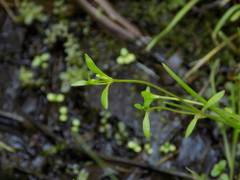
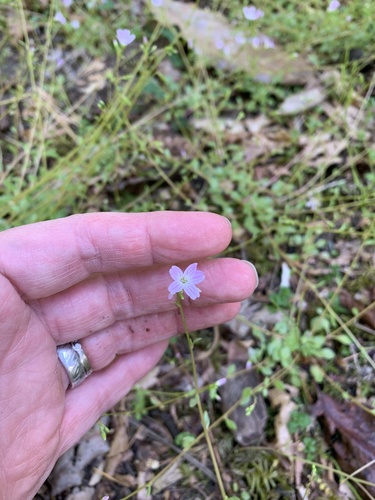
Montia parvifolia is a small evergreen perennial in the family Montiaceae, reaching 4-12 inches (10-30 cm) tall in flower with a basal rosette 2-4 inches (5-10 cm) wide. Basal leaves spatulate to oblanceolate, succulent, 0.4-1.2 inches (10-30 mm) long, medium green often flushed with red at the base. Stem leaves smaller, alternate, sometimes bearing tiny bulblets at their axils that root and start new plants. Flowers white to pale pink with darker pink veining, 0.4-0.6 inch (10-15 mm) across, with 5 notched petals; borne in loose racemes from May through August. Spreads by stoloniferous runners and bulblet-derived plantlets to form colonies 6-12 inches (15-30 cm) wide in 2-3 years. Foliage remains green through mild winters and may dry to brown rosettes in zones 5-6 winters; new leaves emerge in early spring. Plants tolerate occasional foot traffic in pathway edges but rot in saturated soil.
Native Range
Native to moist crevices in rock outcrops, seeps, and shaded streambanks across western North America from southern Alaska south through British Columbia, Washington, Oregon, Idaho, and northern California, generally at elevations from sea level to 7,500 feet (2,300 m).Suggested Uses
Used in rock garden crevices, dry stone walls, troughs, and shaded gravel paths at 6-10 inch (15-25 cm) spacing in zones 5-9. Combines with native ferns, Heuchera micrantha, and Sedum spathulifolium on rocky bank plantings. Grows in containers of at least 1 gallon (3.8 L) with a sharply drained gritty mix; rots in moisture-retentive bagged potting mix.How to Identify
Appearance
Size & Dimensions
Height4" - 1'
Width/Spread6" - 1'
Bloom Information
May through August across the species range, with peak bloom from late May through June. Bloom begins in April at low elevations on the Oregon coast and may extend into September at high-elevation seeps. Individual racemes open over 2-3 weeks; total stand bloom lasts 8-10 weeks. The plant continues to flower lightly through summer where soil moisture remains adequate.
Detailed Descriptions
Flower Description
White to pale pink with darker pink veiningFoliage Description
Medium green flushed red at baseGrowing Conditions
Sun Requirements
Requires 2-4 hours of direct sunlight daily
• Full Sun: 6+ hours of direct sunlight
• Partial Shade: 3-6 hours of direct sunlight
• Full Shade: Less than 3 hours of direct sunlight
Care & Maintenance
Care Guide
Establishes within one growing season from container stock or seed in sharply drained gritty soil with weekly water through the first summer. Mature plants tolerate brief dry periods but require periodic moisture during the growing season; foliage shrivels in extended drought and recovers when moisture returns. Crown rot occurs in heavy clay soils and in containers without drainage. Slugs feed on the succulent foliage in wet seasons. Plants self-propagate from leaf-axil bulblets that drop and root in autumn; volunteer plantlets appear in surrounding gravel and crevices. No serious pest or disease problems occur in suitable sites.Pruning
No pruning is required. Spent flower stems can be removed in late summer to neaten appearance, but seed and bulblets dispersed from these stems are the main means of natural increase. Yellowing winter rosettes are removed in early spring before new growth emerges.Pruning Schedule
Prune: March
early spring
Container Growing
Suitable for container growing
Minimum container size: 1 gallons