Monotoca, Genus, elliptica, Species,
- Genus & species
tree broom-heath
Overview
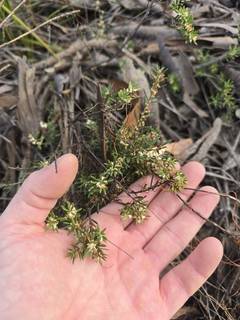
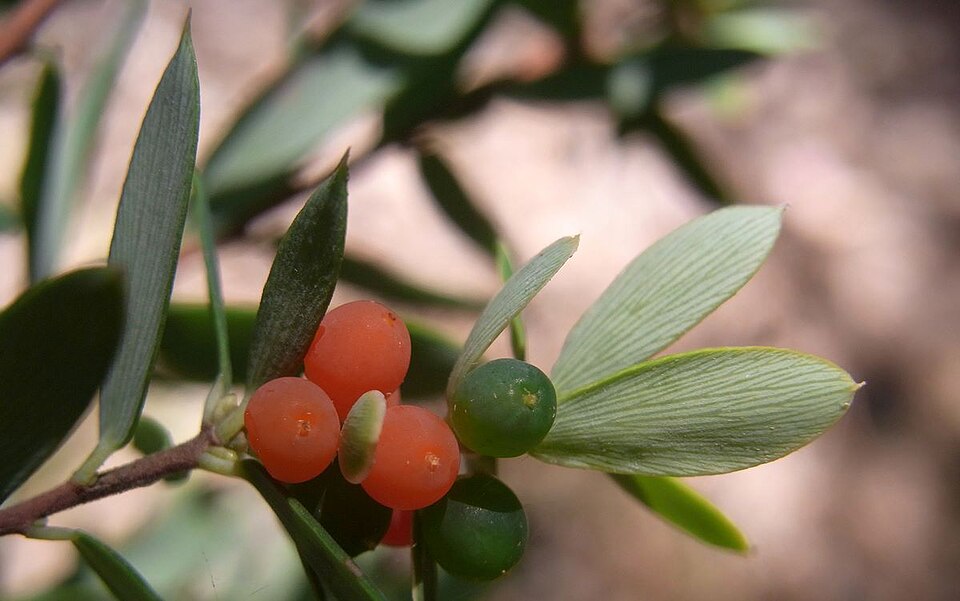
Monotoca elliptica is an evergreen shrub or small tree reaching 10-26 feet (3-8 m) tall with a slender, upright trunk and a narrow crown. The leaves are small, elliptic, 0.2-0.6 inch (5-15 mm) long, dark green above and paler beneath, with margins rolled under and crowded along the stems. Tiny white tubular flowers about 0.1 inch (2-3 mm) long hang in short clusters in the leaf axils; male and female flowers occur on separate plants. Female plants bear small, rounded, fleshy white to cream fruit 0.1-0.2 inch (3-5 mm) wide. Flowering is mainly in autumn and winter. It grows on coastal dunes, in heath, and in open forest on sandy soils and tolerates salt-laden wind. Growth is slow, and plants take several years to flower and fruit.
Native Range
Native to southeastern Australia along the coast and ranges of New South Wales, Victoria, Tasmania, and southeastern South Australia. It grows on coastal dunes, in heath, and in dry open forest on sandy soils, often near the sea.Suggested Uses
Planted in coastal gardens, windbreaks, and screens on sandy soils at 5-10 feet (1.5-3 m) spacing. It tolerates salt-laden wind and stabilizes coastal sites. Slow growth makes it a long-term planting.How to Identify
Appearance
Size & Dimensions
Height10' - 26'
Width/Spread6' - 13'
Bloom Information
Detailed Descriptions
Foliage Description
dark greenGrowing Conditions
Sun Requirements
Requires 5-10 hours of direct sunlight daily
• Full Sun: 6+ hours of direct sunlight
• Partial Shade: 3-6 hours of direct sunlight
• Full Shade: Less than 3 hours of direct sunlight
Care & Maintenance
Care Guide
It grows in full sun to light shade in well-drained sandy soils with a pH of 5.0-6.5. Water through the first season to establish; mature plants tolerate dry, sandy soils and coastal exposure. It tolerates light to moderate frost and salt-laden wind. Few pests or diseases affect it. Growth is slow, especially in the first few years.Pruning
Tip-prune when young to build a denser, bushier shape. The plant tolerates light pruning but is slow to regrow from old wood. Lower branches can be removed to form a small single-trunked tree.Pruning Schedule
Prune: August–September
winterearly spring