Overview
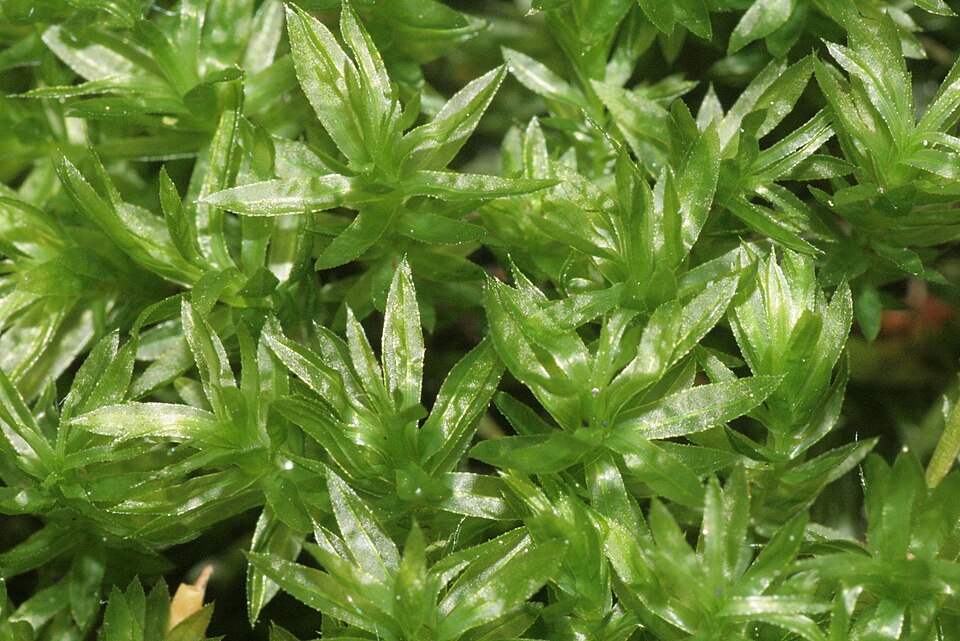
Mnium hornum is a tuft-forming acrocarpous moss of the family Mniaceae, common in woodland and on shaded banks. It grows 0.4-1.6 inch (1-4 cm) tall in dark green patches, with erect shoots that are bright green when young and darken with age. The leaves are lance-shaped to oval, 0.16-0.28 inch (4-7 mm) long, edged with a distinct border of narrow cells and lined with paired teeth along the margin; the leaf bases are often tinged red. When dry the leaves curl and crisp, expanding again when wetted. Female shoots produce a single nodding spore capsule on a long red seta 0.8-1.2 inch (2-3 cm) high, curved over at the tip so the capsule hangs downward; capsules ripen in spring. The moss grows on acidic substrates such as peaty soil, rotting logs, stream banks, rock, and the bases of trees, and avoids lime-rich ground. It attaches by rhizoids rather than roots and needs steady humidity. It thins on dry, sunlit, or strongly calcareous sites. Native throughout Europe, it extends into Macaronesia, North Africa, temperate Asia, and eastern North America.
Native Range
Mnium hornum is native across Europe and ranges into Macaronesia, North Africa, temperate Asia, and eastern North America. It is a frequent and widespread woodland moss in the British Isles.Suggested Uses
Used in shaded, acidic woodland and moss gardens as a green cover over soil, logs, and stone. It holds moisture at the soil surface and shelters small invertebrates.How to Identify
Appearance
Bloom Information
As a moss it reproduces by spores rather than flowers. Spore capsules form over winter and ripen in spring, hanging from arched red setae before shedding spores.
Detailed Descriptions
Foliage Description
dark green, bright green when youngGrowing Conditions
Sun Requirements
• Full Sun: 6+ hours of direct sunlight
• Partial Shade: 3-6 hours of direct sunlight
• Full Shade: Less than 3 hours of direct sunlight
Water & Climate
Water Needs